


Power ESS for Solar Panel: The Key to Unlocking True Energy Independence
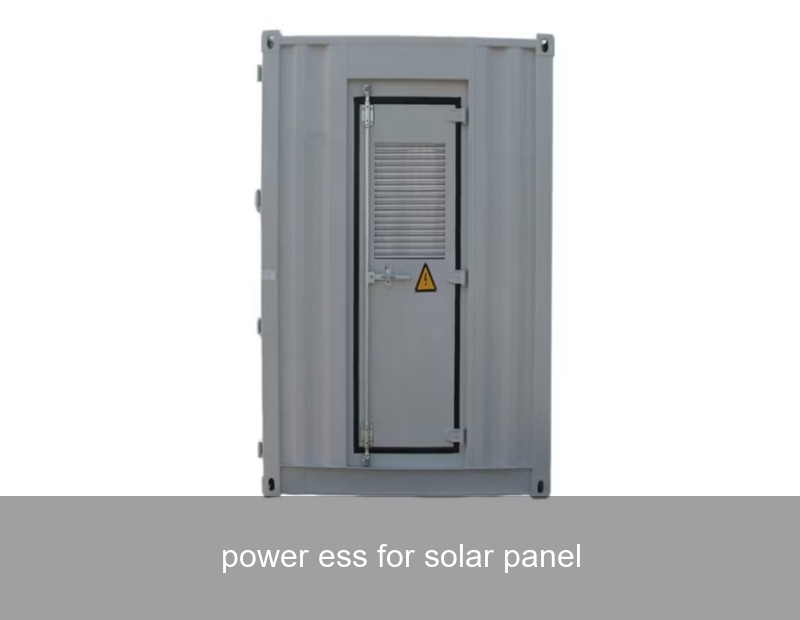
You've made the smart decision to install solar panels. Your roof is generating clean energy, your electricity bills are dropping, and you're feeling good about your environmental impact. But have you ever watched the sun set and wondered, "Where is all that excess energy I produced today going?" The answer, often, is back to the grid for a small credit, while you draw expensive power at night. This is where a Power Energy Storage System (ESS) for solar panels becomes not just an add-on, but the essential brain and battery of your energy ecosystem. It's the technology that captures your solar surplus, stores it intelligently, and delivers it precisely when you need it, transforming a one-way solar system into a resilient, self-sufficient power station.
Table of Contents
- The Solar Dilemma: Generation vs. Consumption
- What is a Power ESS for Solar Panels?
- Key Benefits: Beyond Just Backup
- Real-World Impact: A Case Study from Bavaria
- Choosing the Right System: Key Considerations
- Highjoule's Intelligent Solutions for Home & Business
- Your Home, Your Grid: What's Your Energy Vision?
The Solar Dilemma: Generation vs. Consumption
Let's face a fundamental mismatch. Solar panels produce the most energy in the middle of the day, precisely when many households and businesses have their lowest demand. In the US, residential electricity use typically peaks in the early evening. In Europe, similar patterns exist, with demand surging after sunset. This creates a frustrating gap. The U.S. Department of Energy notes that without storage, solar energy must be used instantly or fed back to the grid. With net metering policies changing and feed-in tariffs shrinking in many regions, the economic value of exporting solar power is declining.
Image: The classic mismatch between solar production and home energy use. Source: Unsplash

The data is clear. A typical home solar system might cover 60-80% of a household's annual electricity needs, but nearly 100% of its daytime needs and only 20-40% at night. The rest is imported from the utility at full price. This is the problem a power ESS for solar panels is designed to solve.
What is a Power ESS for Solar Panels?
Think of it as a high-tech energy bank. A Power ESS consists of three core components:
- Battery Pack: The storage medium, typically lithium-ion (like LiFePO4 for safety and longevity), where your solar electricity is stored chemically.
- Inverter/Charger: The intelligent manager. It converts the DC electricity from your panels and batteries to AC for your home, and vice-versa for charging. Modern hybrid inverters handle this seamlessly.
- Energy Management System (EMS): The true brain. This software learns your consumption patterns, weather forecasts, and utility rate schedules to decide when to store, use, or (if beneficial) export energy.
When your panels produce more than you need, the excess charges the battery instead of flowing to the grid. When the sun goes down or during a peak rate period, your home automatically draws from the battery, minimizing grid imports.
Key Benefits: Beyond Just Backup
While backup power during outages is a major driver, especially in areas with unstable grids or extreme weather, the advantages run deeper:
| Benefit | Explanation | Direct Impact |
|---|---|---|
| Maximized Self-Consumption | Use more of the solar energy you produce, sometimes increasing direct usage from 30% to 80%. | Lower electricity bills, better ROI on solar investment. |
| Time-of-Use (TOU) Optimization | Automatically avoid drawing power during expensive peak hours (e.g., 4-9 PM). | Significant cost savings in regions with TOU pricing (common in CA, parts of EU). |
| Grid Support & Resilience | Reduces strain on the grid during peaks and provides backup during blackouts. | Energy independence and community grid stability. |
| Future-Proofing | Ready for vehicle-to-home (V2H) integration and smart home energy ecosystems. | Protects your investment as energy technology evolves. |
Real-World Impact: A Case Study from Bavaria
Let's move from theory to practice. Consider the Schmidt family in southern Germany. They installed a 10 kWp solar array in 2020. Despite good production, they still bought 45% of their power from the grid, especially in winter evenings. In 2022, they integrated a power ESS for solar panels—a 13.5 kWh lithium iron phosphate (LiFePO4) battery system with a smart hybrid inverter.
The results after one year were quantified:
- Grid Independence: Increased from 55% to 92% on an annual average.
- Bill Reduction: Annual electricity costs reduced by an additional €1,150, on top of savings from solar alone.
- Self-Consumption Rate: Jumped from 35% to 88% of their total solar production.
- Backup Security: The system provided uninterrupted power during two regional grid outages, totaling 8 hours.
This tangible example, mirrored by thousands of installations across Europe and North America, underscores the transformative effect of adding storage. It turns a solar system from a contributor to a near-total solution.
Choosing the Right System: Key Considerations
Not all storage solutions are created equal. When evaluating a power ESS for solar panels, focus on these critical factors:
- Battery Chemistry & Safety: LiFePO4 (LFP) is now the preferred choice for stationary storage due to its exceptional cycle life, thermal stability, and lack of cobalt. It's the safe, long-lasting workhorse.
- Usable Capacity & Depth of Discharge (DoD): Look for the usable kWh, not the total. A system with a 100% DoD (like many LFP systems) means you can use all the stated capacity without damaging the battery.
- Power Rating (kW): This determines how many appliances you can run simultaneously from the battery. A high continuous power rating (e.g., 5-10 kW) is needed to start motors or run multiple high-load devices during an outage.
- System Intelligence & Integration: The EMS software is what makes the system "smart." Can it integrate with time-of-use rates? Does it learn and adapt? Can it be updated remotely?
- Scalability & Warranty: Can you add more battery modules later? Does the warranty guarantee a certain capacity (e.g., 70%) after 10 years?
Highjoule's Intelligent Solutions for Home & Business
At Highjoule, with nearly two decades of expertise in advanced energy storage, we design our systems with these exact considerations at the forefront. Our Residential Power ESS solutions, like the Highjoule H-Series Home Battery, are engineered to seamlessly pair with new or existing solar panel installations.
Image: A modern, wall-mounted home battery system. Source: Unsplash

What sets our approach apart is the Highjoule Harmony OS, our proprietary energy management platform. It doesn't just react; it forecasts. By analyzing local weather data and your historical usage, it optimizes charge/discharge cycles to maximize financial savings, whether you're on a net metering, time-of-use, or dynamic tariff. For commercial and industrial clients, our C&I ESS solutions provide peak shaving, demand charge reduction, and critical backup, turning energy from a cost center into a manageable asset. Our systems are built on safe, durable LiFePO4 chemistry, are fully scalable, and come with a transparent, industry-leading performance warranty.
Why Highjoule is a Trusted Partner
- Proven Track Record: Since 2005, we've deployed robust storage solutions across multiple continents and climates.
- Full System Integration: We provide the complete package—battery, hybrid inverter, and intelligent software—ensuring perfect compatibility and performance.
- Focus on Safety & Longevity: Our engineering prioritizes safety systems and cycle life, giving you peace of mind for decades.
- Local Support Network: We work with certified installers across Europe and the US, ensuring professional installation and after-sales service.
Your Home, Your Grid: What's Your Energy Vision?
The journey to energy independence is no longer a futuristic dream. It's a practical, financially sound decision available today. A power ESS for solar panels is the final piece that closes the loop, transforming your property into a responsive, resilient energy node. As the International Energy Agency highlights, storage is the linchpin for a renewables-dominated future, starting at the individual home and business level.
So, we leave you with this question to ponder: What could you power, protect, or achieve if your solar energy was available to you 24 hours a day? Whether it's ensuring your home office never goes offline, protecting your family during a storm, or simply taking control of your energy costs with precision, the next step is to define your vision. The technology to make it real is here.
 Inquiry
 Online Chat