


Navigating the Landscape: Your Guide to a Reliable Lithium Ion Battery Supplier in Malaysia
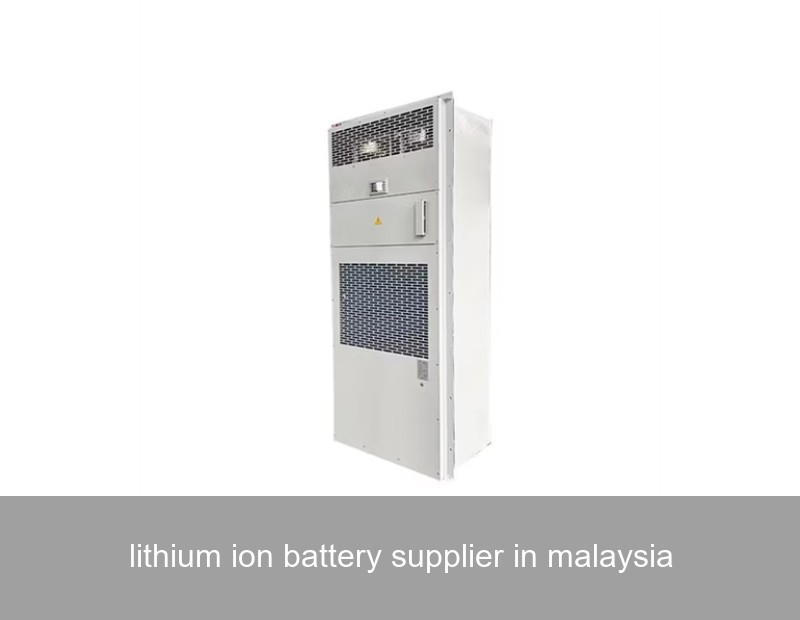
As the global energy transition accelerates, Malaysia is emerging as a strategic hub for advanced manufacturing and clean technology. For businesses and project developers in Europe and the US looking to source high-quality energy storage components, finding a trustworthy lithium ion battery supplier in Malaysia is more than a procurement task—it's a critical step towards energy resilience and sustainability. This guide will help you understand the market dynamics, what to look for in a supplier, and how global expertise can ensure your project's success.
Table of Contents
The Malaysian Advantage in Battery Supply
Malaysia has strategically positioned itself within the global battery value chain, particularly for lithium-ion cells and modules. It's not just about competitive labor costs; it's about established electronics and electrical ecosystems, strong government support for high-tech industries, and a growing pool of engineering talent. For international buyers, this translates to a potential source for reliable, cost-effective battery packs. However, the market is diverse, ranging from large-scale cell manufacturers to system integrators. The key is identifying a supplier whose capabilities align with your specific application—be it for commercial backup power, industrial load management, or integrating with renewable energy sources like solar PV.
Understanding this landscape is crucial. A supplier might excel at producing standard modules but lack the engineering depth to customize a Battery Energy Storage System (BESS) for a specific grid code requirement in Germany or a cold-climate installation in Scandinavia.
What to Look for Beyond Price: The Supplier Checklist
Choosing a lithium ion battery supplier in Malaysia on price alone is a common but risky shortcut. Here are the critical factors that should be on your evaluation list:
- Certifications & Compliance: Do their products carry essential international certifications like UL 9540, IEC 62619, and UN38.3? This is non-negotiable for market access in the US and Europe.
- Technical Support & Engineering: Can they provide detailed technical specifications, cycle life data under different conditions, and thermal management profiles? Do they have application engineers who can speak your language?
- Manufacturing & Quality Control: What is their process for cell grading, Battery Management System (BMS) integration, and quality assurance? A transparent audit trail is vital.
- Supply Chain Stability: How resilient is their supply of raw materials and key components? The last few years have taught us the cost of fragility.
This is where partnering with a global system provider like Highjoule adds immense value. With nearly two decades of experience since 2005, Highjoule doesn't just source components; we design, integrate, and validate complete intelligent storage systems. We work with a vetted network of global manufacturers, including partners in Malaysia, applying our stringent standards to ensure every cell that goes into a Highjoule system meets our performance, safety, and durability benchmarks for commercial, industrial, and residential applications.

Image Source: Unsplash. A robust quality control process is essential for any reputable battery supplier.
Case Study: A Real-World Test of Performance
Let's move from theory to practice. Consider a recent project for a food processing plant in the Netherlands. The goal was to reduce peak demand charges and provide backup power for critical refrigeration units. They sourced battery racks from a capable lithium ion battery supplier in Malaysia. The modules themselves tested well in isolation. However, when integrated into a full-scale, 500 kWh site installation, challenges emerged: the BMS communication protocol had limitations in granular data reporting, and the thermal management system struggled to maintain optimal temperature uniformity during rapid, high-C-rate discharges in the Dutch winter.
This is a classic "integration gap." The plant then engaged Highjoule for a solution. Our team deployed our HPS Series commercial storage system, which is built around a proprietary adaptive BMS and a climate-agnostic thermal design. Within six months of operation, the system achieved a 98.5% round-trip efficiency and successfully shaved over 30% off the facility's peak demand charges. The data logging and remote monitoring capabilities provided clear insights into ROI, something the previous setup lacked. The lesson? The battery cell is a component; the fully engineered system is what delivers reliable financial and operational outcomes.
The Value of a Global Partner in Your Supply Chain
So, should you work with a lithium ion battery supplier in Malaysia directly? For large OEMs with massive in-house engineering teams, perhaps. But for most energy consultants, project developers, and businesses, the lower-risk, higher-value path is to partner with a global system integrator. Highjoule acts as your single point of accountability. We handle:
- System Design & Application Engineering: Tailoring the BESS to your specific energy profile and local grid requirements.
- Technology Agnostic Sourcing: We select the optimal cell chemistry (LFP, NMC, etc.) and module design from our trusted partners worldwide for your use case.
- Full System Integration: Delivering a pre-assembled, tested, and certified solution that includes power conversion, safety systems, and our proprietary energy management software.
- Lifecycle Support: Offering warranties, performance guarantees, and remote monitoring for the lifetime of the system.
Our ResiCore line for homes and GridMax solutions for utility-scale microgrids are prime examples of this integrated approach. They combine high-density battery modules with the intelligence needed to maximize self-consumption of solar, participate in grid services, or ensure uptime.
Future Trends: What's Next for Battery Tech?
The technology is constantly evolving. While sourcing today, it's wise to consider tomorrow's landscape. Solid-state batteries promise higher energy density and safety (U.S. Department of Energy), though commercial scale is still on the horizon. More immediately, we see advancements in cell-to-pack technology, increasing volumetric energy density. Furthermore, regulatory frameworks like the EU's new battery passport initiative will demand unprecedented transparency in the carbon footprint and material provenance of every battery sold. A forward-thinking supplier or partner is already building these traceability and sustainability metrics into their processes.

Image Source: Unsplash. Intelligent energy management software is what transforms battery hardware into a smart grid asset.
Your Next Strategic Move
The journey to a successful energy storage deployment is complex. Whether you are evaluating a specific lithium ion battery supplier in Malaysia or looking for a turnkey solution, the core question remains: How will this investment perform not just on day one, but over its entire 10-15 year lifespan under real-world stresses?
At Highjoule, we believe performance is engineered, not assumed. We invite you to move beyond the spec sheet. What is the most critical performance metric for your next project—is it cycle life at partial depth of discharge, round-trip efficiency under specific climatic conditions, or the flexibility of the software API for grid interaction? Define your true requirement, and let's discuss how an integrated system approach can meet it reliably.
 Inquiry
 Online Chat