


Lithium-Ion Traction Battery: The Unsung Hero Powering Our Electric Future
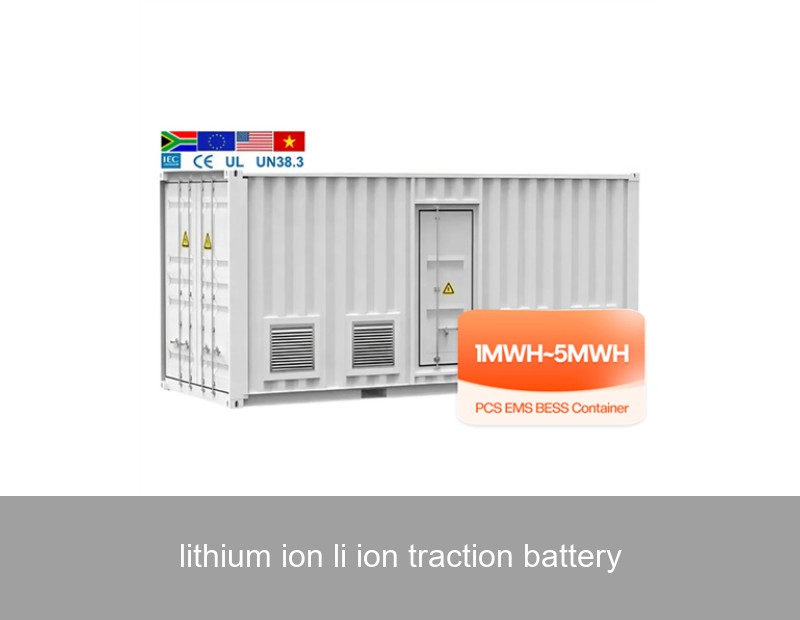
When you hear "lithium-ion battery," you probably think of your smartphone or the latest electric vehicle (EV) model. But there's a powerful, rugged cousin in the battery family that deserves the spotlight: the lithium-ion li ion traction battery. These are the workhorses designed not just for moving people, but for moving industries. They power the forklifts in massive warehouses, the automated guided vehicles (AGVs) in smart factories, the electric buses on city streets, and even the heavy-duty mining equipment. As Europe and the US push aggressively towards decarbonizing industry and transport, understanding this key technology becomes crucial. It's the silent force driving the electrification of everything that moves and lifts in our commercial and industrial world.
What Makes a Lithium-Ion Traction Battery Different?
Think of a standard EV battery as a marathon runner—optimized for long range and steady discharge. A traction battery, on the other hand, is more like a weightlifter. It's built for different demands. The term "traction" literally refers to the power needed to produce motion, and these batteries are engineered to deliver high power outputs consistently, often in demanding, cyclical conditions.
So, what sets them apart?
- Rugged Construction: They are built to withstand vibration, shock, and variable temperatures that would degrade other batteries.
- High C-Rate Capability: They can discharge and charge at high rates (high C-rates) to deliver bursts of power for lifting heavy loads or accelerating heavy equipment.
- Deep Cycling Resilience: Traction batteries are designed for daily deep discharge cycles, often down to 20% or less of their capacity, over a lifespan of thousands of cycles.
- Thermal Management: Robust thermal management systems are integrated to handle the heat generated during high-power operations, which is critical for safety and longevity.

Image Source: Unsplash (Representative image of industrial battery technology)
At Highjoule, our expertise in advanced energy storage directly informs our approach to powering these demanding applications. While we are renowned for our stationary storage solutions, the same core principles of safety, efficiency, and intelligent management apply to the mobile power systems that drive industry forward.
The Power Behind the Shift: Key Performance Metrics
The transition from lead-acid to lithium-ion traction batteries isn't just a trend; it's a quantified upgrade. Let's break down the "why" with some compelling data.
| Performance Metric | Traditional Lead-Acid | Lithium-Ion Traction Battery | Practical Impact |
|---|---|---|---|
| Energy Density (Wh/L) | ~60-80 | ~200-350 | Smaller, lighter packs for the same runtime. |
| Cycle Life (to 80% capacity) | 500-1,200 cycles | 3,000-5,000+ cycles | 3-5x longer lifespan, drastically reducing TCO. |
| Charge Time | 8-10 hours | 1-3 hours (opportunity charging) | Enables 24/7 multi-shift operations. |
| Energy Efficiency | ~75-80% | ~95-98% | Less energy wasted as heat, lower electricity bills. |
| Maintenance | High (watering, equalization) | Virtually None | Eliminates maintenance labor and costs. |
This data paints a clear picture: the operational and economic advantages are substantial. But to truly grasp the impact, we need to look at a real-world application.
A Real-World Case: Electrifying Port Operations in Rotterdam
The Port of Rotterdam, Europe's largest seaport, is a living lab for sustainable logistics. A major challenge was decarbonizing its vast fleet of diesel-powered rubber-tired gantry (RTG) cranes, which are essential for stacking shipping containers. These cranes require immense, instantaneous power for lifting and precise movement.
The Project: A pilot project retrofitted several RTG cranes with a custom lithium-ion li ion traction battery system paired with a downsized diesel generator (creating a hybrid system). The batteries would handle the peak power demands of hoisting, while the generator ran at a steady, efficient rate to recharge the batteries.
The Results (Data from port-issued reports):
- Fuel Savings: Reduced diesel consumption by 65% per crane.
- Emission Reduction: Cut CO2 emissions by approximately 1,000 tons per crane annually.
- Noise Pollution: Dramatically reduced operational noise, improving conditions for workers and nearby communities.
- Performance: Smoother and faster hoisting operations due to the instant torque from electric power.
This case exemplifies the transformative potential. It's not just about replacing a power source; it's about re-engineering operations for peak efficiency and sustainability. You can read more about port electrification strategies from the Port of Rotterdam Authority.

Image Source: Unsplash (Representative image of port operations)
The Critical Role of Battery Management Systems (BMS)
None of this performance is possible without the brain of the operation: the Battery Management System. A high-performance BMS is what separates a safe, long-lasting traction battery from a potential liability. For a lithium-ion li ion traction battery, the BMS does the heavy lifting in the background:
- Cell Monitoring & Balancing: Ensures every cell in the pack charges and discharges evenly, maximizing lifespan.
- Thermal Regulation: Actively manages temperature to keep the battery in its optimal, safe window.
- State-of-Health (SoH) Tracking: Accurately predicts remaining useful life, crucial for fleet management and Total Cost of Ownership (TCO) calculations.
- Safety Protocols: Continuously monitors for faults like overcurrent, short circuits, or thermal runaway, and takes immediate protective action.
This is where Highjoule's core technology shines. Our intelligent BMS, honed over years in stationary storage, provides unparalleled oversight and control. For mobile traction applications, this intelligence translates to predictable performance, minimized downtime, and ultimately, a faster return on your investment.
Beyond Mobility: Traction Batteries for Stationary Power
Here's an intriguing crossover. The robust, cycle-resilient nature of traction batteries makes them excellent candidates for certain stationary storage applications. Think of industrial microgrids or facilities with heavy, cyclical power loads—like a manufacturing plant with large presses or welders.
A lithium-ion li ion traction battery can be deployed to provide "power smoothing," absorbing and releasing energy rapidly to protect the main grid connection and reduce peak demand charges. This concept, sometimes called "second-life" for EV batteries, is evolving into a "first-life" design strategy. Highjoule's platform is inherently adaptable, allowing us to design integrated storage solutions that can handle these high-power, cyclical demands, whether the battery is on wheels or anchored to a foundation.
For a deeper dive into battery technologies and their applications, the U.S. Department of Energy's Vehicle Technologies Office provides excellent resources.
Choosing the Right Partner for Your Energy Transition
Electrifying your mobile equipment or designing a resilient power system for your facility is a significant step. The choice of your battery technology partner is paramount. It's not just about buying cells; it's about acquiring a system—encompassing hardware, software, and deep application knowledge.
Since 2005, Highjoule has been at the forefront of intelligent energy storage. We understand that a battery is a living, dynamic asset. Our solutions, from commercial & industrial storage to microgrid support, are built on the pillars of safety, longevity, and smart control. Whether you're a logistics company looking to convert your warehouse fleet, a municipality electrifying public transport, or an industrial plant seeking to stabilize its energy profile, the principles remain the same. The future is electric, and it requires power systems that are as intelligent and reliable as they are powerful.
What's the most demanding cyclical power challenge in your operation, and have you considered how a robust traction battery system could transform its economics and sustainability profile?
 Inquiry
 Online Chat