


From Cell to Power: Why Your Choice of Supplier of Cell to Pack Matters
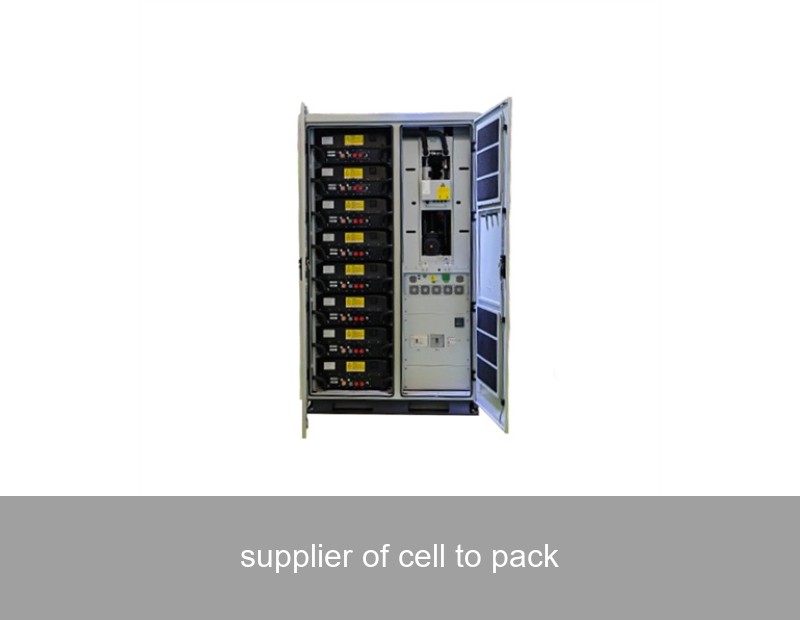
You're planning a solar-plus-storage project for a commercial building or perhaps a resilient community microgrid. You've sourced high-quality lithium-ion cells, the fundamental building blocks of energy storage. But here's a critical question many overlook: what happens between the cell and a fully functional, safe, and reliable battery pack? This gap is where the expertise of a true supplier of cell to pack becomes the linchpin of your project's success. It's the intricate process of integrating hundreds or thousands of individual cells with advanced battery management systems (BMS), thermal controls, safety mechanisms, and robust enclosure design. Choosing a partner who masters this vertical integration isn't just a procurement decision; it's a strategic move that determines the performance, longevity, and total cost of ownership of your entire energy storage system.
Table of Contents
- The Phenomenon: The Hidden Complexity Behind Every Battery Pack
- The Data: How Integration Impacts Performance & Economics
- The Case Study: A European Industrial Park's Transformation
- The Insight: The Hallmarks of a True Cell-to-Pack Partner
- The Highjoule Approach: Engineered Integration for Demanding Applications
- Future-Proofing Your Investment
The Phenomenon: The Hidden Complexity Behind Every Battery Pack
Think of a single lithium-ion cell as a brilliant but temperamental musician. It can perform beautifully under specific conditions. Now, imagine coordinating an entire orchestra of thousands of these musicians to play a symphony perfectly for 10-15 years, 24/7, through heatwaves and freezing temperatures, charging and discharging on demand. That's the challenge of battery pack engineering. A simple assembler might just wire them together, but a dedicated supplier of cell to pack acts as the conductor, composer, and sound engineer all in one.
The process involves far more than physical connections. It encompasses:
- Cell Selection & Grading: Not all cells are created equal, even from the same batch. Precise grading ensures performance uniformity across the pack.
- Advanced Battery Management System (BMS): The "brain" that monitors voltage, temperature, and current of each cell group, ensuring safe operation and preventing thermal runaway.
- Thermal Management: A passive or active system (liquid or air cooling) is crucial. Poor thermal design accelerates degradation and poses safety risks.
- Mechanical & Structural Design: The pack must withstand vibration, potential impacts, and environmental ingress (IP ratings).
- Safety Fortifications: This includes fusing, contactors, and containment strategies to isolate any single cell failure.

Image Source: Unsplash - Representative image of advanced manufacturing in energy technology.
The Data: How Integration Impacts Performance & Economics
Why does this deep integration matter so much? The numbers speak for themselves. According to a comprehensive study by the National Renewable Energy Laboratory (NREL), system-level engineering, including pack integration, can influence the overall Levelized Cost of Storage (LCOS) by up to 30%. Furthermore, a well-integrated pack can achieve a cycle life that is 20-25% longer than a poorly integrated one using the same cells, simply by maintaining optimal operating conditions and balancing.
Consider this comparison:
| Factor | Basic Cell Assembler | Expert Supplier of Cell to Pack |
|---|---|---|
| System Efficiency | Relies on cell specs; losses in wiring & imbalance can reduce round-trip efficiency. | Designs for minimal losses; advanced BMS optimizes efficiency across all states of charge. |
| Degradation Rate | Faster, uneven degradation due to poor thermal management and cell imbalance. | Slower, more predictable degradation through precise control and homogeneous conditions. |
| Safety Assurance | Often limited to basic certifications; reactive safety measures. | Safety-by-design philosophy with multi-layer protection (electrical, thermal, mechanical). |
| Scalability & Service | Can be rigid; troubleshooting is often at the module or pack level. | Modular design allows for flexible scaling and easier diagnostics/maintenance. |
The Case Study: A European Industrial Park's Transformation
Let's look at a real-world application. A large industrial park in Northern Germany faced two challenges: volatile energy costs and a corporate mandate to reduce its carbon footprint. Their solution was a 2.5 MWh battery energy storage system (BESS) to shift solar power for self-consumption and provide grid services.
Initially, they considered a fragmented approach: sourcing cells and using a third-party integrator. However, after a detailed lifecycle analysis, they partnered with Highjoule as their turnkey supplier of cell to pack. Highjoule delivered its H-Ion CTP Series commercial storage system, which features a direct cell-to-pack architecture eliminating redundant module components, increasing energy density by 18%, and simplifying thermal management with an integrated liquid cooling loop.
The Results (18 months post-installation):
- Performance: Achieved a consistent 94.5% round-trip efficiency, exceeding the projected 92%.
- Financial: Reduced peak demand charges by 40% and increased on-site solar consumption from 55% to over 85%.
- Reliability: The system's advanced, cloud-connected BMS provided predictive alerts on cell balance, allowing for proactive maintenance with zero unplanned downtime.
This case underscores that the value of a proficient supplier of cell to pack is measured not just in upfront cost, but in realized, long-term operational savings and reliability.
The Insight: The Hallmarks of a True Cell-to-Pack Partner
So, how do you identify a partner with true depth? Look for these three pillars:
- Vertical Engineering Expertise: They should have in-house mastery over BMS firmware, mechanical design, and thermal engineering, not just assembly manuals.
- Proactive Safety Culture: Their designs should adhere to and exceed international standards like UL 9540 and IEC 62619. Ask about their approach to thermal runaway propagation testing.
- Lifecycle Data Intelligence: The pack should be a data generator. A good partner provides monitoring platforms that translate raw data into actionable insights for performance optimization and longevity.
The Highjoule Approach: Engineered Integration for Demanding Applications
For nearly two decades, Highjoule has built its reputation on being more than just a manufacturer; we are a solution architect and a trusted supplier of cell to pack for the world's most demanding commercial, industrial, and utility-scale projects. Our philosophy is rooted in the principle that the whole must be greater than the sum of its parts.
Our product lines, such as the H-Ion CTP Series for large-scale applications and the NeoHome series for high-end residential installations, embody this. We start with rigorous cell qualification from top-tier suppliers. Our proprietary Sentinel BMS doesn't just monitor—it learns and adapts to usage patterns. Our pack designs prioritize serviceability, with modular components that can be accessed and replaced without decommissioning the entire unit, dramatically reducing lifecycle costs.
As a global provider, we understand the nuanced grid codes and market incentives in regions like Europe and the United States. Whether it's participating in Frequency Containment Reserve (FCR) markets in the EU or managing demand response in California, our systems are engineered with the intelligence and grid-interface capabilities to maximize your revenue streams.

Image Source: Unsplash - Representative image of a grid-scale energy storage installation.
Future-Proofing Your Investment
The energy landscape is evolving at a breakneck pace. Today's battery pack might need to serve different functions tomorrow—from solar self-consumption to participating in virtual power plants. A flexible, intelligently integrated pack from a forward-thinking supplier of cell to pack is your best hedge against technological obsolescence. It's an asset designed to adapt.
When you evaluate partners, ask them not just about today's specifications, but about their roadmap for software updates, compatibility with evolving grid standards, and their approach to end-of-life repurposing or recycling. The depth of their answers will reveal their true capability as a long-term partner.
Given the critical role storage now plays in both economic and energy resilience strategies, can you afford to treat the "cell to pack" journey as anything less than the core of your project's value proposition?
 Inquiry
 Online Chat