


The Lithium Ion Solar Charge Controller: Your Smart Energy Hub Explained
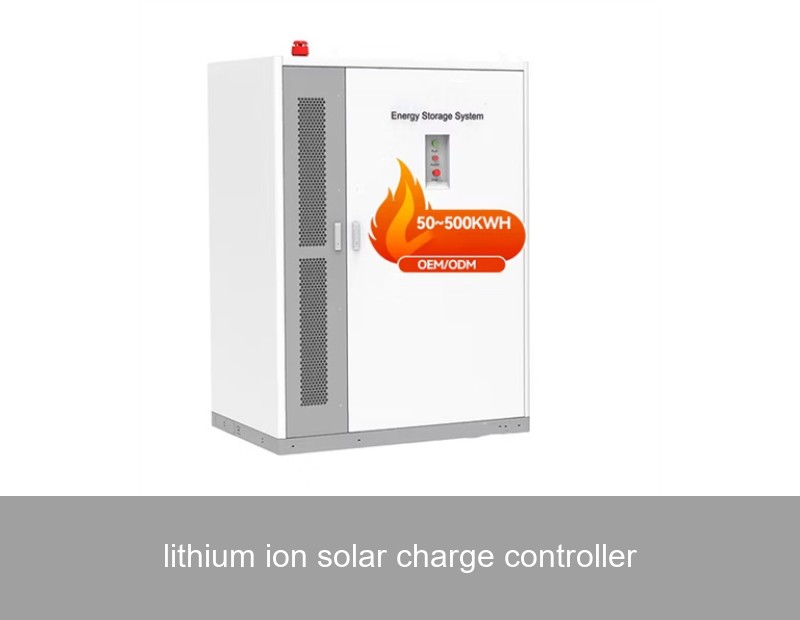
If you're exploring solar power for your home or business, you've likely encountered the term "battery storage." But the true brain behind a safe, efficient, and long-lasting solar-plus-storage system is a more specific component: the lithium ion solar charge controller. Unlike older technologies, this modern device is specifically engineered to manage the unique charging characteristics of lithium-ion batteries—now the dominant choice for home and commercial energy storage. It's the critical link that ensures your solar panels don't just generate power, but intelligently store and manage it for when you need it most. At Highjoule, with nearly two decades of expertise in advanced energy storage, we design our integrated systems around this intelligent core, ensuring maximum return on your renewable investment.
Table of Contents
What is a Lithium Ion Solar Charge Controller?
In simple terms, a solar charge controller is a regulator. It sits between your solar panels and your battery bank. Its primary job is to prevent overcharging, which can damage batteries and even create safety hazards. However, a generic controller won't suffice for today's technology. A lithium ion solar charge controller is a sophisticated electronic device programmed with the precise charging algorithm that lithium-ion batteries require.
Think of it this way: lithium-ion batteries are like elite athletes—they perform exceptionally well but require a specific, data-driven regimen to maintain peak health and longevity. A standard controller might provide a "one-size-fits-all" meal plan, while a dedicated lithium-ion controller acts as a personal trainer and nutritionist, constantly monitoring and adjusting the flow of energy (voltage and current) to optimize every charge cycle.

Image Source: Unsplash (Representative image of energy system components)
Why is it Critical for Modern Solar Systems?
The shift to lithium-ion batteries (like LiFePO4) from traditional lead-acid has been a game-changer. They offer higher energy density, longer lifespans (often 10+ years), deeper discharge capability, and greater efficiency. But these benefits are fully realized only with proper management. Here’s where the specialized controller proves its worth:
- Precision Charging: It follows exact voltage set points (bulk, absorption, float) tailored for lithium chemistry, avoiding the stress caused by incorrect voltage.
- Battery Life Extension: By preventing overcharge and deep discharge, it directly extends the battery's operational life, protecting your investment.
- Safety Assurance: It integrates with the Battery Management System (BMS), providing a critical layer of protection against over-temperature, over-current, and short circuits.
- System Efficiency: Advanced Maximum Power Point Tracking (MPPT) technology in controllers like those used in Highjoule systems can increase energy harvest from your solar panels by up to 30% compared to older PWM types, delivering more usable power to your batteries and home.
Key Features of an Advanced Lithium Ion Controller
When evaluating a system, look for these non-negotiable features that define a high-performance controller:
| Feature | Benefit | Highjoule's Implementation |
|---|---|---|
| Advanced MPPT Algorithm | Maximizes energy harvest from solar panels under all weather conditions. | Our proprietary AdaptiveSun™ MPPT dynamically adjusts to changing light, ensuring optimal yield. |
| Seamless BMS Integration | Enables direct communication with the battery for state-of-charge monitoring and protective control. | Our controllers are pre-programmed for seamless plug-and-play integration with Highjoule lithium battery racks, simplifying installation and enhancing safety. |
| Multi-Stage Charging Profile | Applies the correct voltage/current at each stage (CC, CV, float) for lithium chemistry. | Profiles are fine-tuned for our LiFePO4 cells, balancing fast charging with long-term cell health. |
| User-Friendly Monitoring & Control | Provides real-time data and remote control via app or web portal. | The Highjoule Energy Hub platform offers intuitive insights into charge status, solar input, and home consumption. |
Real-World Impact: A Case Study from Bavaria
Let's move beyond theory to see the tangible benefits. Consider a medium-sized dairy farm in Bavaria, Germany. Facing high energy costs and a goal for energy independence, they installed a 50kW rooftop solar array. The initial proposal included a standard inverter with a basic charge controller for a lead-acid battery bank.
After consulting with Highjoule's European team, the farm opted for an integrated system featuring our HPS-50 commercial power station, which houses a high-capacity LiFePO4 battery and, crucially, a dedicated, high-voltage lithium ion solar charge controller as part of its intelligent power management system.
- Energy Self-Sufficiency: Increased from an estimated 65% with the generic system to 92%, thanks to the more efficient harvesting and deeper, usable storage.
- Battery Performance: The system maintained 98% of its original capacity, with the controller ensuring no damaging charge cycles.
- Financial ROI: The combination of higher efficiency and longer projected battery life shortened the payback period by an estimated 2 years. The farm now saves over €8,000 annually on energy bills and earns revenue through Germany's grid feed-in schemes for surplus power.
This case highlights that the choice of a purpose-built lithium ion solar charge controller isn't just a technical detail—it's a central driver of financial and operational success. For more on the growth of solar storage, see this report from the International Energy Agency (IEA).
Choosing the Right System for Your Needs
You don't typically buy a charge controller off the shelf. You choose an integrated storage system where this intelligence is built-in. Here’s what to consider:
- For Residential Homes (EU & US): Look for all-in-one systems like the Highjoule HomePower series. These sleek units combine the inverter, lithium ion charge controller, and battery in one, with built-in grid and generator support. They are designed for simplicity, safety, and maximum solar self-consumption.
- For Commercial & Industrial Sites: Scalability and robustness are key. Highjoule's Modular Energy Platform (MEP) allows businesses to stack battery and controller power. The system's master controller orchestrates multiple charge controllers and battery strings, managing complex loads and peak shaving strategies effectively.
- For Off-Grid & Microgrids: Reliability is paramount. Systems require controllers with high input voltage ranges and the ability to integrate with backup generators. Highjoule's controllers in microgrid configurations prioritize critical loads and ensure stable frequency, even in remote locations.

Image Source: Unsplash (Representative image of a home solar and battery system)
Future Trends and Smart Integration
The role of the charge controller is evolving from a simple regulator to the energy router of a smart home or business. With the rise of electric vehicles (EVs) and time-of-use electricity rates, future systems will need to make split-second decisions. Should solar power charge the battery, feed the home, or top up the EV? The next generation of controllers, like those in Highjoule's roadmap, will use AI-driven forecasts (weather, consumption patterns, utility prices) to autonomously optimize for cost and carbon footprint. This aligns with grid-supportive services like virtual power plants (VPPs), where thousands of distributed systems can act as one, a concept gaining traction in both the US and Europe. Learn about grid flexibility from the U.S. Department of Energy.
So, as you plan your journey to energy independence, ask yourself this: Is your solar storage system built around intelligent, chemistry-specific management, or is it relying on a generic approach that could limit your savings and system life? What specific energy goal—total backup, bill reduction, or carbon neutrality—is most important for your property to achieve in the next year?
 Inquiry
 Online Chat