


Which Lithium Battery is Best in Nigeria? Powering Progress with the Right Technology
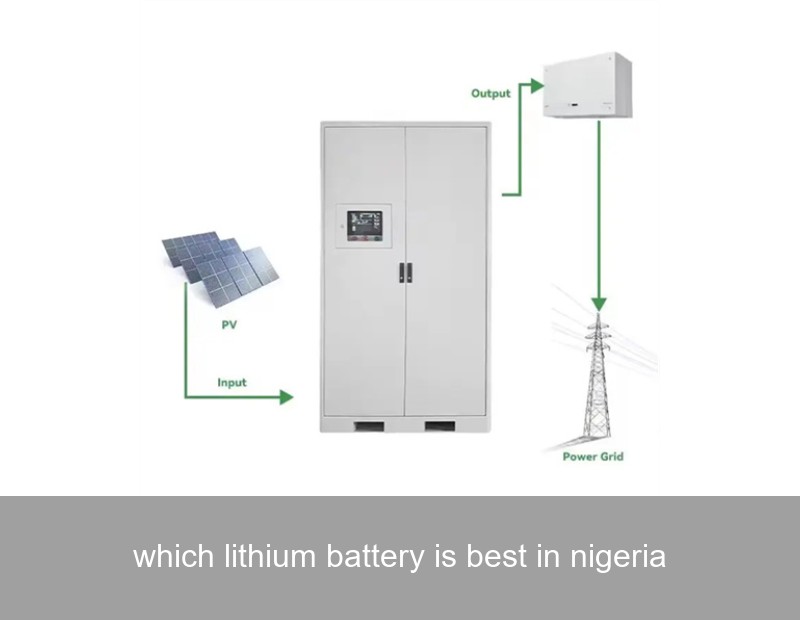
Nigeria's energy landscape is at a turning point. With a growing population and increasing industrialization, the demand for reliable, clean power has never been greater. Frequent grid outages and the high cost of diesel generators are pushing homes and businesses to seek sustainable alternatives. This is where lithium-ion battery storage systems come in, offering a beacon of hope. But with various technologies available, a critical question arises for anyone looking to invest: which lithium battery is best in Nigeria? The answer isn't one-size-fits-all; it depends on your specific needs, climate, and budget. Let's explore the key technologies and how global leaders like Highjoule are tailoring solutions for resilience in Nigeria and beyond.
Table of Contents
- The Nigerian Energy Challenge: More Than Just a Power Outage
- Lithium Battery Chemistries: The Contenders for Best Performance
- Key Decision Factors: What Makes a Battery "Best" for Nigeria?
- Case Study: Solar + Storage Transforms a Lagos Business
- Highjoule's Tailored Solutions for Reliability
- Looking Ahead: Your Power, Your Choice
The Nigerian Energy Challenge: More Than Just a Power Outage
For many in Nigeria, "power cut" is a daily reality. The economic impact is staggering. A World Bank report estimates that the country's power sector problems cost the economy a massive $28 billion annually. This isn't just an inconvenience; it's a direct barrier to productivity, healthcare, education, and business growth. Traditionally, diesel and petrol generators have been the default backup, but they come with crippling fuel costs, noise, pollution, and maintenance headaches.
This pain point has accelerated the adoption of solar photovoltaic (PV) systems. However, solar alone has a limitation: the sun doesn't shine at night, and energy is needed most when it's not being produced. This mismatch creates the perfect use case for energy storage systems (ESS). By pairing solar panels with a high-quality lithium battery, you can store excess solar energy generated during the day and use it in the evening or during grid outages, creating a true 24/7 power solution.

Image Source: Unsplash (Representative image of solar installation)
Lithium Battery Chemistries: The Contenders for Best Performance
Not all lithium batteries are created equal. The "best" type depends heavily on the application. For the Nigerian context, we primarily compare two leading chemistries.
| Chemistry | Key Advantages | Considerations | Ideal Use Case in Nigeria |
|---|---|---|---|
| Lithium Iron Phosphate (LFP) | Exceptional safety, long cycle life (3,000-6,000+ cycles), high thermal stability, good performance in heat, cobalt-free. | Slightly lower energy density (needs more space for same capacity), can be sensitive to cold (less relevant in Nigeria). | #1 Recommended. Perfect for daily cycling in solar+storage systems for homes, businesses, and microgrids. Its safety and longevity in warm climates make it the top contender. |
| Nickel Manganese Cobalt (NMC) | High energy density (compact size), good performance across temperatures. | Generally shorter lifespan than LFP, higher sensitivity to high temperatures, contains cobalt (supply chain/ethical considerations). | Useful where space is extremely limited and daily deep cycling is less frequent. May require more active thermal management in Nigeria's heat. |
For most Nigerian applications—where daily charging from solar and discharging during outages is the norm—LFP chemistry often emerges as the best lithium battery for Nigeria. Its inherent safety (reduced risk of thermal runaway), incredible cycle life, and resilience in higher ambient temperatures directly address local needs for a durable, low-maintenance, and safe power solution.
Key Decision Factors: What Makes a Battery "Best" for Nigeria?
Beyond chemistry, several practical factors determine the real-world performance and value of a battery system in Nigeria.
- Cycle Life & Warranty: How many full charge/discharge cycles can it handle? A battery with 6,000 cycles will last over 16 years if cycled once daily, far outlasting one rated for 2,000 cycles. Look for a strong warranty that backs this claim.
- Thermal Management: Nigeria is hot. Batteries degrade faster in high heat. A quality system will have an integrated Battery Management System (BMS) and active cooling (like fans or liquid cooling) to keep cells within their ideal temperature range, ensuring longevity.
- Depth of Discharge (DoD): Can you safely use 90% or 100% of the battery's capacity without damaging it? A higher usable DoD means more value from your investment.
- Scalability & Integration: Can you easily add more battery modules later if your needs grow? Is the system designed to seamlessly integrate with inverters and solar charge controllers?
This is where choosing a provider with proven global expertise matters. Companies like Highjoule engineer their systems with these exact factors in mind. For instance, Highjoule's H-Series commercial storage systems utilize LFP chemistry with advanced liquid cooling, ensuring optimal performance even in demanding environments, and are built with modularity for easy future expansion.
Case Study: Solar + Storage Transforms a Lagos Business
Let's look at a real-world example from Lagos. A medium-sized textile factory was spending over ₦4.5 million monthly on diesel to run generators for 12-14 hours daily. Production was frequently disrupted by fuel shortages and generator maintenance. They decided to invest in a 250 kW solar PV array coupled with a 500 kWh lithium-ion (LFP) battery storage system.
- Diesel Costs Slashed: Monthly fuel expenditure dropped by over 85%.
- Uninterrupted Production: The system provides seamless backup during grid outages, eliminating downtime.
- ROI: The project achieved a full return on investment in under 4 years, based on fuel savings alone.
- Carbon Footprint: Reduced CO2 emissions by an estimated 180 tonnes annually.
This case highlights that the "best" battery is part of a holistic, well-engineered system. The factory chose LFP for its durability under daily, heavy cycling. The system's intelligent energy management software prioritizes solar usage, charges the battery when grid power is available (if cheap), and dispatches power during peak hours or outages, maximizing economic benefit. You can read more about the global impact of such systems in reports by the International Renewable Energy Agency (IRENA).

Image Source: Unsplash (Representative image of industrial battery system maintenance)
Highjoule's Tailored Solutions for Reliability
With nearly two decades of experience since 2005, Highjoule understands that providing the best energy storage solution means more than just shipping hardware. It's about delivering reliability, intelligence, and peace of mind. For markets like Nigeria, with its unique challenges, Highjoule offers a range of products designed for performance.
For residential users, the Highjoule HomePower series offers scalable LFP battery cabinets with integrated safety systems and user-friendly monitoring apps, allowing homeowners to take control of their energy. For commercial and industrial clients, the Highjoule PowerStack and containerized MicroGrid Solutions provide utility-scale storage that can manage demand charges, provide black-start capability, and integrate renewable sources seamlessly.
What sets a premium provider apart is the software intelligence. Highjoule's EnergyOS™ platform allows system owners and operators to monitor performance in real-time, schedule charge/discharge based on tariff rates, and predict maintenance needs. This level of smart management ensures you extract the maximum lifetime value from your lithium battery investment, making it truly the "best" choice for your specific operational and financial goals.
Looking Ahead: Your Power, Your Choice
The journey to energy independence in Nigeria is accelerating. Choosing the right lithium battery technology—primarily robust LFP systems for most—is a foundational step. But it must be part of a larger plan: a correctly sized solar array, compatible inverters, professional installation, and intelligent energy management.
As you consider your options, ask yourself: Is your current power solution a cost center or a strategic asset? Could the capital spent on fuel and generator upkeep be better invested in a system that pays for itself and then generates savings for decades? The data and case studies clearly point towards a smarter path.
What will be the first step you take to secure reliable, clean power for your home or business?
 Inquiry
 Online Chat