


Powering Progress: The Rise of Lithium Solar Batteries in Zimbabwe
Imagine a hospital where critical surgeries are performed by candlelight, or a business where productivity halts as the sun sets. For years, this was the stark reality for many in Zimbabwe, grappling with severe and persistent power shortages. Yet, a powerful solution is illuminating the path forward: lithium solar batteries. This combination of solar photovoltaic (PV) panels and advanced lithium-ion battery storage is transforming energy access, offering a beacon of reliability and sustainability. For nations like Zimbabwe, blessed with abundant sunshine but challenged by grid instability, this technology isn't just an alternative; it's a revolution in self-sufficiency. Companies like Highjoule, a global leader in intelligent energy storage since 2005, are at the forefront, providing the robust systems that make this independence possible.
Table of Contents
- The Power Crisis: A National Phenomenon
- The Data Dive: Why Lithium is the Game-Changer
- Case Study: A Zimbabwean Agro-Processor's Success Story
- Expert Insights: Designing Systems for Resilience
- Highjoule's Role in Empowering Energy Independence
- The Future Horizon for Solar Storage in Zimbabwe
The Power Crisis: A National Phenomenon
Zimbabwe's energy landscape has been defined by a significant supply-demand gap. The national utility has often implemented load-shedding schedules lasting over 18 hours a day, crippling economic activity and disrupting daily life. Reliance on diesel generators became a costly and polluting stopgap. This phenomenon created a powerful market pull for decentralized, reliable power. Solar panels offered a partial solution, but without storage, their energy was only available during daylight hours, leaving businesses and homes in the dark when demand peaked in the evenings. The missing piece was a way to capture the sun's abundance for use at any time.
The Data Dive: Why Lithium is the Game-Changer
Enter lithium-ion battery technology. Compared to traditional lead-acid batteries, lithium solar batteries offer decisive advantages that align perfectly with the needs of a market like Zimbabwe:
- Higher Depth of Discharge (DoD): They can be safely drained to 80-90% of their capacity without significant damage, whereas lead-acid often must not exceed 50%. This means you get almost twice the usable energy from a similarly rated battery.
- Longer Lifespan: Quality lithium batteries can deliver 3,000 to 10,000 cycles, lasting 10-15 years, far outperforming the 3-5 year typical lifespan of lead-acid under heavy cycling.
- Faster Charging: They can absorb solar energy more quickly, making efficient use of limited peak sun hours.
- Lower Maintenance: They are sealed and require no watering or regular equalization charges.
While the upfront cost is higher, the Levelized Cost of Storage (LCOS)—the total cost of owning and operating the storage system per unit of energy delivered—is often lower for lithium over its lifetime. This makes it a smarter economic investment for serious, long-term energy solutions. According to a report by the International Renewable Energy Agency (IRENA), global lithium-ion battery pack prices have fallen by over 90% since 2010, making the technology increasingly accessible.
Case Study: A Zimbabwean Agro-Processor's Success Story
Consider the real-world example of "Harare Food Preservers," a medium-sized company specializing in drying and packaging fruits. With a 100kW processing facility, their operations were hamstrung by daily power cuts. Diesel costs were consuming over 30% of their operational budget.
In 2023, they installed a 120kW solar PV array coupled with a 240kWh lithium-ion battery storage system. The results were transformative:
| Metric | Before Installation | After Installation |
|---|---|---|
| Grid Dependency | >90% | <20% (Grid as backup only) |
| Monthly Energy Cost | ~$4,200 (Grid + Diesel) | ~$900 (Grid maintenance fee) |
| Daily Operating Hours | 6-8 hours (weather-dependent) | 24 hours (full night shifts enabled) |
| Payback Period | N/A | Estimated 4.2 years |
| CO2 Emissions | ~48 tonnes/year | ~6 tonnes/year |
This system allows them to run primarily on solar during the day, charge the batteries, and then power their cold storage and packaging lines through the night entirely from the stored energy. The project not only secured their operations but also improved product quality (consistent refrigeration) and allowed for business expansion. It's a tangible model of how lithium solar batteries directly fuel economic resilience.

Image: Industrial-scale solar installations, like this one, are key to powering businesses independently. When paired with lithium storage, they become a 24/7 power plant.
Expert Insights: Designing Systems for Resilience
Deploying a successful solar-plus-storage system in any environment requires careful engineering, but in regions with challenging conditions, the expertise is critical. Here’s what professionals prioritize:
- Climate Adaptation: Lithium batteries require thermal management. High-quality systems incorporate active cooling and heating to maintain optimal operating temperatures, crucial for both performance and longevity in Zimbabwe's variable climate.
- Cybersecurity & Remote Management: For commercial and industrial applications, the ability to monitor and manage the system remotely is non-negotiable. This ensures optimal performance and allows for proactive maintenance.
- Scalability: Energy needs grow. A modular system design allows businesses to start with what they need and expand battery capacity as their operations grow, protecting the initial investment.
As noted by the National Renewable Energy Laboratory (NREL), system design and integration are as important as the component quality in determining the long-term success and value of a storage project.
Highjoule's Role in Empowering Energy Independence
This is where global expertise meets local need. Highjoule's advanced energy storage systems are engineered for precisely these challenges. Our H-Series Commercial & Industrial (C&I) solutions are built around high-cyclelife, liquid-cooled lithium-ion battery modules. They are designed for maximum durability and efficiency, featuring:
- Integrated Energy Management System (i-EMS): An AI-driven brain that intelligently dispatches power based on solar production, consumption patterns, and tariff schedules, maximizing self-consumption and ROI.
- Robust Thermal Management: The liquid cooling system ensures consistent performance from -30°C to 50°C, making the systems ideal for Zimbabwe's climate.
- Grid-Forming Capabilities: In areas of weak or no grid, Highjoule systems can create a stable "microgrid," providing clean, grid-quality power independently to facilities like hospitals, factories, or farms.
For the residential and small business market, our EcoHome PowerWall offers a scalable, user-friendly solution. Managed via a simple smartphone app, it allows homeowners to seamlessly switch between solar, battery, and grid power, ensuring lights stay on and businesses keep running. By providing these smart, efficient, and sustainable power solutions, Highjoule supports partners and installers in Zimbabwe to deliver turnkey systems that work reliably for the long term.

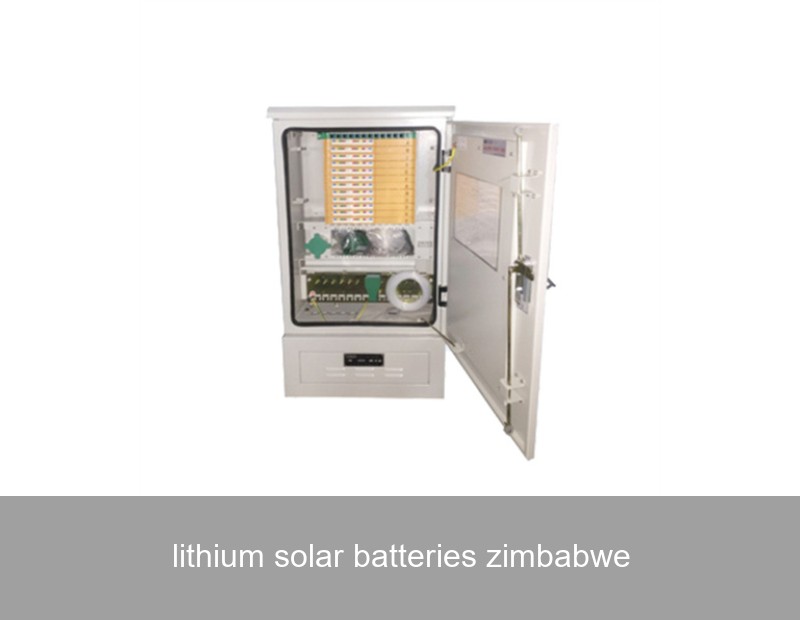
Image: A modern, rack-mounted lithium-ion battery system. Advanced systems feature integrated power conversion and intelligent controls for seamless operation.
The Future Horizon for Solar Storage in Zimbabwe
The trajectory is clear. As technology costs continue to decline and local financing mechanisms evolve, the adoption of lithium solar batteries will accelerate. We are moving beyond mere backup power to sophisticated energy ecosystems. Imagine community microgrids powered by solar and storage revitalizing rural areas, or entire industrial parks operating at near-zero grid dependency, boosting national competitiveness.
The question for business owners, community leaders, and policymakers is no longer if this transition will happen, but how strategically they can participate in it. What does your first step toward energy independence look like?
 Inquiry
 Online Chat