


Unlocking Energy Independence: The Power of the Lithium Solar BESS Battery
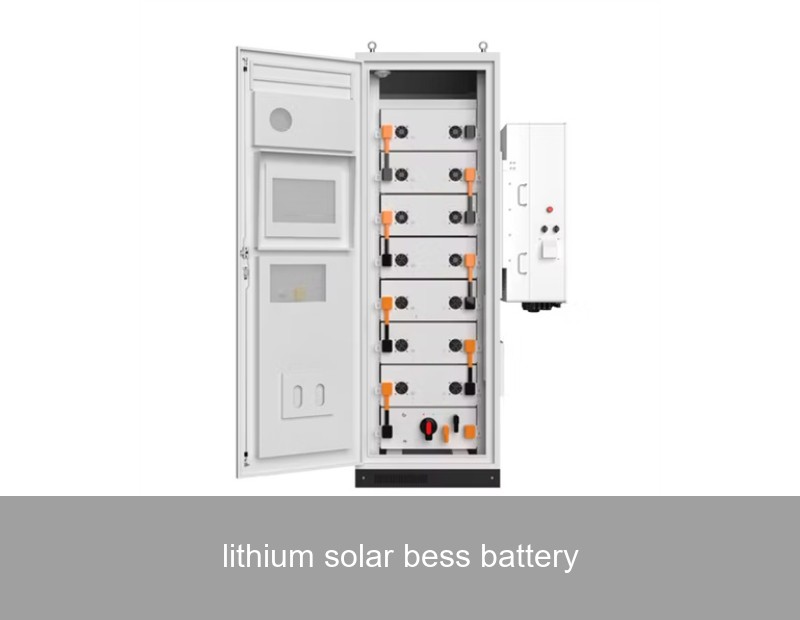
Have you ever watched your solar panels produce a surplus of clean energy on a sunny afternoon, only to draw power from the grid after sunset? This daily cycle highlights a fundamental challenge in our renewable energy transition: the mismatch between generation and consumption. The solution is becoming increasingly sophisticated and accessible: the lithium solar BESS battery. This integrated system—combining lithium-ion battery technology with solar photovoltaic (PV) arrays and a Battery Energy Storage System (BESS)—is revolutionizing how homes and businesses consume electricity. It's not just about storing sunshine; it's about creating a resilient, efficient, and self-sufficient energy hub. Companies like Highjoule, a global leader in advanced energy storage since 2005, are at the forefront, designing intelligent systems that make this energy autonomy a practical reality for commercial, industrial, and residential applications.
Table of Contents
- The Challenge: Solar Intermittency and Rising Costs
- The Solution: Anatomy of a Modern Lithium Solar BESS
- The Data: Why Lithium-Ion Dominates
- Case Study: A California Winery's Success Story
- Highjoule's Intelligent Approach to Energy Storage
- The Future is Integrated and Intelligent
The Challenge: Solar Intermittency and Rising Costs
The phenomenon is clear. A typical residential solar installation peaks in output around midday, but household energy demand often spikes in the early morning and evening. Without storage, excess solar energy is exported to the grid, often at a low feed-in tariff, while expensive grid power is purchased back later. This "duck curve" challenge, famously identified in California, is a growing concern for grid operators worldwide. Furthermore, increasing grid instability and volatile electricity prices, acutely felt across Europe and the US, expose consumers to financial and operational risks. The question shifts from simply generating green energy to managing it effectively.
The Solution: Anatomy of a Modern Lithium Solar BESS
So, what exactly is a lithium solar BESS battery system? Think of it as the brain and bank of your personal energy ecosystem. It's a seamless integration of three core components:
- Solar PV Array: Captures sunlight and converts it to direct current (DC) electricity.
- Lithium-Ion Battery Bank: The storage core. It stores excess DC electricity for later use. Its high energy density, long cycle life, and decreasing cost make it the industry standard.
- Battery Energy Storage System (BESS): This is the intelligent controller. It includes power conversion systems (inverters/converters) that manage the flow of electricity between DC (battery, solar) and AC (your home, grid), along with sophisticated software for monitoring, control, and safety.
This integrated setup allows you to maximize self-consumption of your solar energy, provide backup power during outages, and even participate in grid services in some regions.

Image Source: Unsplash - A modern home energy storage system using lithium-ion technology.
The Data: Why Lithium-Ion Dominates
The choice of lithium-ion chemistry isn't accidental. The data speaks for itself. According to the U.S. Department of Energy, the price of lithium-ion battery packs has fallen by nearly 90% since 2010. This cost plunge is a primary driver for adoption. Furthermore, modern lithium iron phosphate (LFP) batteries, a subtype favored for stationary storage, offer exceptional safety and longevity, often exceeding 6,000 cycles while maintaining 80% of their original capacity. Compare this to older lead-acid batteries which might offer only 1,000-1,500 cycles, and the economic and practical advantage is overwhelming.
| Battery Technology | Typical Cycle Life (to 80% capacity) | Energy Density | Key Advantage for Solar BESS |
|---|---|---|---|
| Lithium Iron Phosphate (LFP) | 6,000+ cycles | Moderate-High | Safety, Longevity, Cost-Effectiveness |
| NMC Lithium-Ion | 3,000 - 5,000 cycles | Very High | High Energy Density |
| Lead-Acid (Advanced) | 1,000 - 1,500 cycles | Low | Low Upfront Cost |
Case Study: A California Winery's Success Story
Let's move from theory to a tangible example. Consider a mid-sized winery in Sonoma County, California. Their challenges were multifaceted: high energy costs for refrigeration and irrigation, a desire to operate sustainably, and vulnerability to Public Safety Power Shutoffs (PSPS) during wildfire season, which could ruin an entire vintage.
The Solution: They installed a 500 kW solar PV array coupled with a 1 MWh lithium solar BESS battery system. The system was designed not just for backup, but for intelligent energy arbitrage—storing solar energy during the day and discharging it during peak evening rate periods.
The Results (Data from first year of operation):
- Energy Cost Reduction: 72% decrease in monthly electricity bills.
- Self-Consumption: Increased on-site solar usage from 40% to over 90%.
- Resilience: Provided 10+ hours of critical backup power for refrigeration during two separate PSPS events, preventing massive product loss.
- ROI: Projected payback period of under 7 years, factoring in state incentives.
This case, echoed by many in agriculture and industry, demonstrates the triple win: economic savings, sustainability gains, and operational resilience. The National Renewable Energy Laboratory (NREL) has extensively documented the grid benefits of such distributed storage.
Highjoule's Intelligent Approach to Energy Storage
As a pioneer in the field, Highjoule understands that a lithium solar BESS battery is more than just hardware. Our systems are built on a foundation of intelligence and reliability. For the residential market, our HomePower Stack series features modular LFP battery cabinets and an AI-driven inverter that learns energy usage patterns to optimize self-consumption and prepare for outages automatically.
For commercial and industrial clients, our GridMax Pro platform is a containerized or skid-mounted solution. It goes beyond simple backup, offering advanced features like peak shaving, demand charge management, and the capability to participate in virtual power plants (VPPs). Our proprietary energy management system (EMS) acts as the conductor, making real-time decisions based on weather forecasts, tariff schedules, and facility load to deliver the maximum financial and operational return.
Highjoule's global experience since 2005 means our systems are engineered for diverse climates and grid standards, from snowy Scandinavia to sunny Southern California, ensuring safety, durability, and seamless integration.

Image Source: Unsplash - A large-scale commercial battery storage installation.
Key Considerations When Choosing a System
- Capacity & Power: Do you need more energy (kWh) for longer backup, or more instantaneous power (kW) to start large motors?
- Chemistry: LFP is generally the recommended choice for home storage due to its safety and cycle life.
- Integration: Ensure the BESS can communicate flawlessly with your existing or new solar inverters.
- Software & Services: The intelligence of the EMS and the quality of support are what transform a battery into a true energy asset.
The Future is Integrated and Intelligent
The trajectory is clear. The lithium solar BESS battery is evolving from an optional add-on to the central nervous system of a modern, decarbonized energy setup. With the rise of electric vehicles, smart appliances, and dynamic electricity pricing, these systems will become the essential platform for home and business energy management. The next frontier involves even deeper integration—where your EV battery, home storage, and solar generation are orchestrated as a single, grid-responsive resource.
As you contemplate your own energy resilience and independence, what single energy challenge—be it unpredictable bills, grid outages, or a commitment to sustainability—would you want a lithium solar BESS battery to solve for you first?
 Inquiry
 Online Chat