


Unlock Energy Independence: Your Guide to the Modern Lithium Battery Bank for Solar
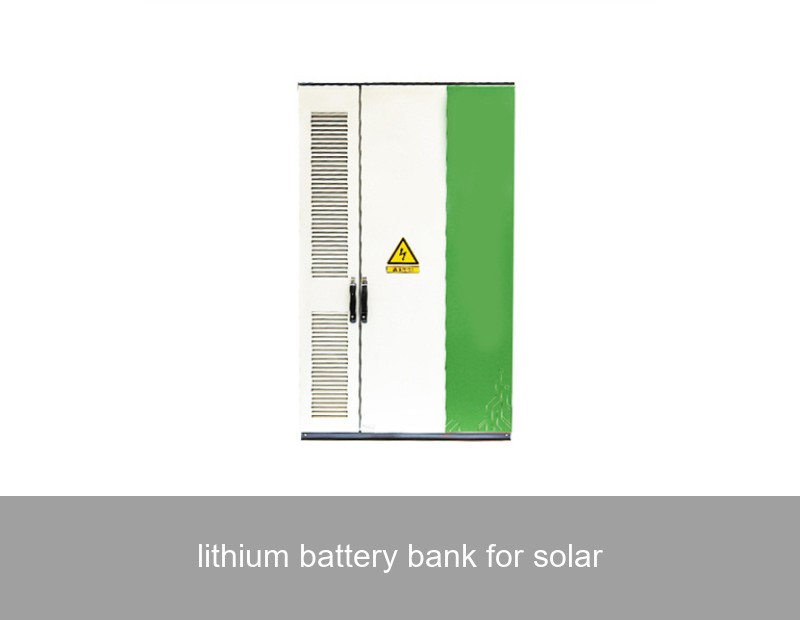
the sun is shining, your solar panels are humming, and you're generating more clean electricity than your home or business can use. Now, fast forward to a cloudy afternoon or a quiet evening. Where does that surplus power go without a storage solution? This is the fundamental challenge of solar energy, and the answer has become increasingly sophisticated: the lithium battery bank for solar. More than just a box of batteries, it's the intelligent heart of a modern energy system, allowing you to capture, store, and manage the sun's bounty on your own terms. For nearly two decades, companies like Highjoule have been at the forefront, refining this technology to deliver smart, efficient, and sustainable power solutions for homes, businesses, and communities worldwide.
Why Lithium Dominates the Solar Storage Scene
Gone are the days when bulky, maintenance-heavy lead-acid batteries were the only option. The shift to lithium-ion technology, particularly lithium iron phosphate (LFP), has revolutionized solar storage. But what's behind this dominance?
The phenomenon is clear: homeowners and businesses want maximum return from their solar investment, which means using more of the power they generate themselves. The data speaks volumes. According to the U.S. Department of Energy, pairing solar with storage can increase self-consumption of solar electricity by up to 40-80%, dramatically reducing reliance on the grid. Lithium batteries are the engine of this self-consumption boom.
Let's break down their advantages with a simple comparison:
| Feature | Traditional Lead-Acid | Modern Lithium (LFP) |
|---|---|---|
| Depth of Discharge (DoD) | ~50% (Use only half its capacity) | >90% (Use almost all capacity) |
| Cycle Life | 1,000 - 1,500 cycles | 6,000+ cycles |
| Efficiency | ~80% | >95% |
| Space & Weight | Bulky, heavy | Compact, modular |
| Maintenance | Regular checkups needed | Essentially maintenance-free |
This isn't just about specs on paper. That high cycle life and deep discharge capability mean your lithium battery bank for solar will last decades, not just years, providing a much better total cost of ownership. Highjoule's systems are engineered around these robust LFP chemistry cells, prioritizing safety, longevity, and performance in every climate, from sunny California to snowy Scandinavia.

Image Source: Unsplash - A modern, wall-mounted residential energy storage system.
Key Components of a Modern Solar Lithium Battery System
Think of your solar-plus-storage setup as a team. The panels collect the energy, but the battery system is the star quarterback, calling the plays. Here’s what makes up that all-star team:
- The Battery Modules: These are the actual energy storage units, using LFP cells. They are modular, meaning you can start with a smaller capacity and easily expand later as your needs grow. Highjoule's H-Series battery banks are designed with this scalability in mind, allowing for seamless expansion from a few kilowatt-hours to a massive megawatt-scale system.
- The Battery Management System (BMS): This is the brain. A sophisticated BMS, like the one in every Highjoule unit, constantly monitors cell voltage, temperature, and state of charge. It ensures balanced charging, prevents over-discharge, and guarantees safe operation, which is the non-negotiable foundation of any quality system.
- The Hybrid Inverter or System Controller: This is the translator and manager. It converts the DC electricity from your panels and batteries into AC power for your home. More importantly, a smart inverter decides in real-time: should solar power go to your appliances, to charge the battery, or back to the grid? Highjoule's integrated Energy Management System (EMS) takes this further, learning your usage patterns and optimizing for self-consumption or cost savings based on variable utility rates.
Where Highjoule Adds the "Smart" to Storage
Beyond these core components, the true value of a modern system lies in its intelligence. Highjoule’s platform provides remote monitoring and control via a user-friendly app. Imagine getting an alert if your system performance dips, or manually scheduling your battery to reserve power for an expected outage. This level of control transforms a passive battery bank into an active energy asset.
Real-World Case Study: Powering Resilience for a German Dairy Farm
Let's move from theory to practice. In Northern Germany, a medium-sized dairy farm faced a dual challenge: high, fluctuating energy costs and the critical need for an uninterrupted power supply for milking and cooling systems. A power outage would be catastrophic.
The Solution: The farm installed a 120 kW solar array paired with a Highjoule C&I (Commercial & Industrial) lithium battery bank with a capacity of 240 kWh. The system was designed for two primary functions: peak shaving (using stored solar power during expensive grid rate periods) and backup power for essential loads.
The Data-Driven Outcome: Within the first year of operation:
- Grid Energy Cost Reduction: The farm reduced its electricity bill from the grid by 68% annually.
- Self-Consumption Rate: The share of solar power used directly on-site jumped from 35% to over 90%.
- Reliability: The system has seamlessly provided backup power during two grid disturbances, preventing spoilage of milk and operational downtime.
This case, documented in a Fraunhofer ISE study on agricultural energy solutions, exemplifies the tangible benefits. It's not just about going green; it's about economic resilience and operational security. The Highjoule system's robust design and intelligent EMS were key to managing the farm's variable, high-power loads efficiently.

Image Source: Unsplash - Solar panels on a farm building, a common application for commercial storage.
Choosing the Right Lithium Battery Bank for Your Solar Setup
So, how do you select the right system? It's not a one-size-fits-all decision. Ask yourself these key questions:
- What are your primary goals? (Maximize self-consumption, achieve backup power, reduce demand charges for your business?)
- What is your average daily energy consumption (in kWh)? Your installer will help audit this.
- How much solar overproduction do you typically have? This helps size the battery.
- What essential loads do you need to back up, and for how long? This defines your critical capacity.
For residential clients, Highjoule's H-Residential series offers sleek, scalable solutions that integrate beautifully with existing or new solar. For commercial and industrial users, the H-Cube containerized solutions provide utility-scale storage in a pre-engineered, plug-and-play format, perfect for microgrids or large-scale peak shaving. The common thread is a focus on safety (LFP chemistry is inherently more stable than other lithium types), modularity, and intelligent software.
The Future of Solar Energy Storage: Beyond the Battery Bank
The evolution of the lithium battery bank for solar is just beginning. We're moving towards integrated energy ecosystems. Think of vehicle-to-home (V2H) technology where your electric car battery can power your house. Or virtual power plants (VPPs), where thousands of distributed systems like yours are aggregated to support the stability of the wider grid, creating potential revenue streams for participants.
Highjoule is actively developing solutions for this interconnected future. Our systems are being designed not just as standalone units, but as network-ready nodes that can participate in grid services and smart energy markets, all while keeping the owner's priorities and control at the center.
So, as you consider harnessing the full potential of your solar panels, ask yourself: Is your current system just generating power, or is it truly empowering your energy independence? What could you achieve with control over when and how you use your solar energy?
 Inquiry
 Online Chat