


How a Malawi Solar Energy Company is Powering Progress and What It Teaches the World
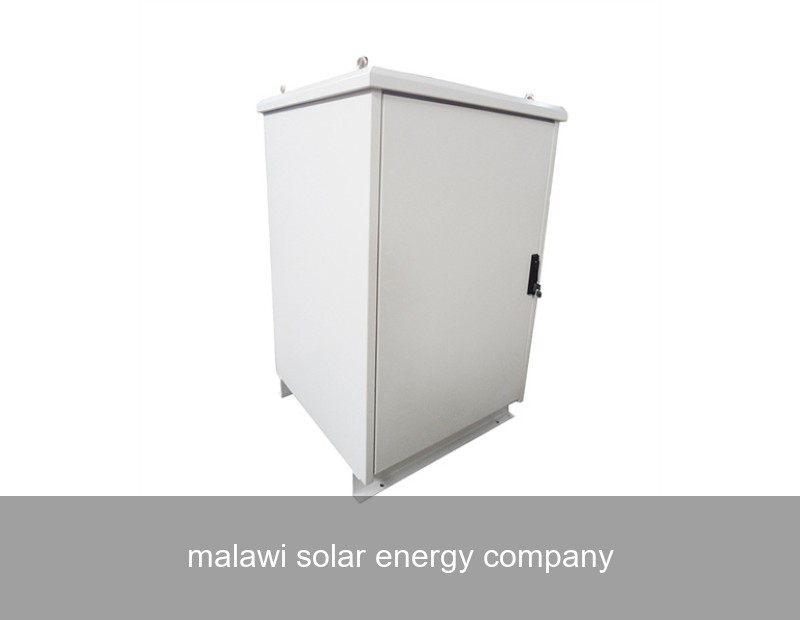
When we think of solar energy's global impact, our minds often go to vast utility-scale farms or suburban rooftops. But perhaps the most profound transformations are happening in places like Malawi, where innovative Malawi solar energy companies are tackling energy poverty head-on. For nations and communities with abundant sunshine but underdeveloped grids, solar isn't just an alternative—it's a gateway to education, healthcare, and economic resilience. This movement from basic light to empowered microgrids offers crucial insights for the global shift toward renewables, highlighting why intelligent energy storage is the indispensable backbone of a sustainable future.
Table of Contents
- The Challenge: More Than Just Keeping the Lights On
- The Data: Why Solar is Malawi's Logical Power Source
- Case Study: The Mulanje District Hospital Project
- The Key Ingredient: Beyond Panels to Intelligent Storage
- Global Lessons: What Malawi's Solar Journey Teaches Us
- Highjoule's Role in Empowering Reliable Solar Solutions
The Challenge: More Than Just Keeping the Lights On
Malawi faces significant energy challenges. With a national electrification rate hovering around 15%, the vast majority of the population, particularly in rural areas, lacks reliable access to electricity. This isn't merely an inconvenience. It impacts every facet of development:
- Healthcare: Clinics cannot refrigerate vaccines or medicines. Surgeries are conducted by flashlight, and life-saving equipment sits idle.
- Education: Students cannot study after dark. Schools lack access to digital learning tools and the internet.
- Economy: Small businesses shutter at sunset. Agricultural processing remains rudimentary, limiting income potential.
In this context, a Malawi solar energy company isn't just selling a product; it's providing a foundational service for human and economic development. The goal shifts from simple electricity generation to delivering dependable, 24/7 power that can withstand the realities of the local environment.
The Data: Why Solar is Malawi's Logical Power Source
The opportunity is written in the sunlight. Malawi is blessed with high solar irradiance, averaging between 5 and 7 kWh/m²/day. To put that in perspective, that's higher than many parts of southern Europe. This natural resource makes photovoltaic (PV) technology the most viable and scalable solution. However, the sun's intermittency is the universal challenge—power is needed at night, during cloudy weather, and for consistent operation of critical infrastructure. This is where the simple solar installation of the past meets the integrated solar-plus-storage system of the present and future.

An effective Malawi solar energy company must, therefore, think in terms of systems, not just panels. The real value lies in ensuring the energy captured during the day is available precisely when it's needed most.
Case Study: The Mulanje District Hospital Project
A concrete example illustrates this systems-thinking perfectly. In 2022, a partnership between an international NGO and a local Malawi solar energy company upgraded the power system at Mulanje District Hospital, a facility serving over 500,000 people.
The Problem: The hospital relied on an unreliable main grid and a diesel generator. Fuel costs were prohibitive, outages were frequent, and the generator's noise and fumes polluted the hospital environment. Critical maternity ward lighting, laboratory equipment, and vaccine refrigerators were constantly at risk.
The Solution: The project deployed a 120 kW rooftop solar PV array coupled with a 240 kWh battery energy storage system (BESS), creating a hybrid microgrid. The system was designed to prioritize solar power, use the batteries for overnight and backup power, and only use the generator as a last resort.
The Data-Driven Outcome (12 months post-installation):
| Metric | Result | Impact |
|---|---|---|
| Diesel Fuel Use | Reduced by 85% | ~$28,000 annual savings, redirected to patient care |
| Power Availability | Increased to 99.8% | Zero interrupted surgeries or vaccine spoilage |
| CO₂ Emissions | Avoided ~110 tons | Cleaner air for patients and staff |
This case is a testament to how a well-engineered solar-storage microgrid doesn't just provide power—it enables resilience, saves money, and safeguards lives. It's a blueprint for healthcare facilities across similar regions.
The Key Ingredient: Beyond Panels to Intelligent Storage
As the Mulanje case shows, the battery storage system is the linchpin. For any Malawi solar energy company aiming for reliability, the choice of BESS is critical. The challenges—heat, dust, potential for irregular maintenance—demand a product built for durability and simplicity.
This is where global expertise meets local need. Companies like Highjoule, with nearly two decades of experience, design storage systems for precisely these scenarios. Highjoule's IntelliBESS platform, for instance, isn't just a battery cabinet. It's an integrated system featuring:
- Advanced Thermal Management: Crucial for maintaining battery life and safety in Malawi's warm climate.
- Modular & Scalable Design: Allows a clinic or business to start with what they need and expand capacity as demand grows.
- Intelligent Energy Management Software (EMS): The "brain" that autonomously optimizes energy flow—prioritizing solar charging, scheduling discharges, and managing grid/generator interaction to maximize efficiency and lifespan.
For a local installer, partnering with a technology provider like Highjoule means they can offer a more robust, longer-lasting solution. They can focus on installation and client relationships, backed by a storage system engineered for global standards of performance and safety.
Global Lessons: What Malawi's Solar Journey Teaches Us
The work of a Malawi solar energy company is a microcosm of the global energy transition. It underscores universal principles:
- Resilience is Non-Negotiable: Whether for a hospital in Malawi or a factory in Germany, modern power systems must be resilient. Storage is what transforms variable generation into firm, dispatchable power.
- Intelligence is as Important as Capacity: Smart software that can predict usage, manage loads, and optimize cycles is what makes a storage system cost-effective.
- Solutions Must Be Scalable: Success starts small but should have a clear path to growth. Modular system architecture is key, from residential to industrial scale.

Highjoule's Role in Empowering Reliable Solar Solutions
For over 18 years, Highjoule has been at the forefront of advanced energy storage, serving commercial, industrial, residential, and microgrid applications worldwide. Our experience in diverse climates and grid conditions directly informs the technology we provide to partners everywhere.
A Malawi solar energy company can leverage Highjoule's portfolio to deliver tiered solutions:
- For Telecom Towers & Small Businesses: Containerized, all-in-one storage solutions that ensure uptime for critical communications and operations.
- For Agribusiness & Mini-Grids: Scalable storage systems that stabilize microgrids, power irrigation and processing, and enable community electrification.
- For Large Commercial & Industrial Facilities: High-power BESS solutions that provide peak shaving, backup power, and energy cost optimization, even in areas with a weak grid presence.
Our approach is partnership-driven. We provide the core technology—the intelligent, safe, and efficient storage platform—enabling local companies and integrators to be the heroes in their communities, delivering turnkey power solutions that just work.
Looking Forward: A Question for the Global Community
The narrative from Malawi demonstrates that solar, when paired with sophisticated storage, is a powerful tool for equitable development. It prompts an important question for all of us in the energy sector: As we continue to innovate for grid-scale storage in developed markets, how can we better architect and scale these technologies to accelerate the off-grid and weak-grid revolution, ensuring the lessons from one continent directly benefit the progress on another?
What energy resilience challenge in your community—be it rising costs, grid instability, or a sustainability goal—could be reimagined with a smarter storage-first approach?
 Inquiry
 Online Chat