


Solar Energy Companies in Malawi: Illuminating the Warm Heart of Africa with Smart Power
When you think of solar energy companies in Malawi, you might picture installers mounting panels under the brilliant African sun. And you'd be right—the potential is staggering. But there's a more profound story unfolding. It's not just about capturing sunlight; it's about intelligently managing that power to overcome one of the nation's most persistent challenges: energy access. For a country where only about 18% of the population has reliable grid access, solar isn't just an alternative; it's a lifeline for homes, businesses, clinics, and schools. The real question for Malawi's future isn't "if" solar, but "how" to build solar systems that deliver dependable, 24/7 power to fuel growth and resilience.
The Data Reality: Why Solar is Non-Negotiable for Malawi
Let's look at the numbers. Malawi boasts an impressive solar irradiance average of 5.5 to 6.0 kWh/m²/day. To put that in perspective, that's higher than most of Southern Europe. The resource is abundantly available. Yet, the national electricity grid reaches only a fraction of the population, primarily in urban centers. Frequent load-shedding and instability plague even those connected. This gap has spurred a vibrant ecosystem of solar energy companies in Malawi, ranging from local social enterprises to international developers. Their mission? To deploy photovoltaic (PV) systems. But as any Malawian business owner will tell you, the sun sets every day, and operations can't. This is where the conversation evolves from simple solar panels to comprehensive solar-plus-storage solutions.

Image: Solar installations are key to energy access in regions like Malawi. (Source: Unsplash, Representative Image)
The Storage Imperative: Why Solar Alone Isn't Enough
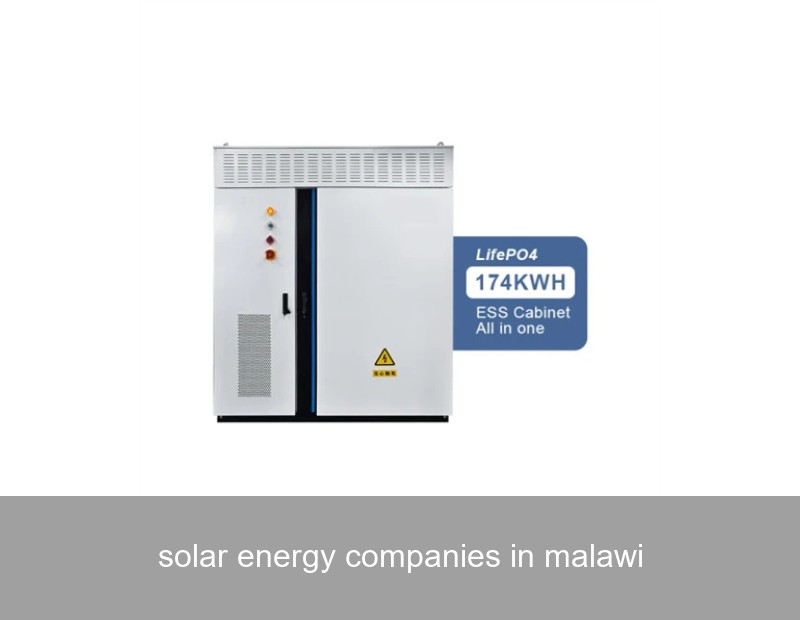
Think of a solar panel system without a battery like a reservoir with a hole in the bottom. You collect water (energy) all day, but you can't save it for when you're thirsty at night. For a solar energy company in Malawi serving a clinic that needs to refrigerate vaccines or a milling factory that runs evening shifts, this is the critical challenge. The solution lies in advanced Battery Energy Storage Systems (BESS). These aren't just simple batteries; they are intelligent systems that store excess solar generation, manage discharge cycles, and ensure power quality and reliability. This technology transforms a daytime-only solar array into a true, round-the-clock power station.
Case Study: Powering Productivity in Kasungu
Let's ground this in a real example. A medium-sized maize milling and processing facility in Kasungu, serving over 50 local farmers, faced crippling grid outages—often 8-10 hours daily. Diesel generators were expensive, noisy, and polluted. They partnered with a forward-thinking solar energy company in Malawi that proposed a hybrid solution: a 120 kWp solar PV array coupled with a 240 kWh lithium-ion battery storage system and intelligent energy management software.
The results, monitored over 12 months, were transformative:
| Metric | Before System | After System |
|---|---|---|
| Energy Reliability | ~6 hours of reliable power/day | 24/7 power for critical loads |
| Diesel Consumption | 4,500 liters/month | 500 liters/month (backup only) |
| Operating Cost | ~$4,500/month (fuel + grid) | ~$1,200/month (savings of 73%) |
| Production Hours | Daylight only | Extended to two full shifts |
This case highlights the multiplier effect: solar generation paired with robust storage doesn't just save money—it increases productivity, creates jobs, and strengthens the entire local agricultural value chain. The solar energy companies in Malawi leading this charge are those integrating smart storage from the outset.
The Highjoule Role: Intelligent Storage for a Brighter Malawi
This is where global expertise meets local need. As a leading provider of advanced energy storage solutions, Highjoule partners with solar energy companies in Malawi and across Africa to elevate their offerings. We understand that the Malawian market requires solutions that are not just high-performance but also rugged, thermally resilient, and simple to manage in diverse environments.
Our Highjoule H-Series Commercial & Industrial (C&I) ESS is engineered for markets like Malawi. Its key features directly address local pain points:
- All-Climate Resilience: Built with advanced thermal management to perform reliably in Malawi's high temperatures, ensuring battery longevity and safety.
- Intelligent Energy Management (IEM): Our proprietary software is the "brain" of the system. It automatically optimizes when to store solar energy, when to discharge it, and when to blend with minimal grid or generator power, maximizing savings and uptime.
- Modular & Scalable Design: Businesses can start with a system that fits their current budget and scale up storage capacity as their operations grow, future-proofing their investment.
- Remote Monitoring & Support: Our platform allows both the local solar company and Highjoule's support team to monitor system health proactively, enabling fast remote diagnostics and support, which is crucial for maintaining systems in remote locations.
For solar energy companies in Malawi, integrating a Highjoule BESS means they can deliver more than just panels—they deliver a guaranteed outcome: reliable, clean, and cost-effective power for their clients. We empower our partners to become full-scale energy solution providers.

Image: A modern Battery Energy Storage System (BESS) unit, similar to solutions deployed in commercial settings. (Source: Unsplash, Representative Image)
The Future Outlook: Scaling Solar with Smart Technology
The trajectory for solar energy companies in Malawi is incredibly promising. With initiatives like the Sustainable Energy for All (SEforALL) framework and increasing focus from development finance institutions, the capital for solar projects is growing. The next frontier is integrating microgrids that can power entire communities or industrial clusters. Here, the intelligence of the storage system becomes paramount—managing multiple energy sources (solar, grid, generator) and loads to create a stable, miniaturized grid.
Furthermore, the falling global costs of lithium-ion batteries, as tracked by authorities like BloombergNEF, make solar-plus-storage increasingly viable. The key for Malawi will be adopting technology that is not just cheap, but smart and durable—solutions that minimize total cost of ownership over a 10-15 year lifespan.
Beyond Kilowatts: The Ripple Effect
When a solar energy company in Malawi installs a high-quality solar-plus-storage system, the impact ripples outward. It enables:
- Healthcare: Clinics can run lights, refrigeration, and medical devices uninterrupted.
- Education: Schools can offer evening classes and digital learning.
- Economic Growth: Businesses can operate efficiently, attract investment, and create stable employment.
- Environmental Stewardship: It reduces reliance on diesel and charcoal, curbing indoor air pollution and deforestation. The IEA's Africa Energy Outlook 2022 consistently underscores solar's central role in a sustainable energy path for the continent.
Your Energy, Your Future
For business leaders, community planners, and development partners in Malawi and similar regions, the equation is clear. The goal is not merely to buy solar panels, but to secure uninterrupted, affordable power. This requires asking the right questions when engaging with solar energy companies in Malawi: "Does your solution include intelligent storage for night-time power?" "How do you ensure the system's longevity in our climate?" "What intelligence does your software have to maximize my savings?"
At Highjoule, we believe the right partnership can turn Malawi's immense solar resource into its most powerful engine for development. So, as you consider powering your future, we leave you with this: What could your business or community achieve with truly reliable, 24-hour clean energy?
 Inquiry
 Online Chat