


How a Leading Masdar Group Supplier is Shaping the Future of Grid-Scale Energy Storage
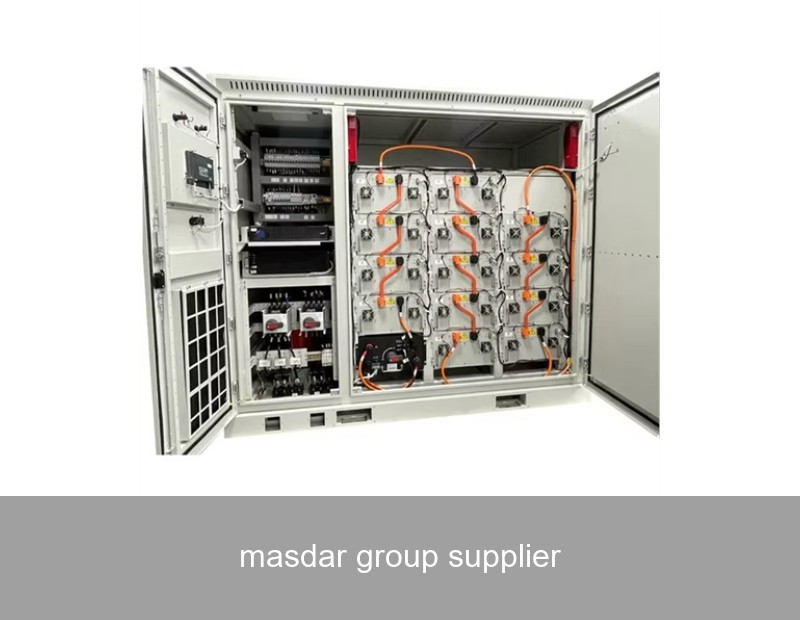
When we talk about the global transition to renewable energy, certain visionary entities come to mind. The Masdar Group, a clean energy powerhouse from Abu Dhabi, is undoubtedly one of them. But behind every major renewable project, there is a network of highly specialized partners and suppliers turning vision into reality. The role of a Masdar Group supplier is not just about providing components; it's about delivering the technological backbone for a sustainable future. This article delves into the critical importance of advanced energy storage systems in utility-scale projects and how specialized suppliers are enabling leaders like Masdar to push the boundaries of what's possible with solar and wind energy.
Table of Contents
The Storage Imperative: Beyond Intermittency
You've likely heard the challenge: solar doesn't shine at night, and the wind isn't always blowing. This intermittency is the single largest hurdle for grid operators integrating large amounts of renewables. The solution, as we all now know, is energy storage. But the conversation is rapidly moving from if we need storage to what kind of storage we need to meet specific, complex grid demands.
Data from the U.S. Energy Information Administration (EIA) underscores this shift. In the United States alone, utility-scale battery storage capacity is expected to surge by 89% in 2024, highlighting an unprecedented acceleration in deployment(Source: EIA). In Europe, driven by the REPowerEU plan, the need for storage to enhance energy security and integrate record levels of renewables is equally urgent. It's no longer just about storing excess energy; it's about providing essential grid services like frequency regulation, voltage support, and black start capabilities.

Image: A modern solar-plus-storage facility, where advanced Battery Energy Storage Systems (BESS) are as crucial as the solar panels themselves. (Photo by American Public Power Association on Unsplash)
The Evolution of a Supplier's Role: From Vendor to Strategic Partner
For a developer like Masdar Group, which operates in over 40 countries and aims to reach 100 gigawatts of renewable capacity, choosing a supplier is a strategic decision. The relationship transcends a simple transaction. A top-tier Masdar Group supplier must act as a technology partner, offering:
- System Intelligence: Beyond the battery cells, the brain of the operation—the Energy Management System (EMS)—is what determines efficiency, profitability, and longevity.
- Grid Compliance Expertise: Understanding and meeting the specific grid codes of markets from the UK to California to Southeast Asia.
- Lifecycle Support: Providing robust performance guarantees, remote monitoring, and maintenance services over a 15-20 year project lifespan.
This partnership model ensures that the storage asset performs optimally throughout its entire life, maximizing return on investment and ensuring reliable grid support.
Case Study: Delivering Grid Stability in the UK Market
Let's look at a concrete example. The UK's National Grid has a constant need to balance supply and demand within a tight frequency of 50Hz. Rapid deviations can cause outages. To address this, the grid operator created the Dynamic Containment service, which requires storage assets to respond to frequency changes in under a second.
In this demanding environment, a Masdar Group supplier with deep grid-service expertise is invaluable. For instance, Highjoule's GridMax BESS platform was selected for a 50 MW / 100 MWh project in England, co-developed with a major renewable energy developer. The system's advanced inverter technology and predictive EMS allow it to automatically switch between revenue streams—providing Dynamic Containment when the grid needs it most, and energy arbitrage (storing cheap energy, discharging during peak prices) at other times.
| Project Metric | Value | Significance |
|---|---|---|
| Capacity | 50 MW / 100 MWh | Can power ~100,000 homes for 2 hours. |
| Primary Service | Dynamic Containment (Frequency Response) | Stabilizes the national grid within milliseconds of an imbalance. |
| Technology Enabler | Highjoule GridMax with AI-powered EMS | Enables automated, optimized participation in multiple grid markets for maximum revenue and utility. |
This project exemplifies the modern supplier's role: delivering not just hardware, but a sophisticated, revenue-optimizing grid asset that helps developers like Masdar meet both financial and sustainability goals.
Highjoule's Integrated Solutions for Major Renewable Developers
As a global leader in advanced energy storage since 2005, Highjoule understands the multifaceted demands of being a trusted partner to pioneers like the Masdar Group. Our approach is built on three pillars that align perfectly with the needs of utility-scale developers:
- Highjoule GridMax Utility BESS: Our flagship platform is engineered for durability and intelligence. It features industry-leading cycle life, liquid cooling for consistent performance, and a modular design that scales from 2 MWh to GWh-scale installations. Its core is the JouleBrain AI EMS, which continuously analyzes market prices, weather forecasts, and grid signals to autonomously maximize asset value.
- Highjoule ProServe: Our comprehensive lifecycle support package includes 24/7 remote monitoring from our Network Operations Centers in the US and Germany, predictive maintenance analytics, and full warranty backing. We ensure your storage asset performs as promised, year after year.
- Application-Specific Engineering: Whether the need is for solar smoothing, wind firming, or creating a dispatchable renewable hybrid plant, we design systems tailored to the specific energy profile and market rules of the project location.

Image: Centralized monitoring and control, like that offered by Highjoule ProServe, is critical for managing distributed storage assets. (Photo by ThisisEngineering on Unsplash)
The Critical Importance of Safety and Standards
Any discussion of large-scale storage is incomplete without addressing safety. Reputable suppliers adhere to the most stringent international standards. Highjoule's systems are designed and tested in compliance with UL 9540, NFPA 855, and IEC 62933, incorporating multi-layer protection from the cell to the system level. For a developer, this mitigates risk and simplifies the permitting process—a non-negotiable aspect of being a reliable Masdar Group supplier.
The Future of Developer-Supplier Collaborations: What's Next?
The landscape is evolving towards even more integrated solutions. We're moving into an era of "Renewable Hub" projects that combine solar PV, wind, battery storage, and even green hydrogen electrolyzers into a single, smart, dispatchable power plant. In this context, the supplier's role becomes even more central, requiring unparalleled expertise in system integration and control software.
Furthermore, innovations in battery chemistry, like lithium iron phosphate (LFP) which offers enhanced safety and longer life, are being rapidly incorporated by forward-thinking suppliers. The ability to source and integrate the best-fit technology for a project's specific needs is a key differentiator. A recent report from BloombergNEF highlights how LFP is becoming the dominant chemistry for stationary storage, a trend agile suppliers are leading(Source: BloombergNEF).

Image: The future lies in the seamless integration of multiple renewable sources and storage technologies. (Photo by NASA on Unsplash)
As the ambitions of clean energy developers grow larger and the technical challenges more complex, one question becomes paramount for project success: Is your storage supplier a transactional vendor, or are they a true technology partner invested in the long-term performance and profitability of your asset?
 Inquiry
 Online Chat