


Material del Panel Solar: The Foundation of Your Energy Independence
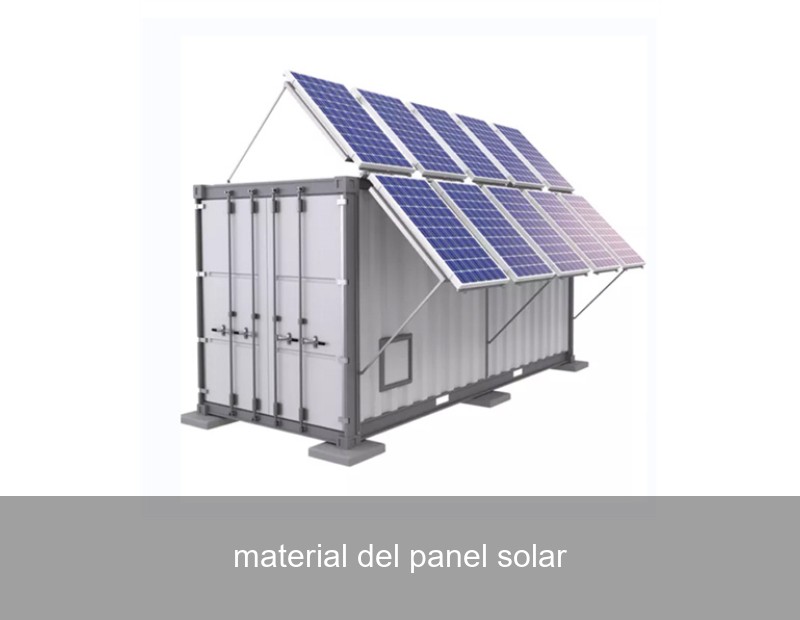
Have you ever wondered what truly powers the solar panels on a rooftop? It's not just sunlight. The heart of every photovoltaic (PV) module lies in its material del panel solar—the specific semiconductor substances that convert photons into usable electricity. Choosing the right solar panel material isn't just a technical detail; it's a critical decision impacting your system's efficiency, longevity, and return on investment for decades. As energy prices fluctuate and sustainability goals become paramount, understanding these core materials empowers you, whether you're a homeowner, a business owner, or managing a community microgrid. This guide will demystify solar panel materials, connect them to real-world performance, and show you how this knowledge translates into smarter, more resilient energy solutions.
Table of Contents
- The Core Dilemma: Silicon's Dominance in Solar Panel Material
- Beyond Silicon: Thin-Film and Emerging Solar Materials
- Data & Durability: How Material Choice Dictates Performance
- Case Study: Material Selection in a Spanish Industrial Project
- From Panels to Power Security: Integrating with Advanced Storage
- Your Next Step: Material, System, and Future
The Core Dilemma: Silicon's Dominance in Solar Panel Material
When we talk about material del panel solar, crystalline silicon (c-Si) is the undisputed champion, accounting for over 95% of the global market. But why? Its success lies in a powerful combination of efficiency, durability, and decades of manufacturing refinement. However, not all silicon is created equal.
- Monocrystalline Silicon (Mono-Si): Made from a single, pure crystal structure, these panels are recognizable by their uniform dark color and rounded cell edges. They offer the highest efficiency rates (typically 20% and above), meaning they generate more power per square meter. They also perform better in low-light conditions and have a longer lifespan, making them a premium choice for residential and commercial projects where space is at a premium.
- Polycrystalline Silicon (Poly-Si): Fabricated from melted fragments of silicon crystals, these panels have a blue, speckled appearance. They are slightly less efficient (usually between 15-17%) but come at a more affordable price point. They've been a popular choice for larger installations where space constraints are less critical.
The choice between mono and poly often boils down to your specific site conditions, budget, and energy goals. It's the first major decision in designing a system that truly fits your needs.
The Manufacturing & Sustainability Angle
The production of silicon cells is energy-intensive, which contributes to their carbon footprint. However, this initial investment is typically "paid back" within 1-3 years of clean energy generation. Furthermore, the industry is making strides in reducing silicon waste and recycling end-of-life panels, a crucial aspect of the circular economy. For a deeper dive into the environmental lifecycle of PV modules, the National Renewable Energy Laboratory (NREL) provides extensive research and data.
Beyond Silicon: Thin-Film and Emerging Solar Materials
While silicon dominates, alternative materiales del panel solar offer unique advantages for specific applications. Thin-film technologies deposit photovoltaic material in layers onto a substrate like glass, metal, or plastic.
| Material Type | Key Characteristics | Ideal Use Cases |
|---|---|---|
| Cadmium Telluride (CdTe) | Low-cost manufacturing, good performance in high temperatures, lower carbon footprint in production. | Large-scale utility solar farms, commercial rooftops in hot climates. |
| Copper Indium Gallium Selenide (CIGS) | Flexible, lightweight, and offers decent efficiency. Can be integrated into building materials (BIPV). | Curved surfaces, building-integrated photovoltaics, portable solar applications. |
| Perovskite | Rapidly improving efficiency in labs, low-cost solution-based processing potential. Stability and longevity under real-world conditions are the focus of current R&D. | Future potential for tandem cells (layered with silicon) to dramatically boost efficiency. |
Imagine a warehouse with a curved roof. Traditional rigid silicon panels might not be suitable, but flexible CIGS thin-film could be seamlessly integrated, turning the entire structure into a power generator. This is the promise of material diversity.

Image Source: Unsplash (Photographer: American Public Power Association)
Data & Durability: How Material Choice Dictates Performance
The material del panel solar directly influences key performance metrics you'll see on a datasheet. Let's break down the most critical ones:
- Efficiency: The percentage of sunlight hitting the panel that is converted into electricity. Monocrystalline leads here.
- Temperature Coefficient: How much power output decreases as the panel's temperature rises (typically above 25°C). Thin-film CdTe often has a better (less negative) coefficient than silicon, meaning it performs relatively better on extremely hot days.
- Degradation Rate: High-quality silicon panels now degrade as slowly as 0.3-0.5% per year. This means after 25 years, they can still produce over 85% of their original output. The material's purity and the panel's construction are key.
- Low-Light Performance: The ability to generate electricity on cloudy days or during dawn/dusk. Monocrystalline generally has an edge.
So, while a cheaper panel might look attractive upfront, its higher degradation rate and lower efficiency could mean significantly less energy produced over 25 years, affecting your long-term savings and sustainability impact.
Case Study: Material Selection in a Spanish Industrial Project
Let's make this concrete with a real example. A major food processing plant in Andalusia, Spain, faced soaring energy costs and sought to stabilize its operations with solar power. Their challenges: high ambient summer temperatures (over 40°C), significant daytime energy consumption, and a need for reliable power to maintain cold storage.
The Phenomenon: High temperatures can reduce the output of standard solar panels, just when the plant's cooling demand was highest.
The Data-Driven Choice: After analysis, the system designers selected high-efficiency monocrystalline panels with a best-in-class temperature coefficient of -0.29%/°C, instead of standard panels with a -0.40%/°C coefficient. This meant less power loss on scorching days.
The Result: The 850 kWp installation, despite the harsh climate, consistently meets its production forecasts. It generates approximately 1.3 GWh of electricity annually, covering 35% of the plant's energy needs and reducing its carbon emissions by over 380 metric tons per year. This case, documented in part by the IEA PVPS Task 12 reports, highlights that selecting the right material del panel solar for the local environment is not an academic exercise—it's a financial and operational imperative.
From Panels to Power Security: Integrating with Advanced Storage
Choosing the optimal solar panel material maximizes energy harvest. But what happens when the sun isn't shining? This is where the conversation evolves from generation to energy management. The true potential of your solar investment is unlocked when paired with an intelligent energy storage system (ESS).
This is precisely where Highjoule's expertise transforms a solar installation into a comprehensive power solution. Think of it this way: the solar panels are your energy harvesters, and the Highjoule battery system is your intelligent energy pantry and manager.
For our industrial case in Spain, the next logical step to increase energy independence would be integrating a Highjoule C&I (Commercial & Industrial) ESS. Our systems are agnostic to the material del panel solar you choose; they seamlessly integrate with any high-quality PV array. The Highjoule ESS would store the excess solar energy produced during peak sun hours and dispatch it during the evening peak or when grid prices are high, further increasing the plant's self-consumption rate and providing critical backup power for its refrigeration units.
For residential clients in Europe and the U.S., our Highjoule Home Energy System offers similar benefits: maximizing the use of your rooftop solar, providing backup power during outages, and allowing participation in utility demand-response programs. The core principle remains: superior components—from the solar cell material to the battery chemistry—combined with intelligent software, create a resilient and efficient energy ecosystem.

Image Source: Unsplash (Photographer: Vivint Solar)
The Highjoule Difference: System Intelligence
Our technology goes beyond just storing energy. Highjoule's AI-driven energy management platform constantly learns your consumption patterns, weather forecasts, and utility rate structures. It automatically optimizes when to store solar energy, when to use it, and when to draw from the grid, ensuring every kilowatt-hour from your carefully chosen panels is used in the most economical way possible.
Your Next Step: Material, System, and Future
Understanding material del panel solar is the first step toward energy literacy and independence. You're now equipped to ask installers informed questions: "What is the temperature coefficient of these panels?" or "How does the degradation rate affect my 20-year yield?"
But the journey doesn't end at the panels. The future of energy is not just about generation—it's about intelligent, resilient, and self-sufficient systems. As you contemplate your solar project, consider this open question: How will you ensure the clean energy you generate today is available precisely when you need it most—tonight, during a grid outage, or in the depths of winter?
We invite you to explore how Highjoule's advanced storage solutions can complement your solar investment, turning variable sunlight into a dependable, 24/7 power source for your home or business. The right material captures the sun; the right system harnesses its full potential.
 Inquiry
 Online Chat