


Unlocking True Energy Independence: The Essential Guide to High-Performance Solar Panels (Panel Solar de Alto Rendimiento)
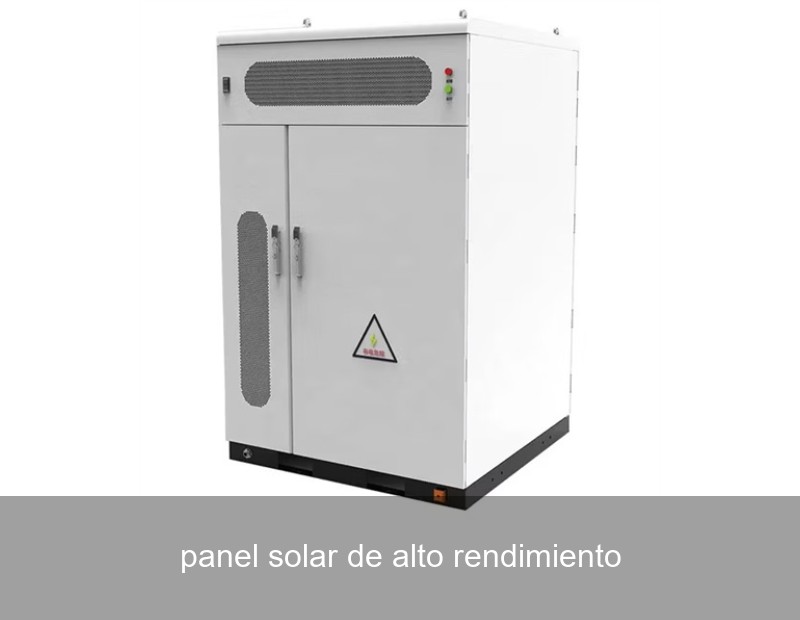
Have you ever looked at your rooftop solar installation on a cloudy day and wondered, "Is this really all the power I can get?" For homeowners and businesses across Europe and the US, this is a common reality. Standard solar panels often leave potential energy on the table, struggling with low-light conditions, heat, and inefficiencies that cap your savings. This is where the game changes: by investing in high-performance solar panels (panel solar de alto rendimiento). But what makes a panel truly "high-performance," and how do you ensure your entire system is optimized to match? Let's dive into the technology that maximizes every ray of sunshine.
Table of Contents
- What Are High-Performance Solar Panels?
- The Key Metrics: Beyond Just Wattage
- The High-Performance System Mindset
- A Real-World Case: The German Industrial Retrofit
- Choosing and Integrating Your High-Performance System
- The Future of High-Performance Solar
What Are High-Performance Solar Panels?
When we talk about high-performance solar panels, we're referring to modules engineered to deliver superior efficiency, durability, and energy yield compared to conventional options. They aren't just about a higher wattage label. Think of them like a high-efficiency engine: they convert more sunlight into electricity under a wider range of real-world conditions—early morning, late afternoon, hazy skies, and yes, even in the heat of a Spanish summer or a mild but cloudy German winter.
The core of this performance lies in advanced cell technology, primarily N-type TOPCon (Tunnel Oxide Passivated Contact) and Heterojunction (HJT) cells. These designs minimize electrical losses and are far less sensitive to temperature increases. While traditional panels can lose over 0.3% of their efficiency for every degree Celsius above 25°C, high-performance N-type panels can have temperature coefficients as low as -0.25% per °C. That difference alone can mean 5-10% more annual energy production in warm climates.

Image Source: Unsplash - Representative image of modern, high-efficiency panel aesthetics.
The Key Metrics: Beyond Just Wattage
To be an informed buyer, look beyond the nameplate power (e.g., 400W). Here’s what truly matters:
- Module Efficiency: The percentage of sunlight hitting the panel that gets converted to electricity. Premium panels now exceed 23%.
- Temperature Coefficient: As mentioned, a lower (closer to zero) percentage means better performance on hot days.
- Low-Light Performance: How well the panel generates power at dawn, dusk, or in overcast conditions.
- Degradation Rate: High-performance panels often come with a guarantee of 90%+ output after 25 years, thanks to annual degradation rates as low as 0.25% (vs. 0.5% for standard panels).
According to the National Renewable Energy Laboratory (NREL), continuous innovation in cell architecture is the primary driver behind rising commercial panel efficiencies.
The High-Performance System Mindset: Panels Are Just the Start
Here’s a crucial insight many miss: a panel solar de alto rendimiento can be held back by a mediocre system. Its full potential is only unleashed when paired with equally intelligent and robust components. This is where the holistic approach of companies like Highjoule becomes critical. Since 2005, Highjoule has specialized in integrating top-tier hardware with its proprietary energy management software to create truly optimized storage solutions.
Imagine your high-performance panels as a powerful sports car engine. You wouldn't pair it with low-grade fuel, weak tires, and a sluggish transmission. Similarly, your panels need:
- Advanced Hybrid Inverters: That can handle the higher power input and convert it with maximum efficiency.
- Smart Battery Storage: To capture every excess kilowatt-hour for use at night or during peak tariff periods.
- AI-Driven Energy Management: Software that learns your consumption patterns, weather forecasts, and electricity prices to autonomously decide when to store, use, or even sell energy back to the grid.
Highjoule's Intelligent Battery Storage Systems (IBSS) are designed specifically for this role. They act as the brain and battery bank for your high-performance solar array, ensuring no self-generated energy goes to waste. For commercial and industrial applications, this system mindset translates directly to higher energy autonomy and significant reductions in demand charges.
A Real-World Case: The Bavarian Manufacturing Facility
Let's look at data from a 2023 retrofit project in southern Germany. A mid-sized automotive parts manufacturer was operating a 500 kW standard solar array, covering about 40% of their daytime load. They faced two issues: significant midday curtailment (wasting solar energy when production was low) and high grid consumption during expensive evening hours.
The solution involved two phases:
- They upgraded 50% of their roof space to high-performance N-type TOPCon panels, increasing peak capacity by 30% within the same area.
- They installed a Highjoule C&I Battery Storage System with 1 MWh capacity and integrated energy management software.
| Metric | Before Retrofit | After Retrofit | Change |
|---|---|---|---|
| Solar Self-Consumption | 55% | 94% | +39% |
| Grid Energy Purchased (Peak Hours) | 35,000 kWh/month | 8,500 kWh/month | -76% |
| Total Energy Cost Savings | Baseline | €68,000/year | -- |
| ROI Period | -- | Estimated 4.2 years | -- |
This case, documented in a Fraunhofer ISE market report on system integration, highlights the multiplier effect of combining cutting-edge panels with smart storage. The facility didn't just generate more power; it utilized nearly all of it intelligently, transforming its energy economics.
Choosing and Integrating Your High-Performance System
For a homeowner or business considering the leap, here is a practical framework:
- Audit & Goals: Start with a detailed energy audit. Is your goal pure bill savings, backup power, or full carbon neutrality?
- Panel Selection: Compare datasheets for efficiency, temperature coefficient, and warranty. Reputable installers will model annual yield using tools like PV*SOL.
- Storage Sizing: This is critical. A system like Highjoule's residential Home Energy Hub is sized not just on daily consumption, but on your specific load profile and future plans (like adding an EV). Their experts analyze this to prevent under or over-investment.
- Software & Control: Ensure the platform provides intuitive monitoring, customizable operating modes (e.g., maximize self-consumption, peak shaving), and grid-service readiness.
Highjoule's services encompass this entire journey—from initial consultancy and system design using advanced modeling tools, through seamless integration of panel solar de alto rendimiento with their storage hardware, to commissioning and long-term performance monitoring via their cloud platform.

Image Source: Unsplash - Example of a sleek, integrated home battery installation.
The Future of High-Performance Solar: Integration and Intelligence
The frontier is no longer just panel efficiency. It's about building-integrated photovoltaics (BIPV), where panels become part of the roof or façade, and vehicle-to-grid (V2G) technology, where your EV battery acts as a mobile storage unit. The next generation of high-performance systems will see the home or business as a single, interactive energy entity.
Highjoule's R&D in microgrid controllers and virtual power plant (VPP) software positions their clients at this forefront. By aggregating distributed storage resources, they can provide grid stability services, opening potential new revenue streams for system owners—a concept already taking hold in markets like California and parts of the EU.
Your Energy, Optimized
Choosing high-performance solar panels (panel solar de alto rendimiento) is a powerful first step toward genuine energy independence. But the true transformation happens when those panels are part of a consciously designed, intelligent ecosystem that captures, stores, and manages every electron with purpose. It's the difference between having a solar system and owning a resilient, profitable, personal power plant.
What is the one energy challenge—be it an unpredictable bill, a desire for backup, or a sustainability target—that a truly optimized high-performance solar and storage system could solve for you in the next year?
 Inquiry
 Online Chat