


Micro Energy for Sale: Your Guide to Buying Personal Power Independence
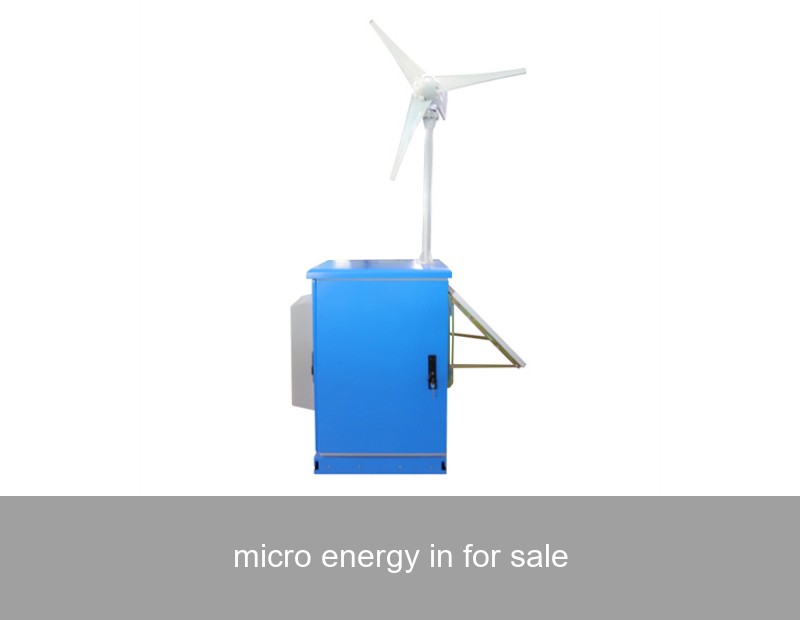
Have you ever glanced at your electricity bill and wondered, "What if I could generate and store my own power?" You're not alone. Across Europe and the U.S., a quiet revolution is underway. It's not about massive power plants; it's about micro energy for sale—compact, intelligent systems that put energy generation and storage directly into the hands of homeowners and business owners. This isn't a futuristic concept; it's a practical, available solution reshaping how we think about energy resilience, cost, and sustainability.
What is "Micro Energy" and Why is it "For Sale" Now?
Let's break it down. "Micro energy" refers to small-scale, decentralized energy systems typically designed for a single property or a small community. Think of it as your personal utility in a box. The "for sale" part is crucial—it signifies that these are no longer niche, DIY projects but are sophisticated, plug-and-play products available on the market from trusted providers like Highjoule.
A complete micro energy system usually combines:
- Generation: Solar panels (PV) are the most common, but small wind or hydro can also contribute.
- Storage: The heart of the system—a battery that stores excess energy for use when the sun isn't shining or the grid is down.
- Management: Smart software that optimizes energy flow, deciding when to charge, discharge, or export to the grid.
The convergence of falling renewable technology costs, rising grid instability in some regions, and strong policy support (like the EU's REPowerEU plan) has made micro energy for sale a compelling mainstream option.
The Data Don't Lie: The Rising Demand for Distributed Power
The trend is unmistakable. In the U.S., residential energy storage installations saw a 40% year-over-year growth in 2023, often paired with new solar projects. In Europe, Germany and Italy are leading markets, driven by a desire for backup power and maximizing self-consumption of solar energy.
But why this surge? The drivers are clear:
| Driver | Impact |
|---|---|
| Energy Price Volatility | Locking in a portion of your energy at a predictable, long-term cost. |
| Grid Reliability Concerns | Providing essential backup power during outages, which are increasing in frequency and duration in some areas. |
| Sustainability Goals | Directly reducing carbon footprint by using stored solar/wind power. |
| Financial Incentives | Tax credits (e.g., U.S. ITC), grants, and favorable feed-in tariffs improve ROI. |
This isn't just about saving money on a bill; it's about purchasing control and predictability.
Case Study: A Bavarian Farm's Journey to Energy Independence
Consider the Müller family farm in southern Germany. Their challenges were threefold: high operational energy costs, vulnerability to grid fluctuations affecting their cold storage, and a personal commitment to sustainability.
In early 2023, they invested in a micro energy system comprising a 45 kW rooftop solar array and a 60 kWh battery storage unit. The results after one year are telling:
- Grid Independence: Achieved 85% self-consumption of solar energy, up from 30% without storage.
- Cost Savings: Reduced their annual electricity costs by over €7,200.
- Resilience: The system automatically provides backup power for critical loads during outages, securing their refrigeration and essential operations.

"The system pays for itself," said Mr. Müller. "But more importantly, it gives us peace of mind. We are now our own primary power provider."
Choosing Your System: Key Components of a Micro Energy Setup
Not all micro energy systems are created equal. When evaluating options for sale, you need to look at the integrated performance of its parts.
The Battery: The Cornerstone
Lithium-ion phosphate (LFP) chemistry is now the industry standard for safety, longevity, and value. Key specs are usable capacity (kWh), continuous power rating (kW), and cycle life. A quality battery should have a 10+ year warranty with high retained capacity.
The Inverter & Brain
This is the system's maestro. A hybrid inverter manages DC-AC conversion for both solar and batteries. The accompanying energy management system (EMS) is the intelligence—using weather forecasts and usage patterns to optimize every kilowatt-hour.
Highjoule's Tailored Solutions for Reliable Micro Energy
This is where expertise matters. At Highjoule, with nearly two decades of experience, we don't just sell components; we engineer integrated micro energy solutions. Our systems are designed for the specific demands of European and North American markets, adhering to the highest safety and grid-compliance standards.
For the residential and small business seeker, our Highjoule HOMe Series is a standout. It's a scalable, all-in-one battery storage system with a modular design. Start with a 5 kWh module, and expand up to 30 kWh as your needs grow. Its integrated Highjoule EnergyOS learns your habits and automatically runs in the most economical mode, whether that's maximizing self-consumption or leveraging time-of-use rates.

For larger commercial or microgrid applications, our Industrial PowerCube (IPC) series offers containerized or skid-mounted solutions from 100 kWh to multiple MWh. These systems are workhorses, providing critical backup, peak shaving, and renewable integration for factories, agricultural complexes, and remote communities.
Our global service network ensures that when you invest in micro energy for sale from Highjoule, you're investing in a partnership for the long-term performance and support of your energy assets.
The Future is Modular and Smart
The next evolution of micro energy is already here: virtual power plants (VPPs). Imagine your home battery, along with thousands of others, forming a decentralized network that can support the main grid during peak demand. According to the U.S. National Renewable Energy Laboratory (NREL), VPPs could offset the need for 10-20% of peak capacity by 2030. By choosing a smart, grid-interactive system today, you're future-proofing your investment and potentially creating a new revenue stream.
So, the question is no longer if personal energy independence is possible, but how and when you will achieve it. What specific energy challenge—be it an unreliable grid, soaring costs, or a sustainability target—will your micro energy system solve first?
 Inquiry
 Online Chat