


Micro Usina de Energia Solar: Your Complete Guide to Personal Power Plants
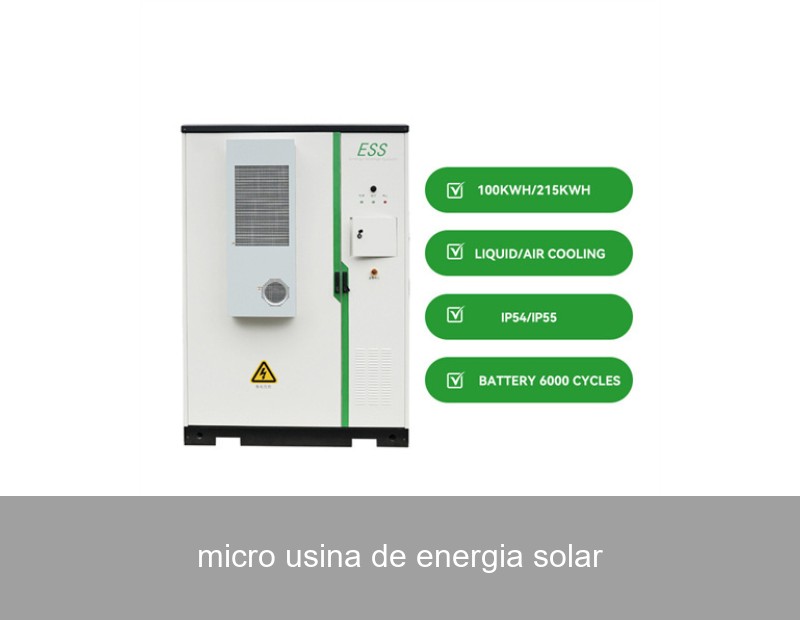
Imagine generating your own clean electricity, slashing your energy bills, and gaining independence from the grid. This isn't a distant dream; it's the reality offered by a micro usina de energia solar, or micro solar power plant. For homeowners and businesses across Europe and the U.S., this concept is revolutionizing how we think about energy. It's more than just a few panels on a roof—it's an integrated, intelligent system designed for maximum self-consumption and resilience. As a leader in advanced energy storage, Highjoule has been at the forefront of this shift since 2005, empowering customers to build their own reliable, sustainable power hubs.
Table of Contents
- What is a Micro Usina de Energia Solar?
- The Core Challenge: Intermittency and Self-Consumption
- The Game Changer: Intelligent Battery Energy Storage Systems (BESS)
- Real-World Impact: A Case Study from Southern Europe
- Highjoule's Role: Building Smarter Micro Power Plants
- Key Components of a High-Performance Micro Usina
- The Future Outlook for Distributed Energy
What is a Micro Usina de Energia Solar?
Let's break down the term. "Micro usina" translates to micro power plant, indicating a small-scale, localized energy generation facility. A micro usina de energia solar typically refers to a photovoltaic (PV) system that not only generates electricity but often also stores it for use on demand. Unlike a simple grid-tied solar array that exports surplus power, a true micro power plant is designed to maximize self-consumption, giving the owner control over their energy flow. It's a system that can include solar panels, inverters, a battery storage system, and smart energy management software—all working in harmony.
Image Source: Unsplash - Representative image of a residential solar-plus-storage system.
The Core Challenge: Intermittency and Self-Consumption
Here's the fundamental issue with solar power alone: the sun doesn't shine 24/7. Generation peaks at midday, but energy demand for homes and businesses often peaks in the early morning and evening. Without storage, you might be exporting excess power to the grid at low feed-in tariffs only to buy expensive power back at night. This mismatch limits both your savings and your energy independence. The U.S. Department of Energy highlights that storage is key to unlocking solar's full potential, allowing it to be a reliable resource after sunset.
The Data Tells the Story
Consider a typical household in Germany or California with a 8 kW solar array. It might produce 40 kWh on a sunny day, but consume only 30% of that directly. The rest goes to the grid. With a micro usina de energia solar incorporating storage, self-consumption can jump to 70% or more, dramatically reducing reliance on the utility and protecting against volatile energy prices.
The Game Changer: Intelligent Battery Energy Storage Systems (BESS)
This is where the magic happens. A Battery Energy Storage System (BESS) transforms a simple solar generator into a true dispatchable power plant. It stores surplus solar energy for use when you need it most. But not all BESS are created equal. Advanced systems, like those developed by Highjoule, feature:
- Lithium Iron Phosphate (LFP) Chemistry: Known for superior safety, long lifespan (often over 6,000 cycles), and stability, making it ideal for residential and commercial use.
- Integrated Energy Management Systems (EMS): The brain of the operation. This software intelligently decides when to store, when to discharge, and how to optimize for cost or backup power based on weather forecasts, usage patterns, and tariff structures.
- Scalable Design: Power and energy capacity can be modularly expanded to meet growing needs, a crucial feature for businesses or evolving family homes.
Highjoule's H-Series Commercial & Industrial and ResiCore Home systems exemplify this intelligent approach, providing seamless integration with new or existing solar arrays.
Real-World Impact: A Case Study from Southern Europe
The theory is compelling, but real data convinces. Let's examine a project for a medium-sized winery in the Alentejo region of Portugal, an area with high solar insolation but also significant grid instability during peak agricultural seasons.
| Challenge | Solution | Results (After 1 Year) |
|---|---|---|
| High daytime energy costs for cooling and irrigation | Installation of a 120 kWp solar PV array coupled with a 240 kWh Highjoule H-Series BESS | 86% reduction in grid energy consumption during peak hours |
| Frequent short grid outages affecting production | The BESS provides seamless backup power for critical loads | Zero production downtime due to power outages |
| Excess solar generation at midday wasted | Intelligent EMS stores all excess for evening use | Overall energy self-sufficiency increased to 78% |
This micro usina de energia solar turned the winery into a prosumer—both a producer and consumer. The system paid for itself in under 5 years, and now provides decades of low-cost, reliable power. It's a tangible example of how modern storage technology solves real business problems. The European Commission's PVGIS tool can help model such potential for any location in Europe.
Highjoule's Role: Building Smarter Micro Power Plants
Since 2005, Highjoule has moved beyond being just a hardware provider. We see ourselves as power solution architects. Our expertise lies in designing the complete ecosystem of a micro usina de energia solar. For us, it's about the seamless interplay between components:
- Custom Design & Simulation: We analyze your historical energy data, site specifics, and goals to model the optimal system size and configuration.
- Core Technology - The PowerHub Inverter: Our bi-directional inverters are the heart of the system, efficiently managing AC/DC conversion and grid interaction with industry-leading efficiency ratings.
- Smart Software - JouleMind OS: Our proprietary platform enables remote monitoring, control, and optimization. You can set preferences (e.g., "maximize savings" or "ensure backup"), and the AI-driven system does the rest, even participating in grid services where available.
- Ongoing Support & Warranty: A 10-year performance warranty on our storage systems provides long-term peace of mind, backed by a global service network.

Image Source: Unsplash - Representative image of commercial battery storage system monitoring.
Key Components of a High-Performance Micro Usina
To build a future-proof system, understanding the components is key.
1. High-Efficiency Solar Panels
The fuel source. Modern monocrystalline panels with efficiencies over 22% ensure maximum energy harvest from limited roof space.
2. The Storage Battery
The bank account for your energy. Highjoule's LFP batteries offer deep cycling capability, meaning you can use most of their stored capacity daily without degrading the system.
3. The Hybrid Inverter/Charger
The traffic controller. It manages power flow between solar panels, batteries, the grid, and your home's circuits, ensuring everything operates safely and efficiently.
4. The Energy Management System (EMS)
The strategist. This is where Highjoule's JouleMind software shines, using algorithms and weather data to predict generation and consumption, making real-time decisions to optimize your economic and energy goals.
The Future Outlook for Distributed Energy
The trend is clear. Markets on both sides of the Atlantic are moving towards decentralized, resilient energy networks. In the U.S., the Inflation Reduction Act (IRA) provides significant tax credits for solar-plus-storage installations. In Europe, the REPowerEU plan aggressively promotes renewable energy independence. The micro usina de energia solar is the building block of this new energy landscape, creating virtual power plants (VPPs) when aggregated. A report by International Energy Agency underscores the critical role of storage in the global energy transition.
So, what does this mean for you? Whether you're a homeowner tired of unpredictable bills or a business owner looking to lock in energy costs and ensure operational continuity, the question is no longer if solar and storage make sense, but how to implement them most effectively. What specific energy challenge in your home or business could a personalized micro power plant solve?
 Inquiry
 Online Chat