


Mastering Grid Stability: The Essential Role of Sungrow Reactive Power Control
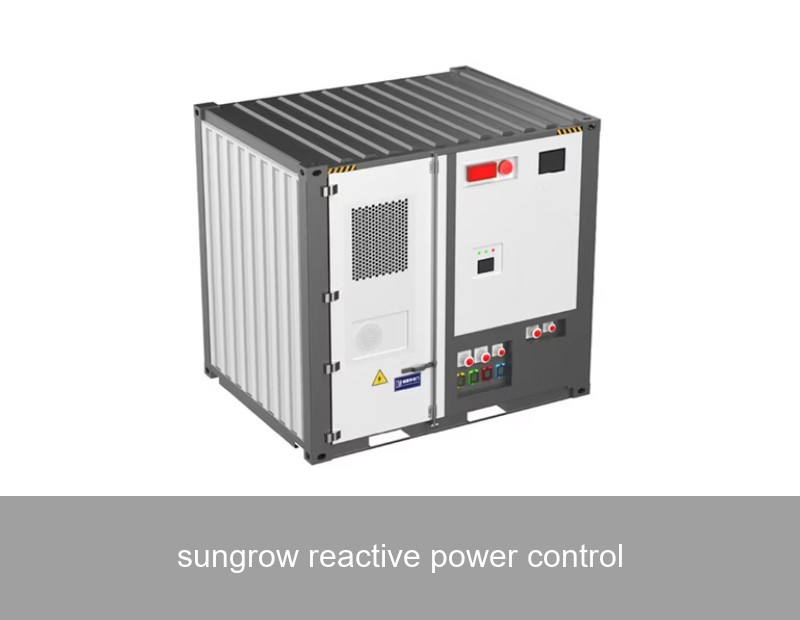
Imagine a modern power grid as a complex, synchronized dance. The active power—the real electricity that powers your lights and appliances—is only one part of the performance. Equally crucial is the reactive power, the unseen force that maintains the voltage and stability of the entire electrical system. As solar penetration skyrockets across Europe and the US, managing this reactive power has become a critical challenge. This is where advanced inverter technology, specifically Sungrow reactive power control, steps into the spotlight. By enabling solar installations to not just generate power but also actively support grid health, this functionality is transforming photovoltaic (PV) systems from passive generators into intelligent grid assets. For businesses and utilities, understanding this capability is key to unlocking greater value from their renewable investments and ensuring a stable energy transition.
Table of Contents
- The Reactive Power Puzzle: More Than Just Watts
- How Sungrow Reactive Power Control Provides the Solution
- Data Drives Adoption: The Grid's Growing Need
- Case Study: Stabilizing a German Industrial Microgrid
- Beyond the Inverter: The System-Level Advantage
- The Future Grid: Your Role in a Stable, Renewable Network
The Reactive Power Puzzle: More Than Just Watts
Let's break it down simply. Active power (kW) does the actual work—spinning motors, creating heat, providing light. Reactive power (kVAR), however, doesn't perform work itself. It's needed to create the magnetic fields in motors and transformers, essentially setting up the conditions for active power to flow. The problem? An imbalance of reactive power causes voltage fluctuations. Too little reactive power can lead to voltage sags and brownouts; too much can cause voltage swells and equipment damage.
Traditionally, centralized fossil-fuel plants and dedicated devices like capacitor banks managed this balance. But as these plants are phased out and decentralized solar floods the grid, a stability gap emerges. A solar inverter that only "pushes" active power is missing half of its potential grid-support duty. This is precisely the gap that smart inverter functions, like those pioneered by Sungrow, are designed to fill.
How Sungrow Reactive Power Control Provides the Solution
Sungrow's advanced inverters integrate sophisticated reactive power control capabilities that allow them to dynamically absorb or generate reactive power as commanded. This isn't a passive feature; it's an active grid-support mode. Through various standards like IEEE 1547 in the US or grid codes in Europe (e.g., VDE-AR-N 4105 in Germany), inverters can be set to:
- Fixed Power Factor (PF) Mode: Continuously provide a set amount of reactive power alongside active generation.
- Voltage-Watt (Q/V) Mode: Automatically adjust reactive power output based on local grid voltage measurements, helping to regulate voltage within a desired band.
- Constant Reactive Power (Q) Mode: Deliver a fixed amount of reactive power, independent of active power generation, useful for nighttime grid support.
The intelligence lies in the seamless execution. Even when the sun isn't shining at full capacity, a Sungrow inverter can utilize its available capacity to provide reactive power support, making it a valuable 24/7 grid citizen.

Image Source: Unsplash - A modern inverter is the key component for reactive power control.
Data Drives Adoption: The Grid's Growing Need
The theoretical need for reactive power control is backed by hard data. According to a report by the National Renewable Energy Laboratory (NREL), high penetrations of solar PV can significantly impact distribution grid voltage. The study found that smart inverter functions, including reactive power control, can mitigate over 90% of voltage violations, deferring costly grid infrastructure upgrades. In the UK, National Grid ESO's "Dynamic Containment" frequency service market highlights the financial value of such fast-response capabilities, with assets like advanced inverters being eligible to participate and earn revenue.
This creates a compelling dual value proposition: grid stability and new revenue streams for asset owners. By providing these ancillary services, a commercial solar+storage installation transitions from a cost-saving measure to a potential profit center.
Case Study: Stabilizing a German Industrial Microgrid
Consider a real-world application at a manufacturing plant in Bavaria, Germany. The facility operates a 2 MW rooftop PV system and several large inductive loads (industrial motors), which consume significant reactive power. This caused a lagging power factor, resulting in monthly penalty fees from the grid operator and occasional voltage instability within the plant's internal microgrid.
The solution involved a holistic upgrade centered on intelligent energy management. While Sungrow inverters with precise reactive power control capabilities were deployed to manage the PV side, the plant needed a unified system to coordinate the entire site's energy flow. This is where Highjoule's integrated energy management system (EMS) proved critical. Highjoule's platform seamlessly integrated the new Sungrow inverters with the existing plant infrastructure.
The Highjoule EMS was configured to:
- Continuously monitor the point of common coupling (PCC) for power factor.
- Automatically dispatch commands to the Sungrow inverters to generate the precise amount of leading reactive power needed to correct the plant's overall power factor to near 1.0 (unity).
- Prioritize using the inverter's spare capacity for this service, minimizing any curtailment of active solar generation.
| Metric | Before Implementation | After Implementation |
|---|---|---|
| Average Power Factor | 0.82 | 0.98 |
| Monthly Grid Penalty Fees | ~€1,800 | €0 |
| On-site Voltage Fluctuation | ±8% | ±2% |
| PV System Revenue Streams | Electricity savings only | Savings + avoided penalties |
The result was the complete elimination of penalty fees, enhanced on-site power quality for sensitive machinery, and a demonstrable increase in the value of their solar asset. The Sungrow inverters provided the tool, and Highjoule's intelligent control provided the strategy and seamless execution.
Beyond the Inverter: The System-Level Advantage
An inverter with reactive power capability is a powerful tool, but its true potential is unlocked within a fully integrated system. This is Highjoule's core expertise. As a global leader in advanced储能系统, Highjoule doesn't just supply components; we deliver intelligent, efficient, and sustainable power solutions.
For a commercial or industrial client, this means:
- Highjoule HPS Series Commercial Storage: Coupled with Sungrow or other leading inverters, our battery systems can provide reactive power support even when solar generation is zero, maximizing the asset's availability for grid services.
- AI-Powered Energy Management System: Our platform makes the complex simple. It automatically optimizes when to sell active power, when to provide reactive support, and when to store energy, based on real-time grid conditions and tariff structures.
- Future-Proofed Microgrid Solutions: Whether for a factory, a hospital, or a community, Highjoule designs systems where solar generation, battery storage, and advanced inverter functions work in concert to ensure resilience, independence, and grid support.
Think of it this way: reactive power control is a vital language your inverter speaks to the grid. Highjoule's solutions ensure your entire energy ecosystem is fluent in that language and can conduct an optimal conversation 24/7.

Image Source: Unsplash - Utility-scale solar requires robust grid support capabilities.
The Future Grid: Your Role in a Stable, Renewable Network
The transition to renewables is non-negotiable, but its success hinges on stability. Technologies like Sungrow reactive power control are not just optional add-ons; they are becoming grid-code mandates in many regions. The question for business leaders, project developers, and utilities is no longer if to adopt these capabilities, but how to implement them most effectively to maximize both technical performance and economic return.
Are you evaluating a new solar or solar-plus-storage project? Are you looking to retrofit an existing installation to unlock new value and compliance? The first step is to think beyond kilowatt-hours and consider your project's role in the wider grid ecosystem.
What specific grid challenges or revenue opportunities in your local market could be addressed by turning your renewable asset into an intelligent grid partner?
 Inquiry
 Online Chat