


Monaco Energy Storage Forum: A Catalyst for a Smarter, More Resilient Grid
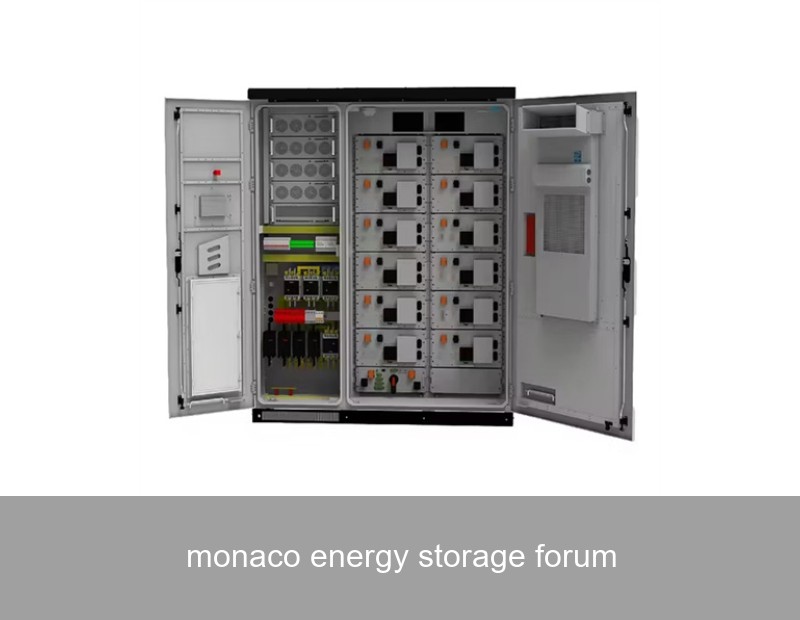
If you're involved in the world of renewable energy, you've likely felt the shift. The conversation is no longer just about generating clean power from the sun or wind; it's about what to do with it. How do we ensure this power is available when the grid is strained, when the sun isn't shining, or when energy prices skyrocket? This is precisely the critical dialogue that forums like the Monaco Energy Storage Forum exist to advance. As a global gathering point for policymakers, innovators, and industry leaders, this forum highlights the undeniable truth: energy storage is no longer an optional add-on but the essential backbone of the modern energy transition. For over 18 years, at Highjoule, we've witnessed this evolution firsthand, designing intelligent battery energy storage systems (BESS) that turn the promise of 24/7 renewable energy into a reliable, economic reality for businesses, communities, and homes.
Table of Contents
- The Storage Imperative: Beyond the Renewable Generation Gap
- The Data Don't Lie: Storage's Soaring Trajectory
- Case in Point: A German Industrial Plant's Strategic Pivot
- The Highjoule Role: Intelligent Systems for Complex Challenges
- The Forum's Future & Your Next Step
The Storage Imperative: Beyond the Renewable Generation Gap
Let's face a simple fact: our electricity demand and renewable energy supply are often out of sync. A solar farm produces abundantly at noon, but peak household demand typically hits in the early evening. This mismatch, often discussed at events like the Monaco Energy Storage Forum, creates a dual challenge: curtailment (wasting excess clean energy) and reliance on fossil-fuel peaker plants during gaps. The phenomenon is clear across Europe and the U.S., leading to grid instability and volatile energy costs.
This isn't just a technical grid issue; it's a direct business and community resilience issue. For a factory manager, an unexpected outage can mean millions in lost production. For a municipality, rising energy costs strain public budgets. The core insight from leading forums is unanimous: we must shift from "generation-centric" to "storage-centric" thinking. The question becomes, how do we effectively capture, hold, and dispatch energy on demand?

Image: Modern battery storage systems are becoming a common sight, providing critical grid services and backup power. Credit: Unsplash.
The Data Don't Lie: Storage's Soaring Trajectory
The numbers powerfully underscore the conversations at the Monaco Energy Storage Forum. According to the International Energy Agency (IEA), the global grid-scale battery storage capacity is set to multiply by over 35 times between 2022 and 2030. In the U.S. alone, the Energy Information Administration (EIA) reported a record-shattering 15.4 GW of utility-scale battery power capacity additions planned for 2024-2025. Europe is following suit, driven by ambitious REPowerEU targets and a need for energy sovereignty.
But what's behind this explosive growth? The data points to three key drivers:
- Economics: Plummeting lithium-ion battery costs (down nearly 90% in the last decade) have transformed storage from a niche technology to a compelling investment.
- Policy: Incentives like the U.S. Inflation Reduction Act (IRA) and various European Union grants are accelerating deployment.
- Resilience: Increasing frequency of extreme weather events and geopolitical tensions have made energy independence a top priority for businesses and governments.
This data isn't abstract; it translates directly into operational savings, revenue opportunities, and risk mitigation for energy consumers and producers alike.
Case in Point: A German Industrial Plant's Strategic Pivot
Let's make this concrete with a real-world example from our work at Highjoule. A major automotive parts manufacturer in Bavaria, Germany, faced a familiar triad of challenges: exposure to volatile spot-market electricity prices, strict internal carbon reduction targets, and the need for ultra-reliable power for precision machinery.
Their solution, implemented in 2023, was a turnkey Highjoule Industrial BESS with our proprietary Adaptive Grid OS software. Here’s what the system was designed to do:
| Challenge | Highjoule Solution | Quantifiable Outcome (First 12 Months) |
|---|---|---|
| High Energy Costs | AI-powered price arbitrage: Charge batteries when prices are low, discharge during expensive peaks. | Reduced annual energy costs by €320,000. |
| Carbon Footprint | Maximize self-consumption of on-site solar PV, store excess for later use. | Increased renewable self-consumption by 65%, cutting Scope 2 emissions. |
| Grid Reliability | Provide 2.5 MW / 5 MWh of backup power for critical manufacturing lines. | Prevented an estimated €500,000 in potential downtime during two grid disturbances. |
| Grid Services | Participate in the German primary control reserve (PCR) market via our software. | Generated €85,000 in ancillary service revenue. |
This case exemplifies the multi-value stream that modern, intelligent storage unlocks—a core topic of analysis at the Monaco Energy Storage Forum. It's not just a battery; it's a financial and operational asset.
The Highjoule Role: Intelligent Systems for Complex Challenges
Discussions at high-level forums reveal a critical insight: the hardware is only half the story. The true differentiation lies in the intelligence that governs it. At Highjoule, our systems, like the ones we often discuss in such expert circles, are built on this principle.
Our product suite is designed to address the specific needs highlighted in forums like Monaco's:
- For Commercial & Industrial (C&I) Clients: Our H-Series Modular BESS offers scalable, containerized solutions. Paired with our energy management system (EMS), it performs automated energy arbitrage, demand charge reduction, and seamless backup, ensuring operations continue uninterrupted and costs are optimized.
- For Utilities and Developers: The GridMax Utility-Scale BESS provides the muscle and stability for the grid. It enables renewable firming, frequency regulation, and transmission deferral, directly addressing the grid integration challenges discussed by forum participants.
- For Residential and Microgrids: Our HomePower+ systems allow homeowners to achieve true energy independence, while our microgrid controllers can orchestrate solar, storage, and generators for communities or critical facilities, creating resilient energy islands.
The common thread is our Adaptive Grid OS software platform. Think of it as the "brain" that makes continuous, real-time decisions: should we store energy, sell it back to the grid, or use it for backup? It considers weather forecasts, electricity prices, historical usage patterns, and grid signals to maximize value autonomously. This level of smart integration is what turns a capital expenditure into a high-return investment.

Image: Intelligent software is key to maximizing the value of storage assets. Credit: Unsplash.
The Forum's Future & Your Next Step
The Monaco Energy Storage Forum and similar gatherings are vital because they move the industry from theory to implementation. The next frontiers—long-duration storage, second-life battery applications, and advanced recycling—are already taking shape. As a company deeply embedded in this innovation cycle, Highjoule is actively researching and developing solutions for these next-phase challenges, ensuring our clients are prepared for the future, not just the present.
The dialogue is exciting, but it begs a practical question: How will your organization move from being a passive observer of the energy transition to an active participant who captures its economic and environmental benefits?
Whether you're an industrial facility manager in Italy, a renewable developer in Texas, or a municipality in France planning a microgrid, the principles are the same. The technology is proven, the economics are sound, and the need for resilience is greater than ever. What specific energy challenge will you solve with storage first?
 Inquiry
 Online Chat