


Unlocking Grid Stability: The Critical Role of a Battery with Transformer in Modern Energy Systems
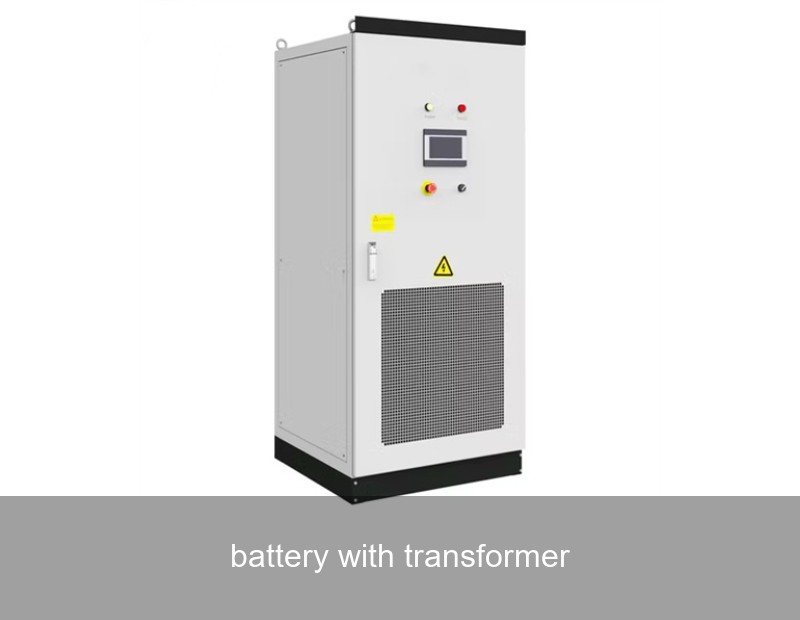
Have you ever wondered how the electricity from your solar panels or a large-scale battery storage system seamlessly integrates with your home appliances or the national grid? The unsung hero enabling this safe and efficient connection is often a specific configuration: a battery with transformer. This pairing is far more than just hardware; it's a fundamental cornerstone for stability, safety, and intelligence in today's renewable-centric energy landscape. As we transition away from fossil fuels, the ability to store intermittent solar and wind power and then release it on demand is paramount. This is where advanced battery energy storage systems (BESS), expertly coupled with the right power conversion technology, become indispensable. Companies like Highjoule, a global leader since 2005, are at the forefront of engineering these integrated solutions for commercial, industrial, and utility applications, ensuring that clean energy is not just generated but also reliably delivered.
Table of Contents
- The Core Challenge: Why We Can't Just Plug Batteries In
- The Transformer Explained: More Than Just Voltage Change
- The Integrated Solution: Battery with Transformer Systems
- A Real-World Case Study: Stability for a German Industrial Park
- The Highjoule Approach: Intelligent, Transformer-Ready Storage
- The Future Horizon: Smarter Grids and New Possibilities
The Core Challenge: Why We Can't Just Plug Batteries In
Imagine trying to charge a laptop directly from a high-voltage power line—it's a dangerous and impossible mismatch. Similarly, battery systems operate at specific direct current (DC) voltages, while our electrical grids and facilities use alternating current (AC) at standardized voltages (like 400V, 11kV, or 33kV). This fundamental incompatibility is the first hurdle. A power conversion system (PCS), or inverter, handles the basic DC-to-AC conversion. However, the transformer takes this a critical step further. It's the essential component that adapts the voltage level to match the precise requirements of the local grid or facility, ensuring safe and compliant interconnection.
The Data Behind the Need
The integration of renewables is accelerating. According to the International Energy Agency (IEA), global renewable capacity additions grew by almost 50% in 2023. This surge creates volatility. Grid operators need assets that don't just produce power but can also provide ancillary services like frequency regulation and voltage support. A battery with transformer is uniquely positioned to offer these services because it can precisely control the quality and characteristics of the power it injects or absorbs from the grid.
The Transformer Explained: More Than Just Voltage Change
At its simplest, a transformer uses electromagnetic induction to step up (increase) or step down (decrease) AC voltage. But in the context of battery storage, its role is multifaceted:
- Voltage Matching & Compliance: It ensures the battery system's output meets the exact voltage of the factory, commercial building, or distribution grid it's connected to.
- Galvanic Isolation: This is a crucial safety feature. It creates a physical separation between the battery's electrical circuit and the grid, protecting both the battery and the grid from faults, surges, and DC current injection, which can damage equipment.
- Power Quality Enhancement: Modern transformers, especially when paired with sophisticated inverters, help in filtering harmonics and maintaining a clean sine wave, leading to higher power quality.
So, when we talk about a battery with transformer, we're really describing a unified, intelligent system designed for seamless and safe grid integration.
The Integrated Solution: Battery with Transformer Systems
Leading providers don't simply sell batteries and transformers as separate boxes. The true value lies in the pre-engineered, tested, and optimized integration. An advanced BESS with an integrated transformer solution typically includes:
| Component | Function | Benefit in an Integrated System |
|---|---|---|
| Battery Racks (Li-ion, LFP) | Stores electrical energy chemically | High energy density, long cycle life, scalable capacity. |
| Power Conversion System (PCS) | Converts DC from batteries to AC for the grid | Bi-directional flow, rapid response for grid services. |
| Isolation Transformer | Steps voltage, provides galvanic isolation | Ensures safety, grid compliance, and voltage stability. |
| Energy Management System (EMS) | The "brain" that controls charging/discharging | Optimizes for cost, self-consumption, or grid support. |
This integrated approach reduces on-site engineering, ensures compatibility, speeds up commissioning, and enhances overall system reliability and performance.
A Real-World Case Study: Stability for a German Industrial Park
Let's look at a concrete example from Europe. A large manufacturing park in North Rhine-Westphalia, Germany, faced two challenges: high peak demand charges from the grid and occasional voltage dips that disrupted sensitive machinery. They needed a solution that could provide peak shaving (reducing grid draw during expensive peak times) and also offer dynamic voltage support.
The implemented solution was a 2.5 MWh containerized battery energy storage system, featuring a fully integrated battery with transformer design. The system was configured for:
- Peak Shaving: The EMS forecasts load and discharges the battery during daily peak periods, reducing demand charges by an estimated 25% annually.
- Voltage Support: The transformer-inverter system can inject or absorb reactive power in milliseconds, stabilizing voltage within the park's internal grid. This capability is certified under German grid codes for providing ancillary services.

Image Source: Unsplash - Representative image of an industrial park with renewable energy integration.
Within the first year of operation, the system not only delivered significant cost savings but also improved the power quality for all tenants. This case illustrates how a well-designed battery with transformer system solves immediate financial pain points while simultaneously contributing to broader grid resilience—a key concern for network operators across the EU and US.
The Highjoule Approach: Intelligent, Transformer-Ready Storage
At Highjoule, our nearly two decades of experience have taught us that reliability is built into the design. For commercial and industrial clients, we offer our H-Series modular storage solutions. These are pre-configured, containerized systems that come with the battery management, PCS, and appropriately sized isolation transformer as a single, plug-and-play unit. This eliminates integration guesswork and ensures compliance with regional standards like UL 9540 in the US or IEC 62933 in Europe.
Our systems are governed by our proprietary Adaptive Grid OS energy management platform. This software doesn't just manage the battery's state of charge; it intelligently coordinates the entire battery with transformer system to participate in multiple value streams. For a microgrid project in California, for instance, the EMS might prioritize solar self-consumption during the day, perform peak shaving in the evening, and even respond to a utility's frequency regulation signal—all automatically, with the transformer ensuring flawless grid interaction at every step.

Image Source: Unsplash - Representative image of energy system monitoring and control.
We focus on making advanced storage simple and bankable. By providing a fully integrated battery with transformer solution, coupled with sophisticated software, we de-risk projects for our clients and ensure they get the maximum possible return on their investment, whether their goal is energy independence, cost reduction, or sustainability.
The Future Horizon: Smarter Grids and New Possibilities
The evolution of the battery with transformer concept is ongoing. We are moving towards even more compact and efficient designs, like solid-state transformers, which offer greater control and power density. Furthermore, as virtual power plants (VPPs) become more prevalent, the ability of thousands of distributed storage systems to act in unison will be crucial. In this future, each individual system's transformer will play a vital role in maintaining local grid health while the aggregated capacity provides grid-scale services.
The question for businesses and communities is no longer if they should consider energy storage, but how to implement it most effectively. The choice of technology partner—one that understands the deep synergy between the battery, the power electronics, and the humble yet critical transformer—will define the success and longevity of their energy resilience strategy.
Is your organization evaluating how a seamlessly integrated battery storage system could address your specific energy cost, reliability, or sustainability goals? What unique grid or power quality challenges does your facility face that a smart battery with transformer solution might solve?
 Inquiry
 Online Chat