


Why Monitoring Solar Battery Performance is Your Key to Energy Independence
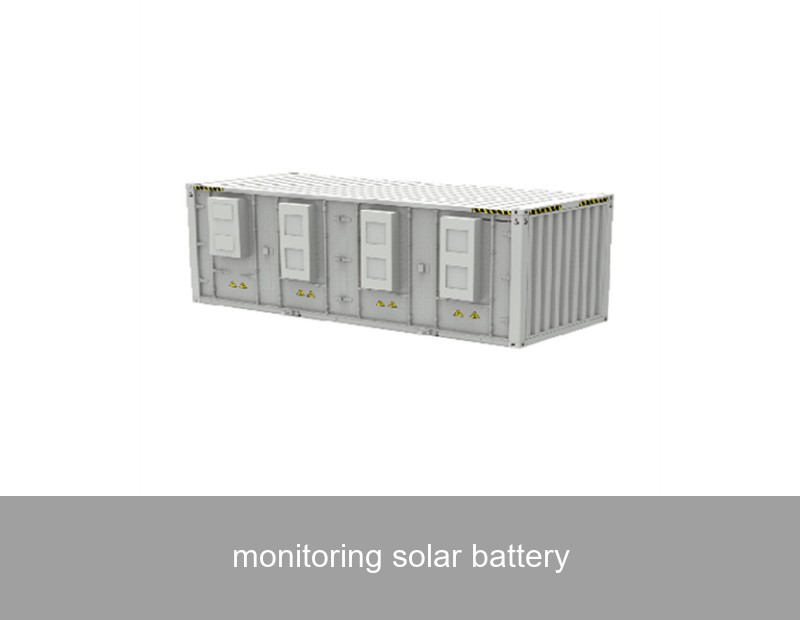
You've made the smart investment in solar panels and a battery. You're generating clean power and storing it for a rainy day (or a dark night). But here's a question many homeowners and businesses don't ask until it's too late: Is your system truly performing at its peak, or is valuable energy—and money—silently slipping away? This is where the critical practice of monitoring solar battery systems transforms from a technical feature into the cornerstone of your energy strategy. It's the difference between just having a system and truly mastering your power.
Table of Contents
- The Silent Issue: "Set and Forget" Doesn't Work
- What Data Matters in Solar Battery Monitoring?
- A Real-World Case: The German Bakery That Saved 23%
- From Data to Proactive Insights
- The Highjoule Approach: Intelligent Monitoring for Peace of Mind
- The Future of Monitoring: AI and Predictive Analytics
The Silent Issue: "Set and Forget" Doesn't Work
Imagine buying a high-performance car with no speedometer, fuel gauge, or check engine light. That's essentially a solar-plus-storage system without robust monitoring. Many assume installation is the finish line. The reality? Degradation happens. Inefficiencies creep in. A single faulty cell or a misconfigured inverter setting can significantly impact your return on investment and energy security over the system's 10-15 year lifespan.
Effective monitoring solar battery health provides a real-time dashboard for your personal energy ecosystem. It answers vital questions: How much solar energy did I produce vs. consume? What is my battery's actual State of Health (SoH)? Am I optimizing time-of-use rates from my utility? Without this clarity, you're operating in the dark.
The Numbers Don't Lie: The Impact of Unmonitored Systems
Industry studies highlight the gap. According to the National Renewable Energy Laboratory (NREL), unaddressed performance issues can lead to an average annual energy loss of 3-5% in photovoltaic systems, with losses compounding when storage is involved. For a 10 kW system, that's hundreds of kilowatt-hours and significant savings lost each year.
What Data Matters in Solar Battery Monitoring?
Not all data is created equal. True monitoring goes beyond a simple "solar production" number. Here’s what a comprehensive monitoring platform should track:
- Battery-Specific Metrics: State of Charge (SoC), State of Health (SoH), charge/discharge cycles, temperature, and depth of discharge (DoD).
- System Performance: Solar PV production (in kWh), home/business consumption, grid import/export, and self-consumption rate.
- Financial Tracking: Real-time savings, earnings from grid feed-in, and impact of tariff changes.
- Fault Detection & Diagnostics: Alerts for underperformance, communication errors, or component failures.
| Metric | Why It Matters | Ideal Monitoring Feature |
|---|---|---|
| State of Health (SoH) | Measures battery degradation over time (like a battery's "mileage"). | Trend graph and annual degradation rate calculation. |
| Self-Consumption Rate | Percentage of your solar power used directly, maximizing savings. | Daily/Weekly reports with optimization tips. |
| Grid Independence Index | Shows how much of your power came from your own system. | Real-time display and historical comparisons. |
A Real-World Case: The German Bakery That Saved 23%
Let's look at a concrete example from Bavaria, Germany. A family-run bakery with a 50 kW solar array and a 40 kWh battery system noticed their electricity bills were not decreasing as projected after 18 months. Their basic inverter app showed "system OK."
After upgrading to an advanced monitoring solution (like the kind Highjoule provides), the data revealed a critical pattern: the battery was consistently stopping its discharge cycle two hours earlier than programmed each evening, coinciding with their peak oven usage. This forced them to buy expensive peak-grid power.
The Insight & Fix: The monitoring software's granular data log pinpointed a voltage spike from a large refrigeration compressor starting up, which the battery's safety protocol misinterpreted as a grid fault. The system was resetting. With this data, their installer adjusted the battery's sensitivity settings and load sequencing.
The Result: A 23% further reduction in their grid energy purchases, paying for the monitoring upgrade in under four months. This case, documented in a Fraunhofer ISE study on storage cost-effectiveness, underscores how monitoring solar battery systems isn't just about observation—it's about actionable intelligence.

Image: Commercial solar installation, similar to the bakery case study. Source: Unsplash (License: Free to use)
From Data to Proactive Insights
The bakery story illustrates the evolution from passive data collection to proactive management. Modern monitoring does three key things:
- Alerts You Before Problems Cost You: Receive notifications for performance drops, not just total failures.
- Optimizes for Weather and Tariffs: Advanced systems can use weather forecasts to pre-charge batteries before a cloudy day or schedule discharge during high utility rates.
- Validates Your Investment: Clear, reportable data proves your system's financial and environmental ROI, which is crucial for businesses claiming sustainability goals.
The Highjoule Approach: Intelligent Monitoring for Peace of Mind
At Highjoule, we believe a storage system is only as good as the insight it provides. That's why our H-PowerStack commercial and industrial battery energy storage systems (BESS) and H-HomeVault residential solutions come integrated with our proprietary EnergyMind OS platform.
EnergyMind goes beyond basic dashboards. It offers:
- Cell-Level Monitoring: We monitor the voltage and temperature of individual battery cells within our racks, allowing for unparalleled precision in diagnostics and safety.
- Adaptive Learning Algorithms: The system learns your unique energy consumption patterns and automatically suggests (or, with your settings, enacts) optimal charge/discharge schedules.
- Granular Reporting: Generate tailored reports for sustainability compliance, financial auditing, or maintenance planning.
- Remote Serviceability: With customer permission, our support team can securely view system data to provide fast, accurate remote diagnostics, often resolving issues without a site visit.

Image: Example of a detailed energy monitoring dashboard interface. Source: Unsplash (License: Free to use)
The Future of Monitoring: AI and Predictive Analytics
The next frontier is predictive health. Imagine your monitoring system sending an alert: "Battery Module #3 in Rack A is showing a 15% faster temperature rise than its peers during charge cycles. Predictive analysis suggests a cooling fan may need inspection within the next 90 days." This shifts maintenance from reactive to scheduled, preventing downtime. Highjoule's R&D is actively integrating these AI-driven models into EnergyMind, moving us closer to truly autonomous energy management.
Your System's Silent Partner
A solar battery is a physical asset, but the monitoring software is its intelligent partner. It ensures your asset delivers on its promise every single day. Whether you're a homeowner seeking energy security or a facility manager tasked with cutting costs and carbon, the question isn't whether you can afford to monitor—it's whether you can afford not to.
What's the one question about your current or planned solar battery system's performance that keeps you up at night? Share it with our energy experts, and let's explore how intelligent monitoring can provide the answer.
 Inquiry
 Online Chat