


Unlocking Solar Potential: Why the Right MPPT Solar Charge Controller Matters in Sri Lanka
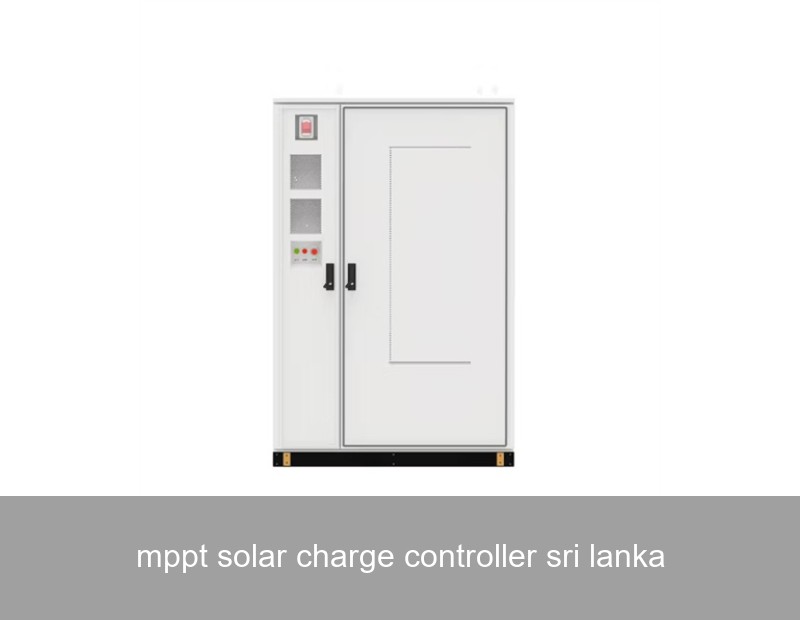
Imagine your solar panels are a powerful river of energy. Without the right guidance, that power can be wasted, flowing inefficiently into your battery bank. This is where the MPPT (Maximum Power Point Tracking) solar charge controller becomes the essential engineer, especially in a sun-rich yet challenging environment like Sri Lanka. For homeowners and businesses across the island nation, harnessing the abundant solar resource is key to combating energy instability and high costs. However, the tropical climate—with its intense heat, humidity, and variable cloud cover—demands more than just panels; it requires intelligent technology to maximize every kilowatt-hour. The MPPT solar charge controller is that critical brain, constantly optimizing the energy harvest to ensure your solar investment in Sri Lanka pays off faster and performs reliably for years to come.
Table of Contents
- The Sri Lankan Solar Phenomenon: Opportunity Meets Challenge
- MPPT Explained: The Intelligent Heart of Your Solar System
- Data & Impact: How MPPT Technology Transforms Efficiency
- A Case Study from Colombo: Real-World Savings in Action
- Choosing Resilience: Features for the Sri Lankan Climate
- Highjoule's Smart Energy Solutions for Robust Performance
- Your Solar Future in Sri Lanka: What's the Next Step?
The Sri Lankan Solar Phenomenon: Opportunity Meets Challenge
Sri Lanka presents a perfect paradox for solar energy. The island boasts an impressive average of over 5 hours of full sunshine per day, making it an ideal candidate for photovoltaic (PV) systems. Yet, this potential is tempered by real-world hurdles. Frequent grid fluctuations and load shedding in certain areas push consumers towards energy independence. Simultaneously, the very environment that provides so much sun also subjects equipment to high temperatures, salty coastal air, and sudden monsoon rains. A standard solar setup can lose significant efficiency as panel voltage fluctuates with heat. This is the core problem: without a sophisticated regulator, your system might be capturing only 60-70% of the energy your panels are theoretically capable of producing. That's lost money and unrealized potential on your rooftop.
MPPT Explained: The Intelligent Heart of Your Solar System
Let's demystify the technology. Think of your solar panel's output as a curve. There's a specific point on that curve—the Maximum Power Point (MPP)—where it produces the highest combination of voltage and current (thus, maximum watts). This point isn't fixed; it shifts constantly with changes in sunlight intensity and temperature.
- PWM vs. MPPT: Older PWM (Pulse Width Modulation) controllers act like a simple on/off switch, pulling panel voltage down to the battery's level, often wasting the extra voltage as heat. An MPPT controller, however, is a smart DC-DC converter.
- The "Tracking" Magic: It continuously scans and tracks that optimal MPP. It then intelligently converts the excess panel voltage into additional charging current for your batteries.
- The Simple Analogy: If your solar panels are a high-pressure water pipe and your battery is a lower-pressure tank, a PWM controller would just let the pressure drop, wasting energy. An MPPT controller uses that extra pressure to pump more water into the tank. In practical terms, this can mean up to 30% more energy harvested from the same panels, particularly in cooler mornings or hazy conditions common in Sri Lanka.

Image Source: Unsplash (Representative image of solar technology)
Data & Impact: How MPPT Technology Transforms Efficiency
The numbers speak for themselves. While a well-sized PWM controller might achieve an efficiency of 70-80% in matching the panel to the battery, modern MPPT controllers boast conversion efficiencies of 97-99%. But the real gain is in the overall energy harvest. Consider a common 400W panel in Sri Lanka. On a hot afternoon, its rated voltage might drop. A PWM controller would follow that drop, reducing effective charge. An MPPT controller finds the new optimal point, ensuring the maximum possible power is extracted. Over a year, this difference can amount to hundreds of kilowatt-hours. For a commercial installation, this is the difference between a 3-year and a 5-year return on investment (ROI). It also means you can sometimes use fewer panels or a smaller battery bank to meet your needs, reducing upfront capital costs—a significant factor for any Sri Lankan household or business.
A Case Study from Colombo: Real-World Savings in Action
Let's look at a concrete example. A medium-sized garment factory in the Colombo district was facing crippling energy costs, accounting for nearly 40% of its operational overhead. In 2022, they installed a 50kW rooftop solar system. The initial design proposed a high-quality MPPT-based charge controller system for their battery backup unit.
| Metric | With Advanced MPPT System | Estimated with Basic Regulator |
|---|---|---|
| Average Daily Harvest | 210-225 kWh | 160-180 kWh |
| Battery Charge Time (0-100%) | 4.5 hours | 6+ hours |
| System Efficiency in Heat | 94% sustained | ~75% sustained |
| Projected Annual Savings | LKR 3.2 Million | LKR 2.1 Million |
The factory's energy manager reported that during the frequent partly cloudy days, the system's performance was remarkably stable. The MPPT controllers' rapid tracking adjusted to the changing light levels seamlessly, keeping the production line's critical backup power ready. The additional ~50 kWh harvested daily allowed them to power additional lighting and office loads, further increasing savings. This case underscores that the choice of charge controller isn't just a technical detail; it's a central financial decision.
Choosing Resilience: Features for the Sri Lankan Climate
Not all MPPT controllers are built equal for Sri Lankan conditions. When selecting a unit, prioritize these features:
- High-Temperature Tolerance: Look for an operating range up to 60°C or more. Internal components must withstand prolonged heat.
- Corrosion-Resistant Housing: For coastal areas like Galle or Trincomalee, a robust, salt-spray-resistant casing is non-negotiable.
- Advanced Battery Management: Support for various battery types (Lithium, AGM, Gel) with customizable charging profiles extends battery life, a major cost component.
- Remote Monitoring: The ability to monitor performance via smartphone is invaluable for troubleshooting and ensuring peak operation without physical inspection.
The Lithium-Ion Compatibility Advantage
As lithium-ion battery prices become more accessible, their longer lifespan and deeper discharge cycles are a game-changer. A high-end MPPT controller with dedicated lithium profiles (like for LiFePO4) ensures safe, full-capacity charging, protecting your investment. This forward compatibility is crucial for system upgrades.
Highjoule's Smart Energy Solutions for Robust Performance
At Highjoule, we understand that global solutions need local intelligence. Our advanced energy storage systems are engineered with precisely the kind of intelligent power management that thriving solar markets like Sri Lanka require. While we provide integrated systems, the core principle of our design mirrors the MPPT philosophy: extract maximum value from every resource.
Our Highjoule HPS Series for commercial and industrial applications incorporates multi-stage, MPPT-based charging algorithms that are fully customizable. Built for rugged environments, these systems feature high-temperature ratings and sophisticated monitoring platforms. For residential and small business microgrids, our HomePower+ solutions offer an all-in-one unit that includes an MPPT solar charger, inverter, and lithium battery management, designed for easy installation and resilience. By choosing a system built around advanced charge control, you're not just buying hardware; you're investing in a platform that guarantees your solar array in Kandy, Jaffna, or Matara delivers on its sunny promise, day after day.

Image Source: Unsplash (Representative image of tropical solar installation)
Your Solar Future in Sri Lanka: What's the Next Step?
The journey to energy independence in Sri Lanka starts with asking the right questions. When evaluating your next or existing solar system, will you settle for basic energy capture, or will you insist on intelligent optimization? Have you calculated how much energy your current system might be losing due to inadequate charge control, especially during the island's dynamic weather? We encourage you to speak with your solar installer and specifically discuss the make, model, and capabilities of the MPPT charge controller they propose. Request performance data sheets and compare their efficiency curves at high temperatures. Your optimal solar harvest depends on it.
What specific energy challenge in your home or business could be solved by capturing 30% more power from your rooftop?
 Inquiry
 Online Chat