


National Energy for Sale: How Decentralized Power is Reshaping Our Grid
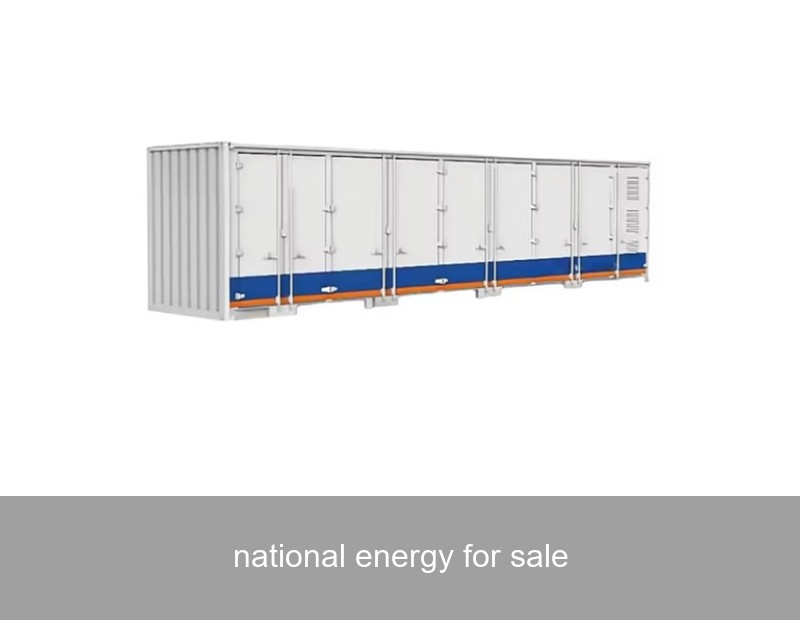
Imagine a future where your home or business isn't just a consumer of electricity, but an active participant in the energy market. This isn't science fiction; it's the emerging reality of "national energy for sale." The concept revolves around decentralized energy resources—like rooftop solar paired with battery storage—feeding power back into the national grid, creating a more resilient, democratic, and sustainable energy system. For homeowners and businesses, this transforms energy from a mere utility bill into a potential revenue stream. Companies like Highjoule, a global leader in advanced energy storage systems since 2005, are at the forefront of providing the intelligent technology that makes this peer-to-peer energy economy possible.
Table of Contents
The Rise of the Prosumer: From Consumer to Market Player
For decades, the energy model was linear: large power plants generated electricity, which traveled vast distances through transmission lines to passive consumers. The rise of affordable solar photovoltaic (PV) panels began to shift this dynamic, allowing property owners to generate their own power. However, the true game-changer is the integration of sophisticated battery energy storage systems (BESS). Without storage, excess solar energy is often fed back to the grid for a minimal feed-in tariff. With storage, that energy can be saved, managed, and sold at the most opportune time—like during peak demand when electricity prices skyrocket. This creates the "prosumer": a producer and consumer who actively manages and monetizes their energy assets.
The Data Driving the Decentralization
The momentum behind decentralized energy isn't just theoretical; it's backed by compelling data. In the United States, the Energy Information Administration (EIA) projects that small-scale solar (like rooftop installations) will be a key driver of electric generation growth. Meanwhile, grid instability, often caused by extreme weather events and aging infrastructure, is pushing demand for backup power solutions. The financial incentive is clear: during grid stress events or peak pricing periods, the value of stored, dispatchable energy can be multiples of the standard retail rate. This creates a compelling value proposition for investing in a system that can both protect your operations and generate revenue.

Credit: Photo by Andreas Gücklhorn on Unsplash. The modern prosumer's setup: solar generation, storage, and smart management.
Case Study: The Texan Microgrid Pioneer
Let's look at a real-world example from Texas, a state with a deregulated energy market and its own grid, ERCOT. A medium-sized commercial cold storage facility faced crippling costs during the summer months due to high cooling loads coinciding with peak wholesale electricity prices, which could exceed $5,000 per megawatt-hour during grid alerts. They partnered with Highjoule to implement a turnkey solution: a 500 kW solar canopy and a 1 MWh Highjoule IntelliBESS industrial battery system.
The Highjoule system's intelligent energy management software was programmed to perform automated energy arbitrage. It charges the batteries from the solar array and the grid during low-cost, off-peak hours (often at night). Then, during the afternoon peak price window, the facility runs almost entirely on its stored energy, avoiding exorbitant grid purchases. Furthermore, the facility is enrolled in a Demand Response program. When ERCOT issues a conservation alert, the system automatically switches to island mode, powering the critical cooling loads from the battery and selling the surplus stored energy back to the grid at a premium. The result? In its first year, the project reduced the facility's annual energy costs by 68% and generated over $120,000 in revenue from grid services, achieving a return on investment in under 4 years.
The Technology Enabler: Beyond Basic Batteries
For "national energy for sale" to function reliably, the technology must be more than just a battery in a box. It requires an integrated, intelligent system. This is where Highjoule's expertise comes into play. Our IntelliBESS platform for commercial and industrial applications and HomePower series for residences are built on three core pillars:
- Advanced Battery Chemistry: Utilizing lithium iron phosphate (LFP) cells for superior safety, longevity (over 10,000 cycles), and stable performance across a wide temperature range.
- Intelligent Energy Management System (EMS): The brain of the operation. This AI-driven software forecasts energy production (from solar) and consumption, analyzes real-time grid pricing data, and autonomously optimizes charge/discharge cycles for maximum self-consumption, cost savings, and revenue generation.
- Grid-Forming Inverter Technology: A critical feature for modern microgrids. Unlike traditional grid-following inverters, Highjoule's systems can "form" a stable grid independently. This means if the main grid goes down, your system can not only provide backup power but also seamlessly restart and manage a local microgrid, keeping your community or business operational.
This combination transforms a simple storage unit into a smart grid asset that can be aggregated and virtually dispatched to support the wider network.
How Does "Energy for Sale" Actually Work? The Market Mechanics
You might wonder, how does my small battery system connect to a national market? Typically, individual assets are aggregated by a third-party aggregator or a Virtual Power Plant (VPP) platform. These aggregators pool thousands of distributed energy resources (like Highjoule systems) to create a significant, grid-scale resource. This "virtual plant" can then bid into various energy markets. Here’s a simplified view of the primary markets:
| Market Service | What It Does | Value to Prosumer |
|---|---|---|
| Energy Arbitrage | Buy low, sell high. Store energy when cheap, sell when expensive. | Direct revenue from price differences. |
| Frequency Regulation | Help grid maintain stable 60 Hz frequency by injecting/absorbing power in seconds. | High-value payments for fast, accurate response. |
| Demand Response | Reduce or shift load (or export power) during grid stress to prevent blackouts. | Capacity payments and avoided peak costs. |
| Capacity Markets | Provide a guarantee of future availability of power during predicted shortages. | Steady, predictable income for being "on call." |
The regulatory landscape, like FERC Order 2222 in the U.S., is actively breaking down barriers to allow these distributed resources to compete fairly in wholesale markets, truly enabling a national energy marketplace.

Credit: Photo by American Public Power Association on Unsplash. Grid operators are increasingly managing flows from millions of distributed assets.
Future Opportunities and Inevitable Challenges
The vision of a fully democratized energy grid is powerful, but it's not without hurdles. Grid modernization is essential; our current infrastructure was designed for one-way flow, not the dynamic, bidirectional flow of millions of prosumers. Cybersecurity for a vastly more complex digital grid is paramount. Furthermore, market rules and regulations must continue to evolve to be inclusive and efficient. However, the opportunities are transformative: enhanced national energy security through decentralization, accelerated integration of renewables, lower overall system costs, and the empowerment of individuals and communities to take control of their energy future and finances.
What Could Your Role Be in the New Energy Marketplace?
The transition to a decentralized energy landscape is underway. Whether you're a homeowner with a roof, a factory owner with a large load, or a community leader, you have a potential stake in this new economy. The first step is understanding your own energy profile—your consumption patterns, your site's potential for solar generation, and the grid services programs available in your region. From there, it's about choosing the right technology partner. Highjoule works with you to design, install, and maintain a system tailored not just for backup power, but for active participation. Our systems are future-proofed with software-upgradable capabilities to adapt as new market opportunities arise.
So, we leave you with this question: As the lines blur between energy buyers and sellers, are you ready to audit your property not just for its energy consumption, but for its potential as a revenue-generating power plant?
 Inquiry
 Online Chat