


The Growing Need for Energy Storage Systems: Powering a Sustainable Future
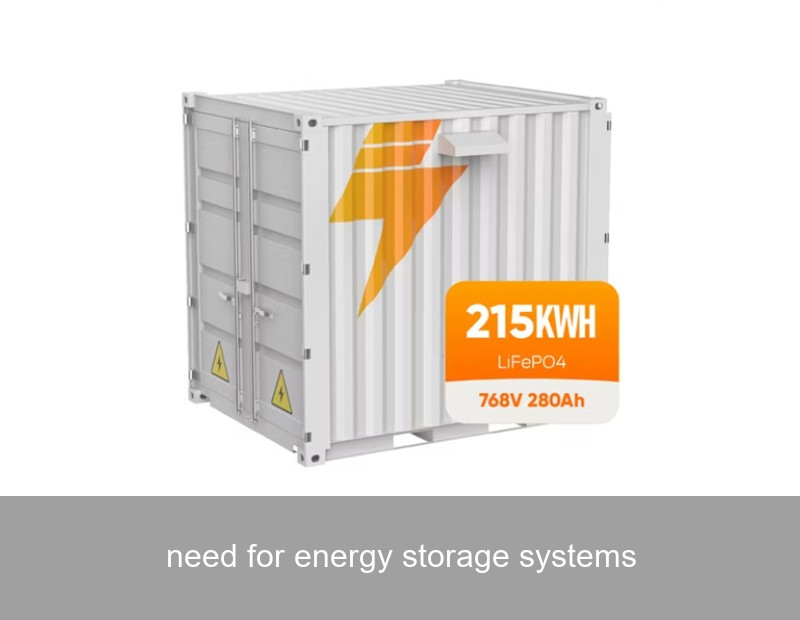
You flip a switch, and the light comes on. It’s a simple, expected miracle of modern life. But behind that simplicity, a profound transformation is underway. Our power grids, built for a bygone era of predictable, centralized fossil fuel generation, are now straining under the weight of the 21st century's dual demands: a surge in electricity demand and the urgent need for energy storage systems to integrate renewable sources like solar and wind. This isn't just a technical challenge; it's the fundamental shift enabling a resilient, clean energy future.
Table of Contents
The Phenomenon: An Electric World in Flux
Imagine two powerful waves crashing into our aging grid infrastructure. The first wave is electrification: from electric vehicles (EVs) and heat pumps to data centers and smart factories, we're plugging in more than ever before. The International Energy Agency (IEA) projects global electricity demand could increase by over 80% by 2040 under current policies (IEA, 2023). The second wave is renewable generation. Solar panels and wind turbines produce clean, abundant power—but only when the sun shines or the wind blows. This intermittency creates a mismatch: peak generation often doesn't align with peak demand.

This mismatch isn't just an engineering puzzle; it leads to real-world problems like grid instability, price volatility, and curtailment (wasting excess renewable energy). The question becomes: how do we capture the sun's noon-time bounty to power our evening homes and businesses?
The Data: Quantifying the Storage Imperative
The numbers tell a compelling story. According to BloombergNEF, the global energy storage market is set to explode, with installations projected to reach a cumulative 1,095 gigawatts (GW) by 2030—a fifteenfold increase from 2021 levels (BloombergNEF, 2023). Why this exponential growth? Let's break down the key drivers:
- Grid Stability: Storage provides frequency regulation, reacting in milliseconds to keep the grid's heartbeat steady.
- Renewable Integration: Storage acts as a buffer, smoothing out the variable output from solar and wind farms.
- Cost Savings: For businesses, storage can reduce demand charges, which often make up 30-70% of a commercial electricity bill.
- Energy Security: Storage provides backup power during outages, a growing concern with increasing extreme weather events.
The economic case is solidifying. The levelized cost of storage (LCOS) for lithium-ion batteries has fallen nearly 90% in the past decade, making storage not just a technical asset, but a smart financial one.
The Case Study: California's Duck Curve in Action
Perhaps no example illustrates the need for energy storage systems more vividly than California's famous "Duck Curve." This graph, charted by the California Independent System Operator (CAISO), shows the deepening mid-day dip in net load (thanks to abundant solar) and the steep evening ramp-up as the sun sets and demand peaks.
In 2022, CAISO faced a critical evening period where it needed to rapidly ramp up nearly 13,000 MW of non-solar power in just three hours. The strain on gas "peaker" plants was immense, costly, and carbon-intensive. The solution? Aggressive storage deployment. California now leads the U.S. with a mandate to deploy 52,000 MW of storage by 2045. One real-world success is the Moss Landing Energy Storage Facility. With phases totaling 750 MW / 3,000 MWh, it's one of the world's largest battery installations. During a heatwave in September 2022, this facility and others like it discharged over 2,000 MW to the grid, crucially preventing rolling blackouts by filling the belly of the duck. This case proves storage is no longer a pilot project; it's essential grid infrastructure.
The Solution: How Modern Energy Storage Works
Today's energy storage systems, particularly Battery Energy Storage Systems (BESS), are sophisticated hubs of intelligence. At their core is the battery rack (using lithium-ion or other advanced chemistries), but the real magic lies in the power conversion system (PCS) and the brain: the energy management system (EMS).
A smart EMS constantly analyzes data—grid frequency, electricity prices, weather forecasts, and your consumption patterns. It autonomously decides when to store energy, when to discharge it back to the grid or your facility, and how to optimize for cost, sustainability, or resilience. This turns a simple battery into a dynamic financial and operational asset.
Highjoule's Role: Intelligent Storage for Every Need
At Highjoule, we've been at the forefront of this transformation since 2005. We understand that the need for energy storage systems manifests differently across sectors, and our solutions are tailored accordingly. Our core philosophy is to deliver not just hardware, but intelligent, integrated power resilience.

For Commercial & Industrial (C&I) clients, our HI-POWER C&I Series is a game-changer. These modular systems are designed to slash peak demand charges, provide uninterrupted power during outages, and even participate in grid services like demand response. A European manufacturing plant using our system reduced its annual energy costs by 28% while securing its critical production lines.
For Utility-Scale and Microgrid applications, our HI-POWER GRID Series offers utility-grade performance. With advanced grid-forming capabilities, these systems can "black start" a microgrid or provide vital stability services to the main grid, facilitating higher penetrations of renewables. Highjoule systems are a key component in several community microgrids in the Northeastern U.S., providing clean, reliable power during winter storms.
And for the Residential market, our HI-POWER HOME solution integrates seamlessly with rooftop solar. Our user-friendly app allows homeowners to maximize self-consumption of their solar energy, protect their homes from outages, and contribute to a more stable community grid.
Across all products, Highjoule's proprietary Adaptive EMS platform ensures every kilowatt-hour is optimized for your specific goals, making sustainability not just attainable, but profitable.
The Future Horizon: What's Next for Storage?
The journey is just beginning. We're moving beyond lithium-ion to explore chemistries like sodium-ion and long-duration storage technologies (8+ hours) that can store seasonal energy. The convergence of AI with storage management will unlock predictive optimization we can only imagine today. Furthermore, the rise of vehicle-to-grid (V2G) technology will turn millions of EVs into a vast, distributed network of mobile storage units.
This evolution underscores that the need for energy storage systems is dynamic. It's expanding from solving intermittency to becoming the cornerstone of a fully decentralized, digitalized, and democratized energy ecosystem.
As you look at your own energy bills, sustainability goals, or operational resilience, where do you see the most immediate opportunity for storage to transform your relationship with power?
 Inquiry
 Online Chat