


Northland Power Europe Netherlands BV: A Case Study in Renewable Integration and Grid Stability
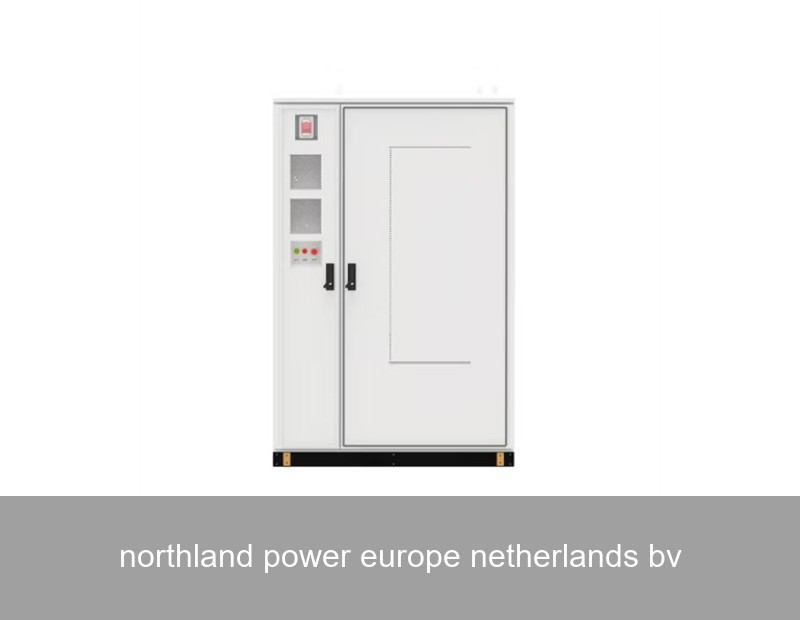
Imagine a windy day in the North Sea. Gigawatts of clean power surge from offshore wind farms towards the European mainland. Now, imagine a calm, cloudy day. That power flow dips dramatically. This inherent variability of renewable sources like wind and solar is one of the most significant challenges facing the modern energy transition. For forward-thinking power producers like Northland Power Europe Netherlands BV, managing this intermittency isn't just a technical hurdle; it's the core of their business model to deliver reliable, sustainable energy. The key to unlocking this reliability? Intelligent energy storage.
The Grid Balancing Challenge: A European Phenomenon
Europe and the United States are aggressively pursuing decarbonization goals, leading to an unprecedented influx of wind and solar power onto the grid. While this is positive for the environment, it introduces a fundamental engineering challenge: the grid must always be in perfect balance between supply and demand, second-by-second. Traditional grids relied on predictable fossil-fuel plants to "ramp up" or down as needed. Renewables, however, are weather-dependent.
- Frequency Fluctuations: When supply exceeds demand, grid frequency rises. When demand outpaces supply, it falls. Both scenarios can damage equipment and lead to blackouts.
- Congestion Management: Power lines can become overloaded in areas with high renewable generation, forcing curtailment (wasting clean energy).
- Price Volatility: This imbalance creates extreme peaks and troughs in wholesale electricity prices.
According to the International Renewable Energy Agency (IRENA), the global average annual curtailment rate for wind and solar can exceed 5% in some regions, representing a massive loss of clean energy and revenue. This is the precise operational environment where companies like Northland Power Europe operate.
The Smart Solution: Advanced Battery Energy Storage Systems (BESS)
This is where Battery Energy Storage Systems (BESS) transition from a promising technology to an essential grid asset. Think of a BESS as a giant, high-speed "shock absorber" for the electricity grid. It doesn't generate power but intelligently stores it and releases it in milliseconds to maintain equilibrium.
| Grid Need | How BESS Responds | Benefit to Producers like Northland Power |
|---|---|---|
| Frequency Regulation | Injecting or absorbing power instantly to stabilize grid frequency. | Provides a new, high-value revenue stream through ancillary services markets. |
| Renewable Firming | Smoothing the output of a wind or solar farm, turning intermittent power into a predictable source. | Enhances the reliability and bankability of power purchase agreements (PPAs). |
| Energy Arbitrage | Storing energy when prices are low (e.g., sunny/windy periods) and discharging when prices are high. | Maximizes asset revenue and reduces market price risk. |
| Congestion Relief | Storing excess local generation that the grid can't immediately transport, releasing it later. | Minimizes curtailment losses and maximizes utilization of grid connections. |
The technology behind this is complex, but the outcome is simple: a more resilient, efficient, and profitable renewable energy ecosystem. For a company with the portfolio and scale of Northland Power Europe Netherlands BV, integrating storage is a strategic imperative.

Image: Utility-scale battery storage systems are becoming a common sight co-located with renewable generation. (Photo by American Public Power Association on Unsplash)
Case Study: Supporting Grid Stability in the Netherlands
Let's look at a real-world scenario in Northland Power's operational backyard. The Netherlands, with its ambitious offshore wind targets in the North Sea, faces significant grid stability challenges. TenneT, the Dutch Transmission System Operator (TSO), is constantly procuring services to keep the national grid frequency at 50 Hz.
In this context, a 40 MW / 160 MWh BESS project was developed to provide frequency regulation services (FCR and aFRR) to TenneT. While not directly a Northland Power project, it exemplifies the exact market and technical need that their operations must navigate. This facility acts as a giant battery, responding to grid signals faster than any traditional power plant ever could. Projects like this:
- Directly support the integration of Dutch wind power.
- Generate stable revenue from grid service contracts.
- Demonstrate the commercial and technical maturity of large-scale storage in Europe.
For a power producer, having the capability to pair such a system with an existing wind or solar asset transforms that asset's value proposition entirely.
How Highjoule Empowers Renewable Pioneers
This is where Highjoule's expertise becomes critical. Since 2005, we have partnered with developers, utilities, and independent power producers to transform the challenges of intermittency into opportunities for resilience and growth. We understand that for a leader like Northland Power Europe Netherlands BV, a storage solution isn't an off-the-shelf product; it's a core component of a strategic energy asset.
Our approach focuses on delivering intelligent, integrated systems:
- Highjoule GridSynk Platform: Our proprietary energy management software (EMS) is the brain of the operation. It doesn't just control the battery; it makes real-time economic decisions, optimizing for multiple value streams—frequency response, arbitrage, and congestion management—simultaneously.
- Containerized BESS Solutions: We provide fully integrated, factory-tested battery storage systems for commercial, industrial, and utility-scale applications. Our systems are built with safety and longevity as the top priorities, using top-tier Li-ion phosphate (LFP) battery cells.
- End-to-End Service: From initial feasibility studies and financial modeling to system design, grid interconnection support, commissioning, and long-term performance monitoring, Highjoule is a single point of responsibility.
For a company managing a diverse European portfolio, having a technology partner that ensures each storage asset performs optimally against local market rules is invaluable. Our systems are designed to be grid-adaptive, meeting the specific technical requirements of TSOs from the Netherlands to Germany to the UK.

Image: Advanced Energy Management Systems (EMS) are crucial for optimizing battery storage performance. (Photo by ThisisEngineering RAEng on Unsplash)
The Future of Energy is Integrated and Intelligent
The trajectory is clear. The next phase of the energy transition is not just about building more renewables, but about building a smarter, more flexible system around them. The U.S. market, driven by the Inflation Reduction Act (IRA), is seeing a similar explosion in storage paired with solar PV. The business case is now undeniable.
So, whether you are a developer of a new offshore wind farm, an operator of a distributed solar portfolio, or an industrial energy consumer looking to manage costs, the question is no longer if you need storage, but how to implement it most effectively. What unique combination of grid services and energy market opportunities in your specific region would deliver the optimal return on your storage investment?
 Inquiry
 Online Chat