


Understanding the Off-Grid Solar PV System Diagram: Your Blueprint for Energy Independence
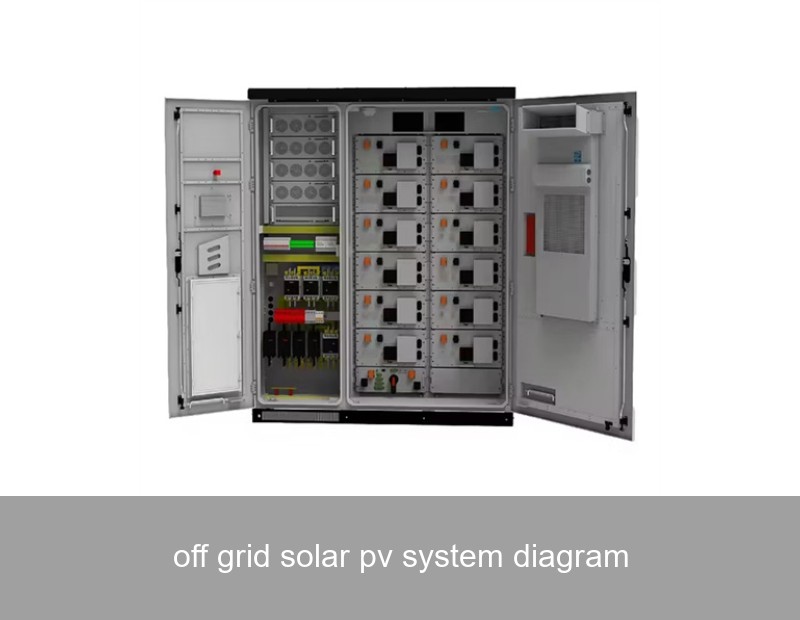
Have you ever looked at a complex off-grid solar PV system diagram and wondered how all those components translate into reliable power for a remote home or business? You're not alone. For many considering energy independence, the schematic is the first, sometimes daunting, step. But it's simply a blueprint—a map of how sunlight is captured, converted, stored, and managed to power your life without the traditional grid. In this guide, we'll demystify that diagram, explain each critical component, and show you how modern technology, like the solutions from Highjoule, is making off-grid power smarter and more accessible than ever.
Table of Contents
- The Core Phenomenon: Why Go Off-Grid?
- Decoding the Off-Grid Solar PV System Diagram
- Data Drives Design: Sizing Your System
- Case Study: An Alpine Retreat's Energy Transformation
- The Highjoule Intelligent Layer: Beyond the Basic Diagram
- The Evolving Future of Off-Grid Systems
The Core Phenomenon: Why Go Off-Grid?
The trend towards energy self-sufficiency is accelerating, driven by more than just remote location necessity. While the classic scenario is a cabin in the woods, we're now seeing a surge in off-grid and backup power systems for suburban homes, agricultural operations, and critical infrastructure. The motivation blends practicality with principle: achieving resilience against increasing power outages, reducing long-term energy costs, and minimizing environmental footprint. An off-grid solar PV system diagram represents the tangible plan to achieve this freedom.
Decoding the Off-Grid Solar PV System Diagram
Let's break down the standard diagram into its key components. Think of it as an energy supply chain, starting with the sun and ending at your appliances.
1. Energy Generation: Solar Panels (PV Array)
The journey begins on your roof or ground mount. Photovoltaic (PV) panels convert sunlight into direct current (DC) electricity. The size of your array is the first major variable in the diagram, determining your system's maximum power potential.

Image source: Unsplash. A typical off-grid installation with solar panels.
2. Energy Management & Conversion: The Charge Controller and Inverter
This is the brain and the translator of your system.
- Solar Charge Controller: This crucial device regulates the voltage and current from the solar panels to the battery bank. It prevents overcharging, which can severely damage batteries. Modern Maximum Power Point Tracking (MPPT) controllers, like those integrated into Highjoule's power conversion systems, can improve energy harvest by up to 30% compared to older technologies.
- Inverter: Batteries and solar panels deal in DC, but your home runs on alternating current (AC). The inverter converts DC to usable AC power. For off-grid systems, a pure sine wave inverter is essential for running sensitive electronics smoothly.
3. Energy Storage: The Battery Bank
The heart of any off-grid system. When the sun isn't shining, your batteries release stored energy. The diagram's battery section shows the configuration (series vs. parallel) to achieve the required system voltage and capacity (measured in kilowatt-hours, kWh). While lead-acid was once the standard, Lithium Iron Phosphate (LiFePO4) batteries are now the preferred choice for their longer lifespan, deeper safe discharge cycles, and higher efficiency. Highjoule's H-Stack series of modular LiFePO4 battery cabinets are designed specifically for robust off-grid and microgrid applications, offering scalable capacity from 10 kWh to over 1 MWh with superior cycle life and built-in Battery Management System (BMS) safety.
4. Backup Power: The Generator (Optional but Recommended)
Most practical off-grid diagrams include a backup generator input. It acts as an insurance policy during prolonged periods of low sunlight (e.g., winter storms). Advanced systems can auto-start the generator when battery levels are critically low.
5. Distribution & Safety: The Load Center and System Monitoring
Finally, the AC power from the inverter is fed into your main load center (breaker panel) to distribute electricity throughout your property. Integral to this is system monitoring—a modern necessity often overlooked in basic diagrams. Real-time data on energy production, consumption, and battery state-of-charge is key to efficient operation.
| Component | Role in the Diagram | Modern Standard |
|---|---|---|
| PV Array | Primary Energy Source | High-efficiency Monocrystalline Panels |
| Charge Controller | Regulates PV input to batteries | MPPT Type (High Efficiency) |
| Battery Bank | Energy Storage Reservoir | Lithium Iron Phosphate (LiFePO4) |
| Inverter | DC to AC Power Conversion | Pure Sine Wave, High Surge Capacity |
| Generator | Backup Power Source | Automatic Start/Stop Compatible |
Data Drives Design: Sizing Your System
A diagram isn't useful without correct sizing. This is a data-intensive process. You must analyze:
- Load Profile: List all appliances, their wattage, and daily usage hours to calculate total daily kWh consumption.
- Solar Insolation: The average peak sun hours at your location (e.g., 3.5 hrs/day in Northern Germany vs. 5.5 hrs/day in California). Data from sources like the European Commission's PVGIS tool is invaluable.
- Autonomy Days: How many days of battery backup you need without sun (typically 2-3 days).
An undersized system leads to blackouts; an oversized one is unnecessarily expensive. Professional design software uses this data to create an optimized off-grid solar PV system diagram.
Case Study: An Alpine Retreat's Energy Transformation
Consider a real-world application: a year-round chalet in the Swiss Alps, previously reliant on a diesel generator. The goal was 100% renewable energy for heating (heat pump), lighting, and appliances, with zero grid connection.
Challenge: Harsh winters with heavy snow and low solar yield, coupled with high energy demand for heating.
Solution & Data:
- A 24 kWp solar array was installed on a steep, south-facing pitch to shed snow easily.
- The core of the system is a Highjoule integrated energy storage system, combining a high-efficiency hybrid inverter (managing PV, battery, and generator), MPPT charge controllers, and 40 kWh of H-Stack LiFePO4 battery storage.
- A propane generator is retained as a backup, automatically managed by the Highjoule system controller to only run when absolutely necessary.
Results: The system now meets 94% of the annual energy demand from solar, reducing generator runtime by over 90% compared to the old setup. The intelligent energy management prioritizes using solar to heat water and charge batteries during the day, ensuring warmth and power throughout the night. The owner monitors everything via a simple smartphone app. The International Energy Agency highlights the importance of such integrated systems in decarbonizing remote power.

Image source: Unsplash. A modern lithium battery bank similar to those used in advanced off-grid systems.
The Highjoule Intelligent Layer: Beyond the Basic Diagram
At Highjoule, we see the traditional off-grid solar PV system diagram as a starting point. Our expertise lies in adding an intelligent layer of control and optimization. Our Energy Management System (EMS) acts as the central nervous system, making real-time decisions that a static diagram cannot represent. It learns consumption patterns, predicts solar generation based on weather forecasts, and decides the most economical and efficient use of energy—whether to draw from batteries, use direct solar, or (if needed) start the generator. This maximizes component lifespan and minimizes fuel costs. For commercial and microgrid applications, this level of control is not a luxury; it's essential for financial and operational viability.
The Evolving Future of Off-Grid Systems
The diagram is evolving. Future off-grid systems may incorporate wind turbines, hydro power, or even green hydrogen as complementary generation. The role of the battery is also expanding from a simple storage unit to a grid-forming asset that can create a stable "grid" in isolation—a capability built into Highjoule's advanced inverters. As battery costs continue to fall, the economic case for robust, intelligent off-grid systems only grows stronger, moving them from niche applications to mainstream resilience solutions for homes and businesses across Europe and North America.
So, when you look at an off-grid solar PV system diagram now, do you see just a collection of parts, or do you see the potential for a fully intelligent, self-sufficient energy ecosystem tailored to your specific needs and goals?
 Inquiry
 Online Chat