


Solar Packages Zimbabwe with Payment Plan: Your Guide to Affordable, Sustainable Power
Imagine a future where load shedding is a distant memory, your monthly electricity bill is predictable, and your home or business is powered by clean, abundant sunshine. For many in Zimbabwe, this isn't just a dream—it's an increasingly attainable reality, thanks to innovative solar packages Zimbabwe with payment plan options. The energy landscape is shifting rapidly, moving from a reliance on an unstable grid to empowered self-generation. But how do you navigate this shift without a massive upfront investment? The answer lies in understanding the new generation of solar solutions designed for accessibility and long-term value.
Table of Contents
- The Power Shift: From Grid Dependency to Energy Independence
- Beyond the Panels: What Makes a Modern Solar Package?
- The Payment Plan Revolution: Making Solar Accessible
- Real-World Impact: A Case Study from Harare
- Choosing the Right System for Your Needs
- Highjoule's Role: Smart Storage for Reliable Solar Packages
- What's Your Energy Independence Plan?
The Power Shift: From Grid Dependency to Energy Independence
Zimbabwe, like many nations, faces a critical energy paradox: abundant solar resources alongside frequent grid instability. The phenomenon of prolonged load shedding isn't just an inconvenience; it disrupts businesses, hinders education, and affects the quality of daily life. According to the World Bank, access to reliable electricity is a fundamental driver of economic growth and poverty reduction. This gap between potential and reality is precisely where solar energy, particularly systems bundled with flexible payment options, becomes a transformative solution.
It’s a move from being a passive consumer to an active "prosumer"—someone who both produces and consumes energy. The initial barrier, however, has often been cost. Modern solar packages with payment plans are strategically designed to dismantle this barrier, turning a capital expense into a manageable operational one, similar to a monthly utility bill, but one that ultimately leads to ownership and decades of free power.
Beyond the Panels: What Makes a Modern Solar Package?
A true solar power package is more than just photovoltaic (PV) panels on your roof. It's an integrated system where each component must work in perfect harmony for optimal performance, safety, and return on investment. A comprehensive package typically includes:
- Solar PV Panels: The generators, converting sunlight into direct current (DC) electricity.
- Inverter: The brain, converting DC electricity into usable alternating current (AC) for your appliances.
- Battery Energy Storage System (BESS): The heart of energy independence. This stores excess solar energy for use at night or during grid outages.
- Mounting Structure & Cabling: The skeleton and nervous system, ensuring secure installation and efficient energy transfer.
- Monitoring System: The eyes, allowing you to track energy production, consumption, and savings in real-time, often from a smartphone app.

Image Source: Unsplash - A modern solar installation showcasing integrated panels and components.
The quality and compatibility of these components, especially the battery storage, are paramount. A subpar battery can undermine an entire system, leading to insufficient backup, shorter lifespan, and safety concerns. This is where expertise from global providers like Highjoule becomes critical. With nearly two decades of experience, Highjoule designs its IntelliBESS residential and commercial battery systems specifically for high-cycle, long-duration applications common in regions with frequent outages, ensuring reliability when you need it most.
The Payment Plan Revolution: Making Solar Accessible
The financial model is as important as the technology. The emergence of tailored payment plans has fundamentally changed the solar adoption curve. Let's break down how these plans typically work and why they make sense.
| Plan Type | How It Works | Best For | Key Consideration |
|---|---|---|---|
| Lease/Power Purchase Agreement (PPA) | You pay a monthly fee to "lease" the system or for the power it produces. The provider owns and maintains it. | Those seeking minimal upfront cost and no maintenance responsibility. | Total long-term cost may be higher, and you don't own the asset. |
| Instalment Sale (Loan) | You finance the system through a loan or direct with the installer. You own the system from day one after a down payment. | Those who want to own the system and benefit from long-term savings and property value increase. | Requires credit assessment. Monthly payment + grid bill should be less than your old grid bill. |
| Pay-As-You-Go (PAYG) | You make small, frequent payments via mobile money to unlock energy usage, leading to eventual ownership. | Off-grid households or those with limited access to traditional credit. | Excellent for inclusivity; technology enables remote activation based on payments. |
The key is to calculate your Energy Return on Investment (EROI). Compare your current monthly electricity expenditure (including the cost of candles, fuel for generators, etc.) against the proposed solar package monthly payment. Often, the solar payment is equal to or less than the old cost, but with the crucial difference that it's fixed and leads to an asset, not a burnt fossil fuel or a spent utility bill.
Real-World Impact: A Case Study from Harare
Consider the case of a medium-sized poultry farm on the outskirts of Harare. Facing up to 12 hours of load shedding daily, the farm's operations—from incubation to refrigeration—were severely threatened. Generator costs were exceeding $800 USD monthly, not to mention the noise, pollution, and maintenance headaches.
In 2023, they opted for a solar package with a 36-month instalment plan. The system included:
- 25kW solar PV array
- A robust 40kWh battery storage system
- A hybrid inverter capable of grid/generator/solar integration
The result? Their monthly energy cost became a predictable solar loan payment of approximately $700 USD, saving them $100 USD monthly from day one while eliminating generator dependence. More importantly, after three years, their payment drops to near zero for the sun's energy, and they have a system with a 10+ year lifespan for the batteries and 25+ years for the panels. This case, documented by local installers partnering with global tech providers, underscores the tangible economic and operational benefits.

Image Source: Unsplash - Solar panels powering agricultural operations, similar to the Harare case study.
Choosing the Right System for Your Needs
Selecting a solar package isn't one-size-fits-all. It requires a careful audit of your energy profile. Ask your provider to conduct a thorough assessment focusing on:
- Energy Audit: What is your daily kWh consumption? What are your critical loads (refrigeration, lighting, computers) vs. non-critical loads (geyser, stove)?
- Load Profile: When do you use the most power? Daytime use aligns perfectly with solar production, while evening use requires more battery capacity.
- Future-Proofing: Are you planning to buy an electric vehicle or expand your business? Your system should have some scalability.
- Component Quality: Insist on internationally certified equipment (like Highjoule's systems, which meet UL, IEC, and CE standards) with strong warranties. The battery's cycle life and depth of discharge rating are especially critical.
Highjoule's Role: Smart Storage for Reliable Solar Packages
While excellent solar panels are widely available, the true differentiator in a reliable off-grid or hybrid system is the battery storage technology. This is the core of Highjoule's expertise. For homeowners and businesses in Zimbabwe considering a solar package, specifying a system with Highjoule's IntelliBESS means integrating a battery system built for resilience.
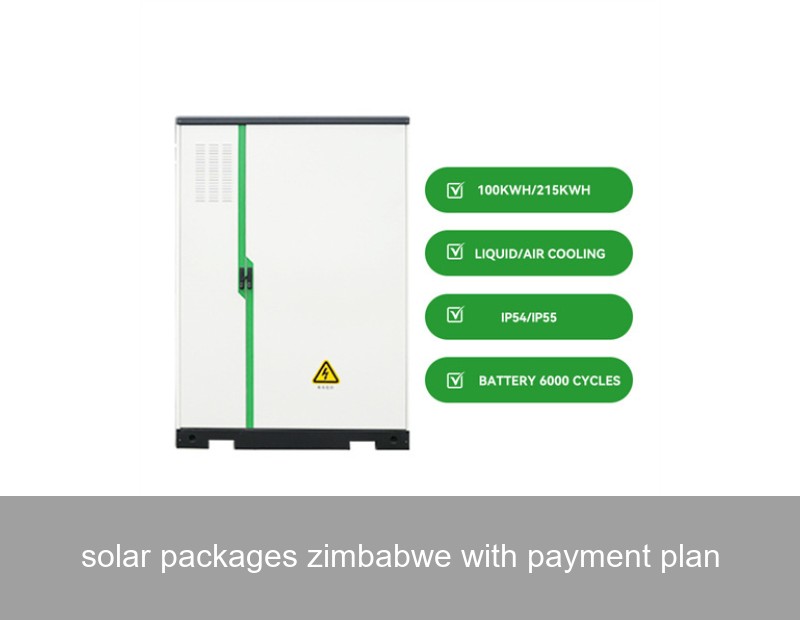
Our lithium iron phosphate (LiFePO4) batteries are renowned for their safety, longevity (over 6000 cycles), and stable performance in varied climates. The integrated Energy Management System (EMS) is the real intelligence, optimally deciding when to charge from solar, discharge to power your home, or even grid-charge during off-peak times if configured. For installers and distributors in Zimbabwe creating competitive solar packages with payment plans, partnering with Highjoule provides a technological edge—offering customers a storage solution that maximizes the value of every solar kilowatt-hour generated, ensuring lights stay on long after the sun sets.
Furthermore, the modular design of our commercial Containerized BESS solutions allows for scalable microgrid applications, supporting larger communities or industrial sites in their transition to sustainable power. Our global experience, backed by projects in over 30 countries, informs products that are truly fit-for-purpose in demanding environments.
What's Your Energy Independence Plan?
The journey to energy security starts with a single question: What is the true cost of unreliable power for your household or business this month—not just in dollars, but in missed opportunities, spoiled goods, or compromised comfort? With the evolution of solar packages Zimbabwe with payment plan structures, the path forward is more accessible than ever. The sun isn't just a source of light; it's a source of financial and operational stability. Have you calculated what your own energy independence could look like?
 Inquiry
 Online Chat