


Your Complete Guide to Off-Grid Solar System Kits: Powering Independence and Sustainability
Imagine a life where your electricity is truly your own—unaffected by grid outages, rising utility rates, or remote locations. This is the promise of off-grid solar system kits, a rapidly growing solution for homeowners, adventurers, and businesses seeking energy independence. But what does it really take to go completely off-grid? In this guide, we'll demystify these systems, explore the critical components, and show you how modern technology makes sustainable, self-sufficient power more accessible than ever.
Table of Contents
What is an Off-Grid Solar System Kit?
An off-grid solar system kit is a packaged solution designed to generate and store electricity entirely independently of the public utility grid. Unlike grid-tied systems that send excess power back to the utility, an off-grid system must meet 100% of your energy needs, 24/7. This requires a careful balance of energy production (solar panels), storage (battery bank), and management (inverter/charge controller).
The appeal is clear: total energy autonomy. For remote cabins, agricultural operations, or even primary residences in areas with unreliable or expensive grid connections, these kits offer a practical and sustainable alternative. The key to success lies not just in the solar panels, but in the intelligence and resilience of the battery storage system—the true heart of any off-grid setup.
Core Components of a Reliable Kit
Let's break down the essential pieces. A high-quality off-grid solar system kit is more than just panels and a battery; it's an integrated ecosystem.
- Solar Panels (PV Modules): Capture sunlight and convert it to direct current (DC) electricity.
- Charge Controller: Regulates the voltage and current from the panels to the batteries, preventing overcharging and damage. Maximum Power Point Tracking (MPPT) controllers are the industry standard for efficiency.
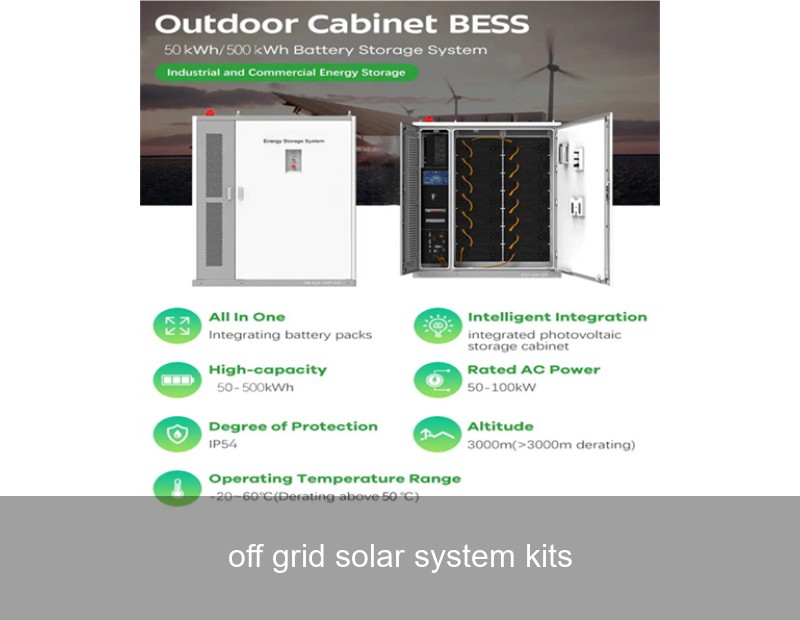
- Battery Energy Storage System (BESS): This is the cornerstone. It stores excess solar energy for use at night or during cloudy days. Deep-cycle lithium-ion batteries, like Lithium Iron Phosphate (LiFePO4), are now preferred for their long lifespan, depth of discharge, and safety.
- Inverter: Converts the DC electricity stored in the batteries into the alternating current (AC) that powers your household appliances.
- Balance of System (BOS): Wiring, circuit breakers, mounting hardware, and monitoring systems.

Image: A modern off-grid solar and storage installation. Source: Unsplash
Why the Battery System Matters Most
Think of your solar panels as the income and your battery as the savings account. You need a robust "savings account" to get through lean times (winter, storms). Early off-grid systems relied on lead-acid batteries, which required frequent replacement and careful maintenance. Today, advanced lithium-ion battery systems have revolutionized off-grid living. They offer higher efficiency, compact size, and can be cycled thousands of times. Companies like Highjoule specialize in integrating these smart battery systems with solar inverters and intelligent energy management software, ensuring every watt-hour of solar energy is captured, stored, and used optimally.
Sizing Your System: From Power Needs to Battery Bank
Oversizing is expensive, undersizing is a disaster. Proper sizing is a three-step process:
- Load Calculation: List every appliance, its wattage, and daily usage hours. Don't forget seasonal variations!
- Solar Array Sizing: Based on your daily energy consumption and local peak sun hours.
- Battery Bank Sizing: Determines how many days of autonomy (backup power) you'll have without sun.
| Appliance | Power (Watts) | Hours Used/Day | Daily Watt-Hours |
|---|---|---|---|
| LED Lights | 20 | 5 | 100 |
| Laptop | 60 | 4 | 240 |
| Refrigerator (efficient DC model) | 80 | 8 (cycling) | 640 |
| Water Pump | 400 | 0.5 | 200 |
| Total | 1,180 Wh |
For this ~1.2 kWh daily load, you'd need a solar array and battery bank sized with a significant buffer (often 20-50%) to account for inefficiencies and poor weather. This is where pre-configured off-grid solar system kits from experienced providers add tremendous value—they take the guesswork out of compatibility and sizing.
Real-World Success: A Mountain Cabin Case Study
Let's look at a real example from the Rocky Mountains, USA. A family-owned cabin at 9,000 feet elevation had no grid access. They previously used a noisy, polluting diesel generator for a few hours of power each evening.
The Goal: Silent, reliable, 24/7 power for lighting, communications, a small refrigerator, and essential tools.
The Solution: A 5 kW solar array paired with a 20 kWh Highjoule Harmony Series lithium-ion battery storage system and a 5 kW hybrid inverter. The system was designed for three days of autonomy, considering heavy winter snow.
- 100% elimination of diesel generator use, saving over $1,500 annually in fuel and maintenance.
- Uninterrupted power through multiple winter storms that would have isolated the cabin.
- Remote monitoring via Highjoule's platform allowed them to check system status and adjust usage from their primary home.
- The projected battery lifespan under these conditions is over 15 years.
This case highlights that modern off-grid solutions are not just about survival; they're about comfort, reliability, and long-term economic sense. You can explore more data on the growth of decentralized energy in reports from the International Energy Agency (IEA).
The Highjoule Advantage: Smart, Integrated Solutions
As a global leader in advanced energy storage since 2005, Highjoule understands that an off-grid system is only as strong as its weakest link. That's why we don't just sell components; we provide intelligent, integrated power solutions.
Our approach to off-grid solar system kits centers on our proprietary battery technology and energy management system. The Highjoule Harmony Series battery, built with LiFePO4 chemistry, is designed for the rigorous charge/discharge cycles of off-grid life. It integrates seamlessly with best-in-class inverters and charge controllers.

Image: A technician interfaces with a modern battery storage system. Source: Unsplash
What sets our systems apart is software. The Highjoule Energy OS allows users to:
- Monitor energy flow in real-time (solar production, battery level, consumption).
- Set intelligent operating modes to prioritize battery health or availability.
- Receive proactive maintenance alerts.
- Integrate backup generators as a secondary, automated charging source.
For commercial and industrial off-grid or microgrid applications, this level of control is non-negotiable. It transforms a simple kit into a resilient, long-term power asset. Learn more about battery safety and standards from sources like the U.S. Department of Energy's Solar Office.
Choosing the Right Kit for You
Whether you're powering a tiny home, a telecom tower, or a large agricultural facility, the principles are the same. Look for:
- Quality Components: Tier-1 solar panels, reputable inverters, and a high-cycle life battery.
- System Integration: Components that are designed to communicate with each other.
- Scalability: Can you easily add more panels or batteries later?
- Professional Support: Does the provider offer design support and warranty?
Highjoule works with a network of certified installers across Europe and North America to deliver tailored off-grid packages that meet these criteria, ensuring a smooth journey to energy independence.
The Future of Off-Grid Living
Technology is pushing boundaries. We're seeing more efficient solar panels, even longer-lasting batteries, and AI-driven energy management that can predict weather and adjust usage patterns automatically. The line between off-grid and "optimal-grid" is blurring, where systems can optionally connect to a grid but are designed to be self-sufficient.
The dream of a quiet, emission-free, and independent power supply is now a practical reality. It requires an upfront investment, but as the case study shows, the long-term benefits in savings, resilience, and environmental impact are substantial.
So, what's the first step you would take to assess if your home or project is ready for the independence of an off-grid solar system kit?
 Inquiry
 Online Chat