


Your Ultimate Guide to Choosing the Perfect Solar Panel Kit for an Off Grid Cabin
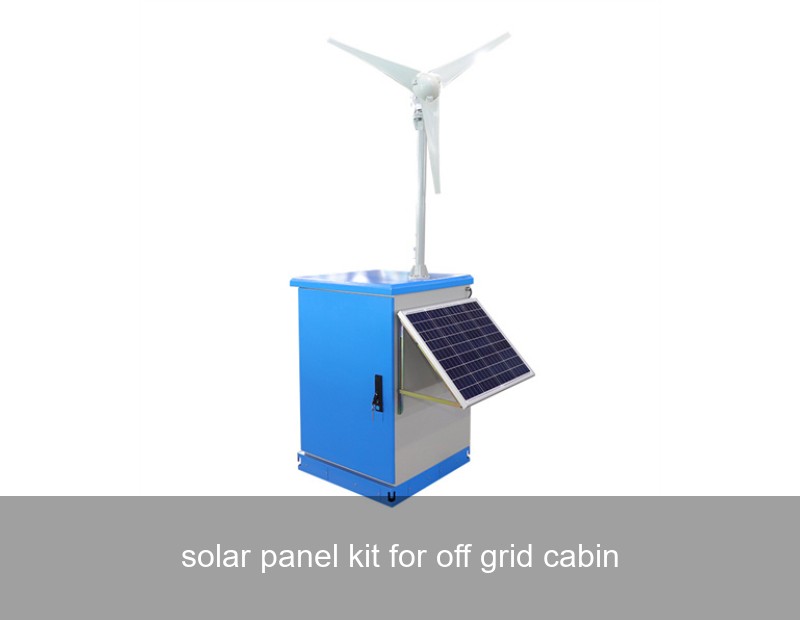
Dreaming of a quiet retreat, completely independent from the utility grid? You're not alone. The allure of off-grid living is stronger than ever, offering freedom, resilience, and a deep connection with nature. At the heart of this lifestyle is a reliable power source, and that's where a well-designed solar panel kit for an off grid cabin becomes non-negotiable. But with so many options, how do you ensure your haven has power when the sun sets or during a week of storms? This guide will walk you through everything you need to know, blending essential principles with real-world solutions from Highjoule, a global leader in advanced energy storage since 2005.
Table of Contents
- The Off-Grid Reality: More Than Just Panels
- Key Components of a Robust Off-Grid Solar Kit
- Sizing Your System: From Watts to Worry-Free Living
- Case Study: Powering an Alpine Retreat in Switzerland
- Highjoule Solutions: Intelligence for Your Off-Grid Independence
- Your Energy Future: What's Your First Step?
The Off-Grid Reality: More Than Just Panels
Many envision off-grid power as simply mounting a few solar panels on the roof. The reality is a sophisticated balancing act. Your system must generate enough energy, store the excess for later use, and manage distribution efficiently—all while dealing with unpredictable weather. A study by the National Renewable Energy Laboratory (NREL) highlights that off-grid systems require careful design to meet 100% of load demands, often necessitating storage for 3-5 days of autonomy. This is where a comprehensive kit, designed as a cohesive system, triumphs over piecemeal components.

Image: A typical off-grid cabin setup. Source: Unsplash
Key Components of a Robust Off-Grid Solar Kit
A complete solar panel kit for an off grid cabin is an integrated ecosystem. Let's break down the essentials:
- Solar Panels (PV Modules): The primary energy harvesters. Monocrystalline panels are often preferred for their higher efficiency in limited space.
- Charge Controller: The guardian of your batteries. It regulates voltage from the panels to prevent overcharging. Modern Maximum Power Point Tracking (MPPT) controllers are 30% more efficient than older PWM types.
- Battery Energy Storage System (BESS): The heart of off-grid power. This is where energy is banked for use at night or on cloudy days.
- Inverter: The translator. It converts the DC electricity stored in your batteries into the AC power that most household appliances use.
- Balance of System (BOS): Wiring, fuses, breakers, and mounting hardware. Often overlooked, these are critical for safety and longevity.
While many kits include the first four items, the quality and intelligence of the battery and inverter system make the most significant difference in long-term performance and peace of mind.
Sizing Your System: From Watts to Worry-Free Living
Sizing your system starts with an energy audit. List every appliance, its wattage, and estimated daily use. Don't forget seasonal variations—a cabin used in winter will have different lighting and heating needs than a summer fishing lodge.
| Appliance | Power (Watts) | Daily Use (Hours) | Daily Energy (Wh) |
|---|---|---|---|
| LED Lights (x6) | 10 | 5 | 300 |
| Refrigerator (DC) | 60 | 8 (cycled) | 480 |
| Water Pump | 300 | 1 | 300 |
| Laptop | 50 | 4 | 200 |
| Total (Example) | 1,280 Wh / 1.28 kWh |
This daily total (1.28 kWh) is your starting point. You must then size your battery bank to cover this consumption for your desired days of autonomy (e.g., 3 days = 3.84 kWh of usable capacity), and size your solar array to reliably recharge that bank given your location's solar irradiance. Tools like NREL's PVWatts Calculator are invaluable for this.
Case Study: Powering an Alpine Retreat in the Swiss Alps
Consider the challenge faced by a family cabin near Grindelwald, Switzerland. Accessible only in summer, it required a system robust enough to handle quick weekend trips and occasional two-week stays, with highly variable spring and autumn weather. Their old lead-acid battery system failed after 4 years, struggling with deep discharges and requiring constant maintenance.
The Solution: A tailored 5 kW solar array was paired with a Highjoule Horizon residential battery storage system. The key differentiator? Highjoule's lithium iron phosphate (LiFePO4) battery chemistry offers a lifespan of over 6,000 cycles and operates efficiently in a wide temperature range. Integrated smart energy management automatically optimizes charging cycles and provides remote monitoring via a smartphone app.
The Results:
- Energy Independence: 100% of power needs met year-round, even with consecutive cloudy days.
- Reduced Worry: Remote monitoring allows the owners to check system health and state of charge before making the trip.
- Longevity: The 10-year warranty on the Highjoule system provided financial predictability, a stark contrast to the previous replacement cycle.
- Data Point: In its first year, the system generated 5,800 kWh, with the battery providing 92% depth of discharge capability without degradation.
This case underscores that the right storage technology is what transforms a solar kit from a fair-weather solution into a true off-grid power plant.

Image: Solar installation in an alpine environment. Source: Unsplash
Highjoule Solutions: Intelligence for Your Off-Grid Independence
At Highjoule, we understand that an off-grid cabin isn't just a small house; it's a unique energy challenge requiring robustness and intelligence. Our products are engineered to seamlessly integrate into your solar panel kit for an off grid cabin.
Our Horizon Series for residential and cabin use features scalable LiFePO4 battery modules. You can start with a 5 kWh base and expand as your needs grow. The built-in Highjoule Energy Management System (HEMS) is the brain of the operation. It doesn't just store power; it learns your consumption patterns, prioritizes loads, and ensures your battery is cycled optimally for maximum lifespan.
For larger cabins, micro-grids, or small commercial off-grid applications like remote lodges, our Voyager Containerized Energy Storage solutions offer a pre-integrated, plug-and-play power hub. These units combine megawatt-scale storage, advanced inverters, and climate control in a secure, shipping-container format, dramatically simplifying deployment in challenging locations.
Choosing Highjoule means partnering with a provider with nearly two decades of global experience. We don't just sell components; we provide a complete, intelligent power solution backed by 24/7 monitoring support, ensuring your off-grid sanctuary remains powered and peaceful.
Installation & Maintenance Considerations
Even the best kit requires proper installation. Key decisions include:
- Panel Placement: Southern orientation (in the Northern Hemisphere) with tilt angle optimized for your latitude and seasonal sun path.
- Battery Environment: Installing your battery bank in a temperate, dry, and ventilated space. Highjoule's systems have a wide operating range, but avoiding extremes prolongs life.
- Professional Help: While DIY is possible, working with a certified installer ensures compliance with local electrical codes, safe wiring practices, and system warranty validation. They can also handle permits, which are often required even for off-grid structures.
Maintenance is thankfully minimal with modern systems. Regular visual checks of panels for debris or snow, ensuring vents are clear, and reviewing system performance data via your monitoring app constitute the majority of required care.
Your Energy Future: What's Your First Step?
Embarking on your off-grid journey is exciting. The foundation is a deep understanding of your own energy needs and the components that will meet them reliably. We've explored the critical role of intelligent storage—the element that turns solar generation into true 24/7 power.
So, as you envision your perfect escape, what's the one appliance or comfort you simply can't imagine your off-grid cabin being without, and how will you ensure it has power even on the darkest, stillest night?
 Inquiry
 Online Chat