


Unlocking Energy Independence: The Complete Guide to On Site Renewable Energy Generation
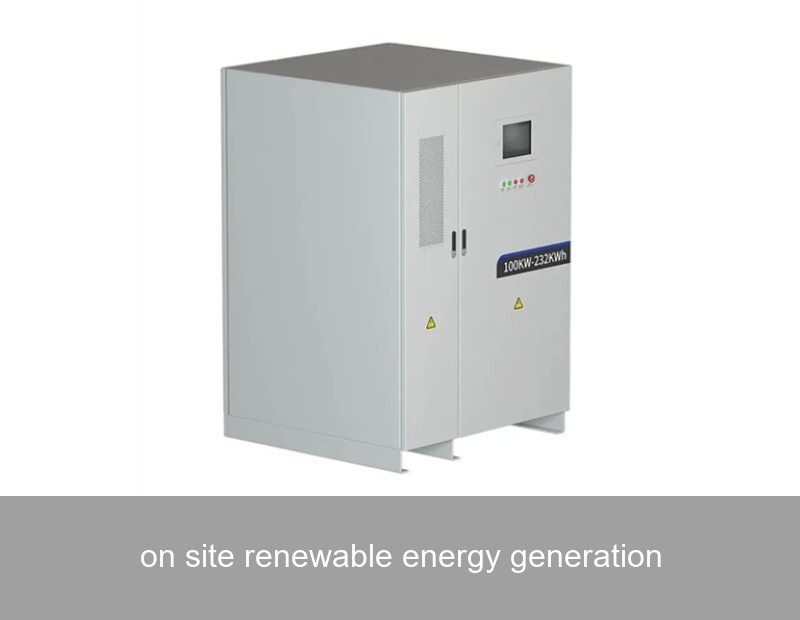
Imagine your business or home not just consuming electricity, but actively producing it. This is the promise of on site renewable energy generation—a transformative shift from passive consumer to active "prosumer." For forward-thinking organizations and homeowners across Europe and the U.S., this isn't just about sustainability; it's a strategic move toward cost control, resilience, and energy sovereignty. But generating clean power is only half the battle. The real genius lies in what you do with it. That's where intelligent storage and management come in, turning intermittent generation into a reliable, 24/7 power asset. As a leader in this space since 2005, Highjoule has witnessed this evolution firsthand, engineering the smart storage solutions that make on-site energy systems truly powerful.
Table of Contents
- The Phenomenon: From Grid Dependence to Energy Self-Sufficiency
- The Data: Why On-Site Generation is a Smart Investment
- The Critical Challenge: Intermittency and the Storage Imperative
- The Highjoule Solution: Intelligent Storage for Maximum ROI
- Case Study: A U.S. Manufacturing Plant's Success Story
- Getting Started with Your On-Site Energy Project
The Phenomenon: From Grid Dependence to Energy Self-Sufficiency
For decades, our relationship with electricity was simple: we paid the utility bill and hoped the lights stayed on. Volatile energy prices, increasing grid instability, and ambitious corporate sustainability goals have fundamentally changed that equation. The new paradigm is on site renewable energy generation, primarily through solar photovoltaic (PV) panels. It allows you to capture free energy from the sun right where you need it—on your rooftop, over your parking lot, or on your land.
But here's a common misconception we at Highjoule often address: installing solar panels is the start, not the finish. Without a way to store excess energy, a significant portion of your self-generated power might be exported to the grid for minimal compensation, while you still buy expensive power at night or on cloudy days. True energy independence requires a brain and a battery for your solar brawn.
The Data: Why On-Site Generation is a Smart Investment
Let's talk numbers. The economic case for on-site generation has never been stronger.
| Factor | Impact | Note |
|---|---|---|
| Solar PV Cost Decline | Over 70% since 2010 | Source: IRENA |
| Commercial Electricity Prices (EU & US) | Consistently rising, with significant spikes | Grid volatility as a major risk |
| Energy Payback Time | Typically 1-4 years for commercial systems | Followed by decades of low-cost power |
| With Storage (Load Shifting) | Can increase self-consumption by 50%+ | Key to maximizing ROI |
These figures paint a clear picture: on site renewable energy generation is a capital investment that directly hedges against operational energy costs. It transforms a variable expense into a fixed, predictable one. Furthermore, in regions like California or parts of Europe with time-of-use (TOU) rates, the cost difference between peak and off-peak power can be staggering. Generating and storing your own power lets you avoid buying from the grid during these expensive peak windows entirely.

A commercial-scale rooftop solar installation: the foundation of on-site generation. (Credit: Unsplash)
The Critical Challenge: Intermittency and the Storage Imperative
Sun doesn't shine at night. Wind isn't always blowing. This intermittency is the fundamental challenge of renewables. If your solar array produces a surplus at noon but your factory's energy demand peaks at 4 PM, you have a timing mismatch. Relying solely on the grid as a "battery" is becoming less economical and, as we've seen with increasing grid outages, less reliable.
This is the core problem Highjoule was founded to solve. An on site renewable energy generation system without storage is like a rainwater collection system without a tank—you can use the water only when it rains. Adding a battery energy storage system (BESS) is like installing that tank. It allows you to:
- Time-Shift Energy: Store excess solar generation for use during evening peak hours.
- Ensure Resilience: Provide backup power during grid outages, keeping critical operations running.
- Optimize Financially: Participate in grid services (where available) or avoid peak demand charges.
The Highjoule Solution: Intelligent Storage for Maximum ROI
At Highjoule, we don't just sell battery boxes. We provide integrated, intelligent energy management systems. Our H-Series Commercial & Industrial (C&I) ESS and HomePower+ residential units are designed to be the perfect partner for your on-site solar.
What sets our systems apart is the EnergyOS software platform. Think of it as the central nervous system for your on-site power plant. EnergyOS doesn't just store and release energy; it constantly learns your consumption patterns, forecasts weather and solar production, and knows local utility rate structures. It makes autonomous decisions to dispatch stored energy when it provides the most value—whether for maximizing self-consumption, providing backup, or capitalizing on market signals.
For microgrids and larger industrial applications, our GridShield inverters and scalable storage solutions allow for complete islanding capability. This means a factory, a hospital, or a university campus can seamlessly disconnect from the main grid during an outage and run entirely on its own solar-plus-storage microgrid.

A modern Battery Energy Storage System (BESS) unit, the heart of a resilient on-site energy setup. (Credit: Unsplash)
Case Study: A U.S. Manufacturing Plant's Success Story
Let's look at a real-world example from Ohio, USA. A mid-sized automotive parts manufacturer was facing annual electricity costs of over $480,000, with nearly 40% attributed to demand charges and peak time-of-use rates. They installed a 750 kW rooftop solar PV system. While this reduced their daytime grid draw, they still faced high evening peaks.
They partnered with Highjoule to integrate a 500 kWh / 750 kW H-Series C&I ESS. The system was programmed via EnergyOS to prioritize charging from the solar surplus and strategically discharge during their identified peak demand windows (4 PM - 9 PM).
The Results (First 12 Months):
- Demand Charge Reduction: 28% decrease, saving approximately $65,000 annually.
- Increased Self-Consumption: Solar self-consumption rate rose from 35% to 89%.
- ROI Acceleration: The combined solar+storage system payback period was reduced from 6.5 years to 4.8 years.
- Resilience Bonus: The facility now has 4 hours of critical load backup, preventing costly production halts during brief grid disturbances.
This case exemplifies the synergy of on site renewable energy generation paired with smart storage. The solar panels produce low-cost electrons, and the Highjoule system ensures every possible one is used for maximum economic benefit.
Getting Started with Your On-Site Energy Project
Embarking on an on-site energy journey requires careful planning. Here is a simplified roadmap:
- Energy Audit & Goals: Define what you want to achieve: lower bills, carbon reduction, backup power, or all three.
- Site Assessment: A professional will evaluate your roof space, electrical infrastructure, and energy consumption patterns.
- System Design: This is where an integrated designer like Highjoule's engineering team is crucial. We size the solar array and the battery storage not in isolation, but as a holistic system to meet your specific goals and financial parameters.
- Financing & Incentives: Leverage available tax credits (like the ITC in the U.S.), grants, or favorable financing models for renewable projects.
- Installation & Commissioning: Professional installation followed by software configuration and testing.
- Monitoring & Optimization: Using platforms like EnergyOS, you can track performance, savings, and environmental impact in real-time.
What's the Next Step for Your Energy Future?
The technology for robust on site renewable energy generation and storage is here, proven, and more accessible than ever. The question is no longer "if" it's viable, but "how" it can be optimized for your specific needs. Whether you're a homeowner looking to shield yourself from rising tariffs or a plant manager tasked with cutting operational costs and securing production lines, the equation starts with understanding your own energy profile.
What single energy challenge—be it cost, resilience, or sustainability—would solving it have the biggest impact on your operations or home life today?
 Inquiry
 Online Chat