


Understanding the Lithium Ion Battery Price in the UK: A 2024 Guide for Homeowners and Businesses
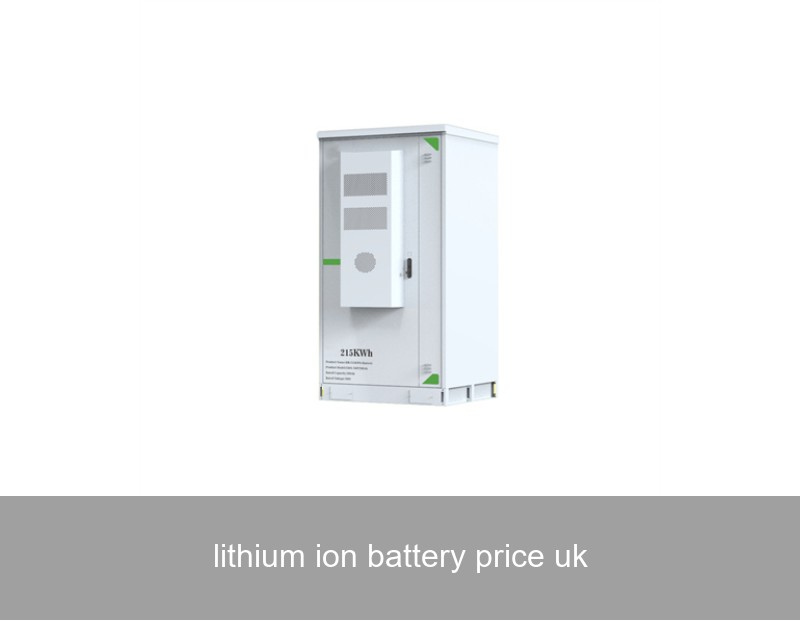
If you're in the UK and considering solar panels or looking to gain energy independence, you've likely asked the central question: what drives the lithium ion battery price in the UK? It's a market that has seen dramatic shifts. From being a costly emerging technology, battery storage is now a central pillar in the UK's net-zero strategy. But with so many factors at play—from raw material costs to installation specifics—getting a clear picture can be challenging. This guide will demystify the costs, explore the value beyond the price tag, and show how making an informed choice can secure your energy future for decades.
Table of Contents
- The Price Phenomenon: Why Costs Are Shifting
- Breaking Down the Costs: More Than Just a Battery
- The Value Equation: ROI, Security, and Sustainability
- A UK Case Study: From Bill Shock to Energy Resilience
- Choosing the Right System for Your UK Home or Business
- The Future of Storage Costs in the UK
The Price Phenomenon: Why Costs Are Shifting
Over the past decade, the global average price of lithium-ion batteries has plummeted by nearly 90% (BloombergNEF, 2023). This trend has been mirrored in the UK, but local factors add unique layers. While economies of scale and improved manufacturing have driven prices down, supply chain fluctuations and geopolitical events cause temporary spikes. For the UK consumer, the key is understanding that the lithium ion battery price in the UK isn't just a number on a box; it's a reflection of technological maturity, market demand, and strategic energy policy. The UK's ambitious target of a fully decarbonised power system by 2035 is a powerful accelerator for adoption, encouraging more competition and innovation in the storage space.
Breaking Down the Costs: More Than Just a Battery
When you get a quote for a battery storage system, you're not just paying for the battery cells. A complete, safe, and efficient system comprises several components:
- The Battery Pack: The core cost, typically priced per kilowatt-hour (kWh) of usable capacity. Prices can range from £400 to £1,000+ per kWh depending on chemistry (e.g., LFP vs. NMC), brand, and cycle life.
- The Battery Management System (BMS): The brain of the operation, crucial for safety, longevity, and performance.
- The Inverter/Hybrid Inverter: This device converts DC electricity from your solar panels and battery to AC for your home. It can be a significant portion of the total cost.
- Installation & Integration: Labour, cabling, mounting, and integrating with your existing solar PV or electrical grid.
- Smart Energy Management Software: The intelligence that maximises your self-consumption, allows for time-of-use arbitrage, and can even participate in grid flexibility services.
This is where the expertise of a provider like Highjoule becomes critical. As a global leader founded in 2005, Highjoule doesn't just supply hardware. We provide integrated, intelligent storage solutions where every component is designed to work in harmony. Our ResiFlow Home and Commercial PowerStack systems are engineered with advanced LFP (Lithium Iron Phosphate) chemistry, renowned for its safety and long cycle life. This holistic approach ensures that while the upfront lithium ion battery price in the UK is a key factor, the long-term value, reliability, and system intelligence are what truly define your investment.

Image source: Unsplash - A modern home battery installation in a utility space.
The Value Equation: ROI, Security, and Sustainability
Focusing solely on the per-kWh battery cost is like buying a car based only on the fuel tank size. The real measure is total cost of ownership and the benefits delivered. A quality battery storage system generates value in multiple ways:
| Value Stream | Description | Impact for UK Users |
|---|---|---|
| Increased Self-Consumption | Store excess solar to use at night, reducing grid imports. | Can increase solar self-use from 30-50% to 60-80% or more. |
| Time-of-Use (ToU) Optimisation | Charge battery when grid electricity is cheap, use it during peak expensive periods. | Significant savings on variable tariffs like Agile Octopus. |
| Backup Power | Provide electricity during grid outages (with the right system design). | Critical for homes with medical equipment or in areas prone to storms. |
| Grid Services (Future) | Participate in demand-side response or balancing markets. | Potential for future revenue streams as the grid evolves. |
Highjoule's Smart Energy Hub is built to maximise every one of these value streams. Its AI-driven software learns your consumption patterns, weather forecasts, and electricity tariffs to autonomously optimise your energy flow, ensuring you get the fastest possible return on investment.
A UK Case Study: From Bill Shock to Energy Resilience
Let's look at a real-world example from Surrey, England. The Thompson family, living in a 4-bedroom detached home with a 4kWp existing solar array, faced soaring energy bills in 2022, despite having solar panels. Their self-consumption was low, exporting most of their daytime generation for a low feed-in tariff and buying expensive power in the evening.
In January 2023, they installed a Highjoule ResiFlow 10 system with 10.2kWh of usable LFP storage and an integrated hybrid inverter. The total installed cost was competitive within the UK market for a premium product. Here's the 12-month outcome:
- Energy Bill Reduction: Their annual electricity cost dropped from £1,850 to £320—a reduction of over 82%.
- Self-Consumption Rate: Increased from an estimated 35% to 92%.
- Payback Period: Based on current savings and assuming no further price rises, their system is projected to pay for itself in under 8 years. With the 10+ year warranty on the Highjoule battery, this represents over a decade of nearly free electricity thereafter.
- Peace of Mind: The system's backup power function provided uninterrupted supply during two short grid outages.
This case illustrates that the lithium ion battery price in the UK, when viewed as part of a complete Highjoule solution, is an investment that delivers tangible financial and resilience benefits.
Choosing the Right System for Your UK Home or Business
Selecting storage is not a one-size-fits-all process. Here are key considerations:
- Capacity (kWh): Match it to your nightly consumption and solar generation. Oversizing can be as inefficient as undersizing.
- Power Rating (kW): How much power can it deliver at once? This determines if you can run multiple high-load appliances (like an oven and kettle) simultaneously on battery.
- Chemistry & Warranty: LFP chemistry, used in all Highjoule residential products, offers superior thermal stability and longevity, often with warranties guaranteeing 70% capacity after 10 years.
- Integration & Scalability: Can it seamlessly work with your existing solar? Can you add more capacity later if your needs change?
- Smart Features: Look for systems with sophisticated, user-friendly software for control and optimisation.
For UK businesses, Highjoule's Commercial PowerStack solutions address more complex needs like peak shaving, three-phase power support, and compliance with stricter commercial regulations, turning energy storage into a strategic asset for cost control and sustainability reporting.

Image source: Unsplash - Commercial solar and storage can significantly cut operational costs.
The Future of Storage Costs in the UK
While battery prices are expected to continue a gradual decline, the focus is shifting from pure cost-per-kWh to value-per-kWh-over-lifetime. Innovations in solid-state batteries and sodium-ion technology hold promise (Nature Energy, 2023), but for the next 5-7 years, advanced LFP will dominate the stationary storage market due to its proven safety and cost-effectiveness. The UK's regulatory environment, including the potential for more dynamic grid services markets, will increasingly allow battery owners to unlock additional revenue, improving the ROI calculus further.
So, as you evaluate the lithium ion battery price in the UK for your project, what specific energy goal is driving your decision—is it total bill elimination, achieving energy resilience, or taking a definitive step towards a net-zero home or business?
 Inquiry
 Online Chat