


Optimal Sizing of Solar Wind Hybrid Systems: A Blueprint for Energy Independence
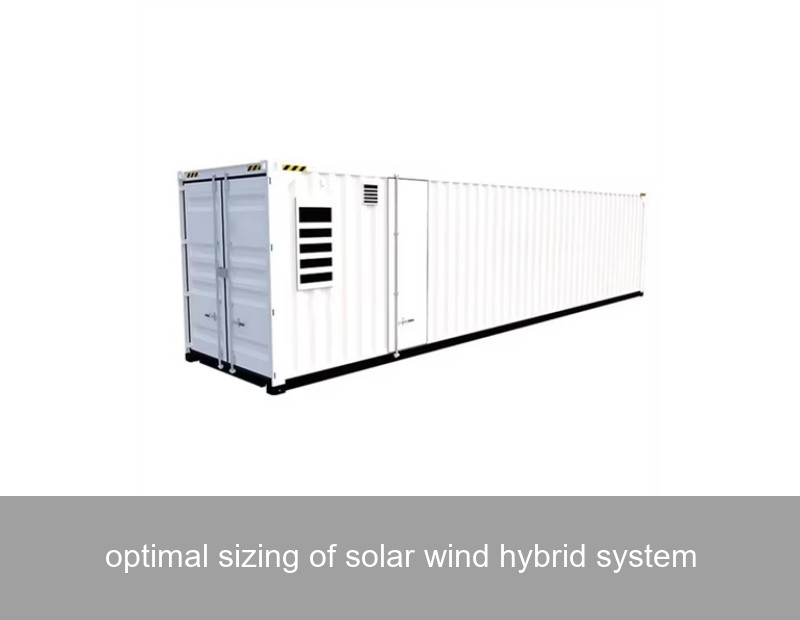
In the quest for reliable, clean power, many businesses and communities are turning to a powerful duo: solar and wind. But here’s a common puzzle we hear at Highjoule: "We have both solar panels and a wind turbine, yet we still face power shortages or wasteful oversizing." The solution isn't just having both—it's about optimal sizing of solar wind hybrid system. This precise engineering art ensures your system is neither an underperformer nor a budget drain, but a perfectly tuned engine for your unique energy needs. Let's explore how to get it right.
Table of Contents
The Challenge: Why "Just Add More" Doesn't Work
Solar and wind resources are beautifully complementary—the sun often shines when the wind is calm, and windy periods can coincide with cloudy days or nights. However, this synergy is not automatic. An undersized system fails to meet demand, leading to reliance on the expensive grid. An oversized system inflates upfront costs, may cause energy curtailment (wasting precious renewable power), and strains your return on investment.
The core phenomenon is intermittency and variability. Your local solar generation profile looks like a daytime bell curve, while wind can be unpredictable. Optimal sizing is the process of modeling these patterns against your specific load consumption to find the sweet spot.

Image Source: Unsplash. A visual representation of a complementary solar-wind landscape.
The Cost of Getting It Wrong
Consider this data point from the National Renewable Energy Laboratory (NREL): In hybrid microgrid designs, a 20% oversizing of the solar PV component can increase capital costs by 15-25%, without a proportional increase in useful energy yield. Conversely, undersizing the storage component often leads to a 30-40% higher utilization of backup diesel generators, negating emissions and fuel savings.
The Optimal Sizing Framework: Data Over Guesswork
At Highjoule, we approach optimal sizing as a multi-step, data-driven science. It's a logical ladder we climb with our clients.
Step 1: Comprehensive Resource & Load Assessment
This is the non-negotiable foundation. We analyze:
- Solar Irradiance Data: Historical hourly data for your exact location.
- Wind Speed & Pattern Data: Typically at hub height, focusing on seasonal variations.
- Load Profile: Not just your total annual kWh, but your hourly consumption pattern. A factory running 24/7 has a vastly different profile from a school.
This data is often visualized in a 8760-hour year model (one data point for every hour of the year).
Step 2: Defining Objectives and Constraints
| Objective | Key Question | Impact on Sizing |
|---|---|---|
| Cost Minimization (LCOE) | What is the lowest levelized cost of energy? | Balances CAPEX and OPEX; may accept slight grid use. |
| Maximize Renewable Fraction | What % of energy must come from renewables? | Larger solar/wind and storage capacity likely needed. |
| Grid Independence (Off-grid) | Must the system stand alone 100% of the time? | Requires the most robust sizing, with significant storage and often a backup genset. |
Step 3: Simulation, Iteration, and Selection
Using advanced software (like HOMER Pro, which NREL developed), we simulate thousands of possible configurations. The model iterates through different sizes of solar PV (in kW), wind turbines (in kW), and battery storage (in kWh), calculating the technical and financial performance of each combo.
The output isn't a single answer, but a Pareto front—a set of optimal solutions that show the trade-off between cost and reliability. You choose based on your priority.
Case Study: A Brewery's Journey to 95% Energy Independence
Let's ground this in reality. Highjoule partnered with a mid-sized craft brewery in Bavaria, Germany. Their goals were clear: reduce volatile energy costs, secure power for refrigeration loads, and enhance their green branding.
- Challenge: High, consistent baseload for cooling (24/7) with daytime peaks for production. Limited rooftop space for solar.
- Data Dive: Historical analysis showed strong winter winds complementing weaker solar, while summer had the opposite pattern. Highjoule Solution & Sizing Result:
- Solar PV: 180 kWp (maximizing available roof & carport space).
- Wind: A single 100 kW medium-wind turbine.
- Storage: A 240 kWh Highjoule H-Cube 2.0 battery energy storage system (BESS) with integrated hybrid inverter.
- Intelligence: Our Energy Management System (EMS) to dynamically dispatch energy based on weather forecast and load prediction.
The Outcome: The optimally sized hybrid system meets 95% of the brewery's annual electricity demand, reducing grid dependence to almost zero during peak tariff hours. The project achieved a return on investment in under 7 years, with the smart storage system capturing excess wind power at night to chill tanks, avoiding daytime grid use. This real-world example underscores that optimal sizing isn't theoretical—it's a tangible financial and operational achievement.

Image Source: Unsplash. Representative image of a modern industrial facility.
The Highjoule Advantage: Intelligent Design Meets Smart Storage
Our expertise goes beyond the initial calculation. The optimal sizing of a solar wind hybrid system is only as good as the components that bring it to life and the intelligence that operates it. This is where Highjoule's integrated approach makes the difference.
We don't just sell components; we provide turnkey, optimized systems. Our H-Cube series BESS is specifically engineered for hybrid renewable integration. With high cycle life, wide operating temperatures, and seamless communication with multiple generation sources, it's the perfect buffer to smooth out the variability that sizing models predict.
Furthermore, our proprietary EMS is the brain. It uses machine learning to refine load predictions and continuously adjusts the energy flow—prioritizing solar self-consumption, storing windy-night energy, and deciding when to buy or sell from the grid—to execute the optimal sizing plan with maximum financial return. Think of it as an autopilot for your energy ecosystem, ensuring the theoretical design performs optimally in the real world, day after day.
Beyond Commercial: Residential and Microgrid Solutions
The same principles apply, at different scales. For a remote home or a community microgrid, Highjoule's H-Power Home and Microgrid Controller solutions bring this sophisticated optimal sizing and management capability to smaller applications, ensuring resilience and savings.
Your Energy Future: What's the First Step?
The journey to a perfectly sized, efficient, and cost-effective solar-wind hybrid system begins with a conversation grounded in your data. The blend of resources will be unique to your location, your energy habits, and your ambitions.
So, we leave you with this question to ponder: If you analyzed your last 12 months of energy bills alongside local sun and wind data, what surprising synergy or hidden opportunity might you discover for your path to energy independence?
 Inquiry
 Online Chat