


Your Guide to Choosing the Best Outdoor Solar Panel and Battery Kit
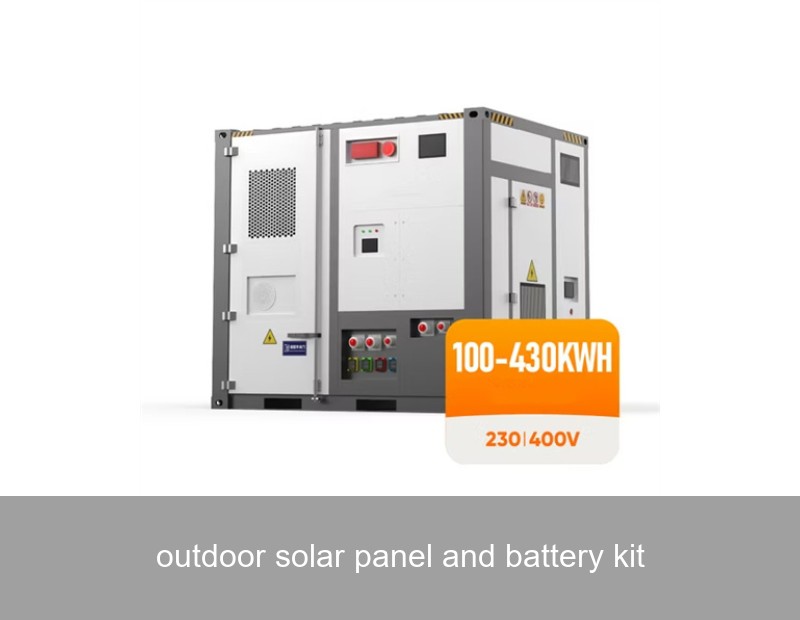
Have you ever been at a remote cabin, a bustling outdoor event, or even just in your own backyard and wished for a reliable, clean power source? The quest for off-grid electricity is driving a quiet revolution, and at its heart is the outdoor solar panel and battery kit. These all-in-one systems are more than just a trendy gadget; they are a practical solution for energy independence, resilience, and sustainable living. But with so many options, how do you choose a system that's powerful, durable, and truly intelligent? Let's explore the technology and trends shaping this exciting market.
Table of Contents
The Rise of Off-Grid Power: More Than a Backup
Gone are the days when solar was only for rooftop installations. Today, the demand for portable, self-contained power is skyrocketing. The driving forces are clear: increasing extreme weather events causing power outages, the growth of remote work and recreation, and a universal desire to reduce carbon footprints. According to the International Energy Agency (IEA), solar PV is set to become the largest source of global electricity capacity by 2027. A significant portion of this growth comes from decentralized systems, including outdoor solar panel and battery kits for residential and commercial use.
These kits solve a fundamental problem: they capture abundant solar energy and store it for use precisely when and where you need it—whether that's at dusk, during a storm, or in the middle of a forest. The market has evolved from simple battery packs with a small panel to sophisticated, integrated energy systems capable of powering tools, appliances, and even critical business operations.
Key Components of a High-Performance Kit
Not all kits are created equal. A reliable, durable system is built on three pillars:
- High-Efficiency, Durable Solar Panels: Look for monocrystalline panels with a robust, weatherproof frame and tempered glass. Efficiency ratings above 21% are now common in premium panels, meaning they generate more power in limited space and lower light conditions.
- A Robust and Long-Lasting Battery: The heart of the system. Lithium Iron Phosphate (LiFePO4) batteries have become the industry standard for safety, longevity (often 6,000+ cycles), and performance across a wide temperature range, unlike older lead-acid or generic lithium-ion options.
- An Intelligent Charge Controller & Inverter: This is the "brain." A Maximum Power Point Tracking (MPPT) controller maximizes energy harvest from the panels. A pure sine wave inverter provides clean, stable power that's safe for sensitive electronics like laptops and medical devices.

Image Source: Unsplash - A modern outdoor solar setup in use.
Why Integration Matters
The magic happens when these components are designed to work together seamlessly. A pre-configured, plug-and-play kit from a single manufacturer ensures compatibility, simplifies setup, and often comes with a unified warranty and monitoring system. This eliminates the guesswork and potential hazards of piecing together mismatched parts.
Real-World Impact: A Case Study from California
Let's look at a concrete example. A small, family-owned vineyard in Sonoma County, California, faced a critical challenge. Their irrigation pumps and monitoring sensors were located in a valley with no grid connection. Running diesel generators was expensive, noisy, and contradicted their sustainable ethos.
In 2022, they installed a scalable outdoor solar panel and battery kit designed for agricultural use. The system comprised:
| Component | Specification | Outcome |
|---|---|---|
| Solar Panels | 4 x 450W Monocrystalline | 1.8kW total array |
| Battery Storage | 15kWh LiFePO4 | 2 days of autonomy |
| Inverter/Charger | 5kW Hybrid MPPT | Powers 3-phase pump |
Within one year, the results were striking: a 100% reduction in generator fuel costs (saving over $4,200 annually), zero noise pollution, and reliable, automated irrigation that improved crop yield by an estimated 8%. The system paid for itself in under four years and provided resilience during regional power shutoffs. This case, documented by the National Renewable Energy Laboratory (NREL), highlights how tailored off-grid solar solutions drive tangible business and environmental benefits.
Beyond the Basics: Smart Features for Modern Needs
The next generation of kits isn't just about power; it's about intelligent energy management. Key features to consider include:
- Remote Monitoring & Control: Manage your system from a smartphone app. Check energy production, battery levels, and adjust settings from anywhere.
- Grid Hybrid Functionality: Some advanced kits can connect to the grid, allowing you to sell excess power back (where permitted) or use the grid as a backup, creating a truly flexible energy solution.
- Scalable Design: Can you start with a smaller system and add more panels or battery capacity later? Modularity protects your investment as your needs grow.
- Extreme Weather Resilience: For permanent outdoor installations, look for IP65 or higher ingress protection ratings and wide operating temperature ranges (e.g., -20°C to 60°C).
Highjoule's Approach to Outdoor Energy Independence
At Highjoule, with nearly two decades of experience since 2005, we understand that an outdoor solar panel and battery kit must be more than the sum of its parts. It must be a resilient, intelligent partner. Our Voyager Series of off-grid and hybrid kits are engineered for this exact purpose.
Designed for the demanding conditions of North American and European climates, the Voyager kits integrate our proprietary Helix™ Battery Management System (BMS). This system actively balances each cell, extends battery life by up to 30% compared to standard systems, and provides detailed performance analytics. Whether for a remote construction site in Germany, a backup power need for a rural home in Texas, or an eco-tourism lodge, our systems are built on a foundation of safety, efficiency, and smart software. We provide end-to-end support, from initial site assessment to commissioning and ongoing monitoring, ensuring our clients achieve true energy autonomy.

Image Source: Unsplash - Solar installation in a rugged environment.
Choosing Your Kit: A Practical Checklist
Ready to evaluate your options? Ask these key questions:
- What is my daily power consumption (in watt-hours)? List the devices you need to run and their runtime.
- What are my peak power demands (in watts)? Identify the highest simultaneous power draw (e.g., starting a motor).
- What are my location's solar conditions? Consider average sun hours and seasonal variations.
- Is the system truly weatherproof and durable? Check IP ratings and warranty terms for outdoor use.
- Does the manufacturer offer comprehensive support and a clear warranty? Look for a company with a proven track record in your region.
The journey to energy independence is empowering. It starts with understanding your needs and choosing a partner that provides not just hardware, but a reliable, intelligent energy solution. As you contemplate your next step, consider this: What could you power, protect, or create with a limitless, clean energy source right outside your door?
 Inquiry
 Online Chat