


Finding the Best Solar Generator for Your Fridge and Freezer: A Guide to Uninterrupted Cooling
Imagine this: a storm knocks out the grid. Hours pass, then a day. Your first concern isn't the TV or the lights—it's the silent hum that has stopped. Your refrigerator and freezer, packed with hundreds of dollars worth of food and essential medications, are warming up. This scenario is becoming more common, from winter storms in Texas to heatwave-induced grid strain in California and across Europe. In these moments, having a reliable backup power source isn't a luxury; it's a necessity for food security and peace of mind. This is where finding the best solar generator for fridge and freezer becomes critical. But with so many options, how do you choose a system that's powerful, reliable, and smart enough to protect your essentials autonomously?
The Modern Power Outage Phenomenon
Power outages are no longer rare, brief events. Climate change is increasing the frequency and severity of extreme weather. The U.S. Energy Information Administration notes that customers experienced an average of over 5 hours of outages in 2021, with major events causing much longer disruptions. In Europe, grid modernization efforts sometimes struggle to keep pace with both decarbonization goals and extreme weather patterns. For households and businesses, the cost of a prolonged outage is tangible: spoiled food, lost inventory, and significant inconvenience.

Image Source: Unsplash (Photographer: Vivint Solar)
Why a Solar Generator is Your Best Bet
You might think of a gas generator first. While they provide power, they are noisy, emit fumes (making them unsafe for indoor use), require constant refueling, and are useless if fuel supplies run dry. A modern "solar generator"—which is really an integrated system of batteries, an inverter, charge controller, and solar panels—offers a cleaner, quieter, and more sustainable solution. Once installed, it can silently keep your fridge and freezer running for days, powered by the sun, without any ongoing fuel cost or emissions. It's a set-and-forget shield for your perishables.
Key Specifications: What Makes the Best Solar Generator for a Fridge and Freezer?
Not all solar power systems are created equal. To be the best solar generator for fridge and freezer, it must meet specific technical demands.
1. Sufficient Battery Capacity (kWh)
This is your "fuel tank." Capacity is measured in kilowatt-hours (kWh). You need enough to cover the continuous draw and the compressor startup surge over your desired backup duration. A typical modern fridge/freezer combo might use 1.5-2.5 kWh per day. For a 24-hour backup, you'd want a battery capacity significantly larger than that to account for inefficiencies and future needs. Think in the 5-10 kWh range for robust coverage.
2. Powerful and Pure Sine Wave Inverter (kW)
The inverter converts battery power (DC) to household power (AC). Its rating in kilowatts (kW) must handle the compressor's startup surge, which can be 3-6 times its running wattage. A 1,200-watt fridge might need a 3,000-watt surge. A pure sine wave output is non-negotiable for sensitive electronics in modern appliances; cheaper modified sine wave inverters can damage compressor motors over time.
3. Scalable Solar Input (W)
To recharge during a multi-day outage, sufficient solar input is key. The system should allow for enough solar panel wattage to both power your loads and recharge the battery on a typical day. Look for systems with high-voltage MPPT charge controllers that can integrate with multiple panels efficiently.
4. Smart Management & Reliability
The system should intelligently manage power, prioritize critical loads, and provide real-time monitoring. It must be built with high-quality, cycle-resistant battery cells (like Lithium Iron Phosphate - LiFePO4) and have a proven track record for safety and durability.
| Component | Key Metric | Recommended Minimum for a Fridge/Freezer Combo | Why It Matters |
|---|---|---|---|
| Battery | Usable Capacity | 5 kWh | Provides multi-day backup, accounting for surges and inefficiencies. |
| Inverter | Continuous Power / Surge Power | 3 kW / 6 kW surge | Handles simultaneous compressor startups without tripping. |
| Solar Charging | Max Solar Input | 2000+ Watts | Enables meaningful recharge even on cloudy or short winter days. |
| Battery Chemistry | Type | Lithium Iron Phosphate (LiFePO4) | Longer lifespan, superior safety, and better performance across temperatures. |
Real-World Case Study: Securing a Farm's Lifeline in Rural France
Let's look at a real example from our work at Highjoule. A small organic dairy farm in the Dordogne region of France faced frequent short grid interruptions that jeopardized their milk refrigeration and veterinary freezer storage. A 48-hour outage would have meant financial ruin.
The Challenge: Provide seamless, automatic backup for a 1,800-liter milk tank (2.5 kW compressor) and a large pharmaceutical freezer (1.2 kW), ensuring 48+ hours of autonomy.
The Highjoule Solution: We installed a scalable Highjoule HES-10 residential energy storage system, featuring:
- A modular 10.2 kWh LiFePO4 battery bank.
- A 5 kW continuous / 10 kW surge pure sine wave inverter.
- Integration with their existing 4 kW rooftop solar array.
- A smart load panel that automatically prioritizes the cooling units during an outage.
The Result: The system has weathered seven grid outages in the past 18 months, the longest being 34 hours. The farm's critical temperatures were maintained without a single fluctuation. The owner estimated saving over €15,000 in potential lost produce and medication. The system also reduces their grid energy consumption by 40% daily, thanks to solar self-consumption. This case underscores that the best solar generator for fridge and freezer isn't just a portable box; for critical commercial and residential applications, it's a professionally integrated, intelligent energy system.

Image Source: Unsplash (Photographer: Maxence Pira)
The Highjoule Solution: Engineered for Critical Loads
At Highjoule, with nearly two decades of experience, we engineer systems that meet the exacting standards for the best solar generator for fridge and freezer applications and beyond. Our products are designed for the European and North American markets, adhering to the highest safety and grid-compliance standards.
For residential and small business applications, our Highjoule HES Series is ideal. Its modular design allows you to start with a 5 kWh unit and expand to 20 kWh or more. The integrated inverter delivers 5 kW to 10 kW of continuous pure sine wave power, with ample surge capacity for multiple compressors. The smart energy management system can be configured via a simple app to ensure your refrigeration circuits are always the top priority during an outage, providing true peace of mind.
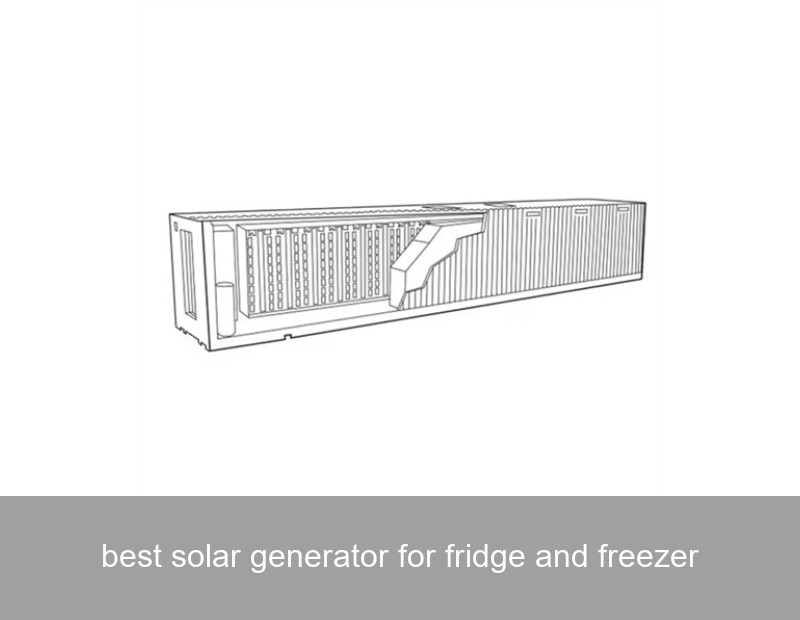
For larger industrial or microgrid applications—think supermarkets, restaurants, or community cold storage—our Highjoule CIB Series containerized battery energy storage systems provide utility-scale power and duration to keep entire refrigeration fleets online indefinitely.
Choosing and Optimizing Your System
Before you invest, take these steps:
- Audit Your Load: Find the nameplate wattage of your appliances and, crucially, their Locked Rotor Amperage (LRA) to calculate the true startup surge. When in doubt, consult a professional.
- Plan for Duration: Decide how many days of backup you need. Add 20-30% to your calculated battery needs as a safety buffer.
- Consider the Future: Choose a scalable system. You may later want to add more panels or battery capacity to cover lighting, a well pump, or medical equipment.
- Prioritize Integration: The best systems integrate seamlessly with your main electrical panel via a critical loads sub-panel or a whole-home transfer switch, enabling automatic, instant backup.
Final Thoughts and Your Next Step
Choosing the best solar generator for your fridge and freezer is an investment in resilience. It moves you from being a passive victim of grid instability to an active manager of your own essential power. The technology is proven, the benefits extend beyond emergencies (reducing your electricity bill and carbon footprint), and the cost of inaction can be far greater.
What's the first question you should ask a provider when evaluating if their system can truly handle the demanding startup surge of your specific freezer while also powering your refrigerator for days on end?
 Inquiry
 Online Chat