


Oxford PV Solar Panels for Sale: The Next Generation of Solar Energy Explained
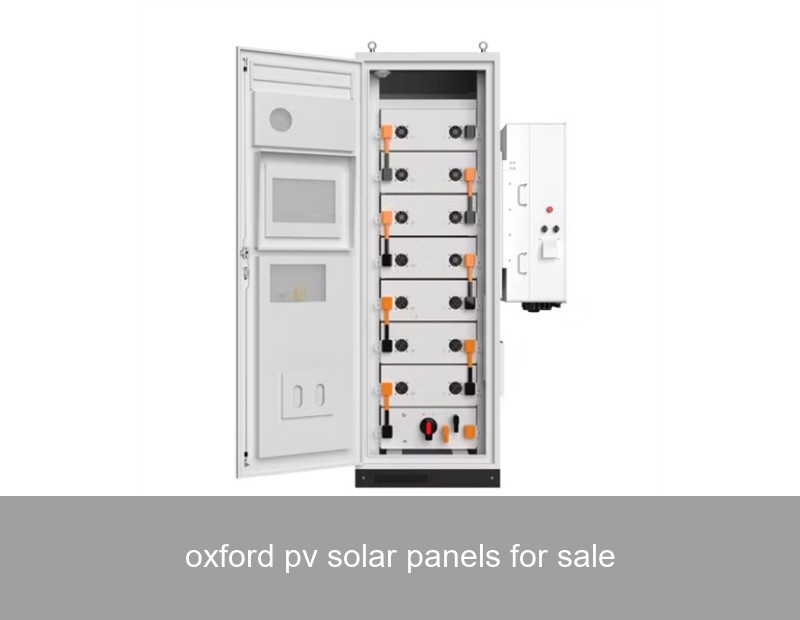
You've probably noticed it too. Solar panels are everywhere, but have you ever wondered why their efficiency seems to have hit a plateau? For years, the standard silicon solar cell has been stuck converting around 22% of sunlight into electricity. That leaves a massive 78% of solar energy untapped. This is the phenomenon driving a quiet revolution in renewable technology, and it's where companies like Oxford PV are making waves. Their groundbreaking work on perovskite-on-silicon tandem solar cells promises to shatter that ceiling, offering a future where Oxford PV solar panels for sale could dramatically change the energy output of every rooftop and solar farm. But what does this advanced technology mean for you as a homeowner, business owner, or energy professional looking to invest in the future? And how do you integrate such pioneering technology into a reliable, high-performing energy system? This is where the synergy between cutting-edge solar innovation and robust, intelligent energy storage becomes critical.
Table of Contents
- What is Oxford PV and Why is Their Technology a Game-Changer?
- The Efficiency Leap: From Data to Real-World Impact
- Case Study: A German Industrial Park's Journey with Next-Gen Solar
- Beyond the Panel: Why Your Energy System is Only as Strong as Its Weakest Link
- Highjoule's Role: Integrating Advanced Solar with Intelligent Storage
What is Oxford PV and Why is Their Technology a Game-Changer?
Oxford PV isn't your average solar manufacturer. Born from the University of Oxford, this UK-based company is a global leader in perovskite solar cell technology. Their flagship innovation is the "perovskite-on-silicon tandem solar cell." Let's break that down in simple terms:
- The Silicon Workhorse: The bottom layer is a standard, high-quality silicon cell—the technology that dominates the market today.
- The Perovskite Pioneer: On top, they add a thin film of a synthetic perovskite material. This crystal structure is exceptionally good at absorbing a different part of the light spectrum (like blue light) that silicon misses.
Think of it like a teamwork strategy for sunlight. Instead of one worker (silicon) trying to handle all the tasks, you add a specialist (perovskite) to manage specific jobs, dramatically boosting overall productivity. This tandem approach allows the cell to capture and convert more of the sun's energy into electricity.

Image: The intricate layers of advanced solar cell technology, like perovskite, aim to capture more sunlight. Source: Unsplash (Representative Image)
The Efficiency Leap: From Data to Real-World Impact
The numbers tell a compelling story. In late 2023, Oxford PV announced a certified world record of 28.6% efficiency for its commercial-sized tandem solar cell. More recently, they have reported lab cells pushing past 31%. This isn't just an incremental gain; it's a transformational jump of over 30% relative to mainstream panels.
What does this mean on your roof? Let's use a table to visualize the practical difference for a typical residential installation:
| System Parameter | Standard Silicon System (22% efficiency) | Future Oxford PV Tandem System (28.6% efficiency) |
|---|---|---|
| Roof Area | 30 m² | 30 m² |
| Typical Annual Output (Germany) | ~6,600 kWh | ~8,580 kWh |
| Additional Energy Generated | — | +1,980 kWh/year |
| Equivalent Power | — | Power for an additional 500+ laundry cycles per year. |
This data illustrates a powerful point: higher efficiency directly translates to more power from the same footprint—a critical factor for space-constrained residential and commercial rooftops.
Case Study: A German Industrial Park's Pilot with Next-Gen Solar
While Oxford PV solar panels for sale at a consumer level are still on the horizon, their commercial-scale pilot projects are providing real-world validation. Consider a recent installation at a mid-sized industrial park in Brandenburg, Germany. Facing rising energy costs and ambitious sustainability targets, the park's management partnered with a developer to install one of the first field trials of Oxford PV's tandem modules alongside a conventional array.
- Project Scale: 50 kW of Oxford PV tandem modules vs. 50 kW of premium silicon modules.
- Duration: 12-month monitoring period.
- Key Result: The tandem array produced 27% more energy per kW installed over the year, despite Germany's variable climate. This performance boost significantly improved the site's energy self-consumption ratio and accelerated their return on investment projection.
This case underscores a vital insight: the leap in panel efficiency is not just a lab trophy. It delivers measurable, superior performance where it counts—on real buildings, under real weather. As the International Energy Agency (IEA) notes, innovation in module technology is key to accelerating the global energy transition.
Beyond the Panel: Why Your Energy System is Only as Strong as Its Weakest Link
Here's a crucial perspective often missed in the excitement about solar efficiency: a high-performance panel is just the beginning. To truly capitalize on that expensive, high-tech energy, you need a brain and a bank for your power. The panel generates electricity, but what happens when the sun is stronger than your immediate demand, or when it sets?
Without a sophisticated battery storage system, a significant portion of that extra 27% energy from advanced panels could be wasted, fed back to the grid at low rates. The true value of next-generation solar is unlocked only when paired with next-generation storage and energy management.

Image: A complete home energy system combines solar generation with battery storage for full independence. Source: Unsplash (Representative Image)
Highjoule's Role: Integrating Advanced Solar with Intelligent Storage
This is where Highjoule's expertise becomes indispensable. As a global leader in advanced energy storage systems since 2005, we don't manufacture solar panels. Instead, we provide the critical infrastructure that makes high-efficiency solar investments like future Oxford PV panels pay off to their fullest potential.
Imagine your Oxford PV tandem array as a high-flow water spring. A Highjoule battery energy storage system (BESS) is the intelligent reservoir and plumbing system that stores the surplus for when you need it most. Our solutions for residential, commercial, and microgrid applications are designed with precisely this kind of advanced generation in mind.
How Highjoule Complements Cutting-Edge Solar:
- Maximized Self-Consumption: Our AI-driven energy management systems automatically store excess solar energy during peak production for use at night or during peak tariff periods, ensuring every kilowatt-hour your premium panels produce is utilized profitably.
- Grid Stability and Backup: For businesses, our commercial-scale BESS provides not just savings, but also backup power and grid services, turning your solar installation into a resilient asset.
- Future-Ready Platform: Highjoule systems are agnostic and adaptable. When Oxford PV solar panels for sale become widely available, our storage solutions will be ready to integrate seamlessly, protecting your investment and amplifying its value from day one.
In essence, while Oxford PV pushes the boundaries of energy generation, Highjoule masters the art of energy optimization and resilience. Together, they represent the complete package for a sustainable, independent, and cost-effective energy future.
Your Energy Future: Questions to Consider
The transition to technologies like perovskite-on-silicon tandem cells is not a matter of "if" but "when." As you contemplate your next energy investment—whether upgrading your home or designing a new commercial facility—what strategy will you adopt to ensure your system isn't just advanced in one component, but holistically optimized for performance and savings? Are you building an energy system that can adapt to and leverage these breakthroughs as they hit the market?
 Inquiry
 Online Chat