


Pabrik Solar Panel di Indonesia: Powering Growth with Smart Energy Storage Solutions
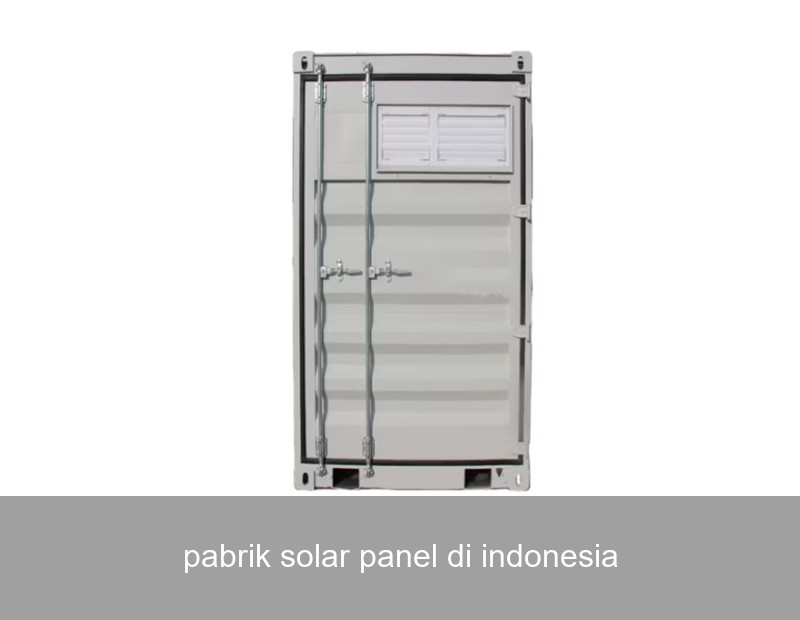
As Indonesia's industrial sector, including its rapidly growing pabrik solar panel di Indonesia (solar panel factories in Indonesia), seeks to power its expansion sustainably, a critical challenge emerges. These factories are major energy consumers, and their reliance on solar power alone hits a fundamental limit: the sun doesn't shine 24/7. This creates a mismatch between energy production and consumption, potentially leaving factories dependent on the grid or expensive diesel generators during peak evening hours or on cloudy days. The real opportunity for these manufacturers lies not just in generating solar energy, but in intelligently managing it. This is where advanced Battery Energy Storage Systems (BESS) become the indispensable component for true energy independence and operational efficiency.
Table of Contents
- The Challenge: Solar Intermittency in Industrial Operations
- The Data: Why Storage is Non-Negotiable for Factories
- The Solution: Integrating BESS with Solar PV Systems
- Highjoule's Role: Smart Storage for Industrial Resilience
- A Closer Look: Energy Storage for a Solar Panel Factory
- The Future Outlook for Indonesian Solar Manufacturing
The Challenge: Solar Intermittency in Industrial Operations
Imagine a pabrik solar panel di Indonesia operating at full capacity. Its rooftop and ground-mounted solar arrays produce abundant clean energy during the midday sun. However, production lines often run extended shifts, and critical processes like silicon purification, wafer slicing, and vacuum coating for solar cells require stable, uninterrupted power. When solar generation dips in the late afternoon or during monsoon season, the factory faces a tough choice: scale back production or switch to grid power, which in many regions of Indonesia can be costly and carbon-intensive. This intermittency is the single biggest barrier to achieving high levels of renewable energy penetration for industries.

Image Source: Unsplash - Illustrating the time-based energy generation challenge for factories.
The Data: Why Storage is Non-Negotiable for Factories
The financial and operational logic for adding storage is compelling. According to the International Renewable Energy Agency (IRENA), the global levelized cost of electricity from solar PV has fallen by about 90% since 2010. However, the value of that energy is time-dependent. For a factory, energy costs are not just about the unit price but about demand charges – fees based on the highest power draw from the grid in a billing period. A BESS can "peak shave" by discharging during these high-demand periods, slashing these charges. A study by the U.S. National Renewable Energy Laboratory (NREL) found that commercial and industrial entities could reduce their electricity bills by 10-30% through strategic solar-plus-storage deployment.
Consider this simplified breakdown for a hypothetical factory:
| Scenario | Energy Cost (Monthly) | Demand Charges | Grid Dependency | Carbon Footprint |
|---|---|---|---|---|
| Grid Only | High | Very High | 100% | High |
| Solar PV Only | Reduced | Moderate | ~40-60% | Medium |
| Solar PV + BESS | Lowest | Minimal | <10% | Low |
The Solution: Integrating BESS with Solar PV Systems
A modern BESS is more than just a battery bank. It's an intelligent energy management hub. For a solar panel factory, a well-integrated system performs three core functions:
- Energy Time-Shifting: Stores excess solar energy produced at noon for use during the evening production shift.
- Peak Shaving: Automatically discharges to supplement power during periods of high machinery load, avoiding steep demand charges.
- Backup Power & Grid Services: Provides seamless backup during short grid outages, ensuring continuous production and protecting sensitive equipment.
This integration transforms a solar PV system from a variable energy source into a reliable, dispatchable power plant tailored to the factory's specific load profile.
Highjoule's Role: Smart Storage for Industrial Resilience
This is precisely where Highjoule, a global leader in advanced energy storage since 2005, delivers critical value. We understand that an industrial pabrik solar panel di Indonesia has unique needs: scalability, ruggedness for tropical climates, and sophisticated energy management software. Our H-Series Industrial BESS is engineered for this environment. It features:
- Containerized or modular designs for easy scaling as the factory expands.
- Advanced liquid cooling and climate control systems, proven reliable in high-temperature, high-humidity conditions.
- The Highjoule Energy Operating System (EOS), an AI-driven platform that optimizes charge/discharge cycles based on weather forecasts, electricity tariffs, and production schedules to maximize ROI.
For a solar panel manufacturer, using our system isn't just about saving on bills; it's about demonstrating a commitment to sustainable manufacturing, which is increasingly a key differentiator in the global green supply chain.
A Closer Look: Energy Storage for a Solar Panel Factory
Let's examine a real-world parallel from Southeast Asia, which mirrors the opportunity in Indonesia. A large electronics manufacturing facility in Thailand, facing rising grid costs and sustainability targets, partnered with Highjoule to deploy a 2 MWh BESS alongside a 1.5 MW rooftop solar array. The facility's operations are analogous to a pabrik solar panel, with continuous assembly lines and cleanrooms.
The Results (12-month period):
- Energy Bill Savings: 28% reduction overall, driven largely by an 80% cut in demand charges.
- Self-Consumption of Solar: Increased from 65% to over 95%, meaning almost all solar energy produced was used on-site.
- Grid Independence: The facility can now operate critical loads for up to 4 hours during a grid outage, preventing millions in potential production losses.
- ROI Period: The project achieved payback in under 5 years, thanks to the combined savings and avoided losses.

Image Source: Unsplash - Representative image of industrial energy storage system monitoring.
This case, documented in part by the ASEAN Centre for Energy, showcases the transformative impact of solar-plus-storage for modern manufacturing. The same principles apply directly to Indonesia's burgeoning solar manufacturing sector.
The Future Outlook for Indonesian Solar Manufacturing
Indonesia holds immense potential to become a solar manufacturing hub for the region. With government initiatives supporting industrial electrification and renewable adoption, the stage is set. However, to compete globally, factories must achieve not just low production costs but also a low carbon footprint and exceptional reliability. An integrated, smart energy infrastructure powered by solar and storage is a strategic asset in this endeavor.
Highjoule's solutions are designed to support this vision. From initial feasibility studies and system design to long-term performance monitoring via our cloud-based EOS platform, we provide end-to-end partnership. Our systems help turn an operational cost center—energy—into a manageable, optimized, and even revenue-generating asset through potential future participation in grid-balancing schemes.
Your Energy, Your Control
For leaders of a pabrik solar panel di Indonesia or any energy-intensive industry, the question is no longer if to adopt renewable energy, but how to optimize it. The synergy between solar generation and advanced storage is the clear answer. It's about taking control of your energy destiny, insulating your business from price volatility, and building a resilient, sustainable operation.
What would a 30% reduction in your energy costs and 24/7 clean power do for your factory's competitiveness and sustainability goals?
 Inquiry
 Online Chat