


Unlocking Unprecedented Power: The Rise of the 700W Bifacial Solar Panel
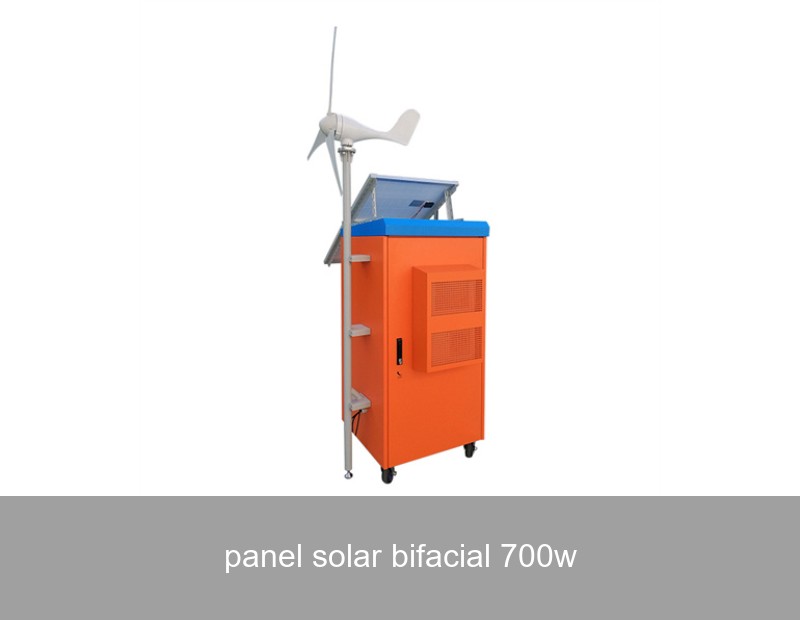
Imagine a solar panel that harvests light from both sides, pushing the boundaries of energy yield. This isn't the future; it's the present reality with modern panel solar bifacial 700w technology. For commercial and industrial energy managers across Europe and the U.S., the promise of higher energy density and a better return on investment is compelling. But to truly harness this advanced hardware, a holistic, intelligent energy system is non-negotiable. Let's explore how this photovoltaic innovation works and, more importantly, how to integrate it for maximum financial and operational benefit.
Table of Contents
- What is a Bifacial Solar Panel?
- Why the 700W Rating is a Game-Changer
- The Critical System View: Beyond the Panel
- Case Study: A European Logistics Hub
- Highjoule's Intelligent Ecosystem for High-Performance Solar
- The Future of Your Energy Independence
What is a Bifacial Solar Panel?
Traditional solar panels capture sunlight only on their front side. Bifacial panels, as the name suggests, feature photovoltaic cells on both the front and rear surfaces. The front captures direct sunlight, while the rear captures reflected and albedo light from the ground or surrounding surfaces.

Image: Bifacial panels allow light transmission. Source: Unsplash (Representative image)
This dual-sided design can lead to significant energy gains—typically 5% to 30% more annual yield compared to monofacial equivalents, depending on installation conditions (NREL, 2019). The key variables are ground reflectivity (a white gravel surface is better than asphalt), mounting height, and array spacing.
Why the 700W Rating is a Game-Changer
The push towards panel solar bifacial 700w modules represents the cutting edge of solar technology convergence. Here’s what drives this high wattage:
- Larger Cell Formats: The move from standard M6/M10 to M12/G12 sized silicon wafers increases surface area per panel.
- Advanced Cell Technology: The widespread adoption of PERC (Passivated Emitter and Rear Cell), followed by TOPCon (Tunnel Oxide Passivated Contact) and HJT (Heterojunction) technologies, boosts cell efficiency dramatically.
- High-Density Packaging: Innovations in panel design allow more cells to be packed into a standard-sized frame, pushing the power output beyond the previous 600W ceiling.
The implication is straightforward: higher power density. You can generate the same amount of energy with fewer panels, reducing balance-of-system costs (racking, wiring, labor) and optimizing valuable roof or land space. For a 1 MW project, using 700W panels instead of 500W panels could mean approximately 1,430 panels versus 2,000 panels—a substantial reduction in physical footprint and installation complexity.
The Critical System View: Beyond the Panel
Herein lies the crucial insight that separates a simple installation from a high-performance asset: a 700W bifacial panel is only as good as the system it's connected to. Think of it as a Formula 1 engine; without a precision chassis, tires, and telemetry, its potential is wasted.
| System Component | Challenge with 700W Bifacial Arrays | Consequence of Mismatch |
|---|---|---|
| Inverter | Must handle higher DC input current & power; needs multiple MPPT trackers for complex shading/bifacial gain profiles. | Clipping losses, reduced efficiency, inverter overload and failure. |
| Energy Storage (BESS) | Must absorb larger, variable generation peaks and dispatch intelligently. | Battery stress, wasted energy, inability to maximize self-consumption. |
| System Design & Software | Must model bifacial gain and optimize string design for volatile rear-side input. | Underperformance vs. forecast, unstable voltage, financial shortfall. |
This is where a provider with deep system integration expertise becomes invaluable. At Highjoule, we don't just see advanced panels; we see a dynamic power source that demands an equally intelligent and robust ecosystem to unlock its full value.
Case Study: A European Logistics Hub
Let's ground this in reality. A major logistics company in Northern Germany sought to decarbonize its 40,000 sq. meter warehouse operation. They opted for a 1.2 MW rooftop system using the latest 700W bifacial panels, installed on a highly reflective white membrane roof with elevated racking.
- Goal: Maximize self-consumption, reduce grid dependence, and ensure stable power for refrigeration units.
- Challenge: The variable, high output from the bifacial array (peaking above 1.3 MW at optimal reflection times) threatened to overwhelm a standard inverter and battery system.
- Highjoule Solution: We deployed our integrated HPS (Highjoule Power System) featuring:
- Our HJ-3000 commercial inverter series, with wide MPPT voltage ranges and high input current capability, specifically tuned for high-wattage bifacial strings.
- A containerized 1.5 MWh Lithium Iron Phosphate (LFP) battery storage system with advanced thermal management.
- The Highjoule Energy OS platform, using AI to predict generation spikes (from weather and albedo forecasts) and proactively manage charge/discharge cycles.
The Result? After one year of operation, the system recorded a 17.5% bifacial gain factor, exceeding initial projections. More importantly, the intelligent coupling of generation and storage achieved a 94% self-consumption rate, reducing their grid electricity purchases by over 80%. The Highjoule system seamlessly managed the power fluctuations, protecting equipment and maximizing ROI.
Highjoule's Intelligent Ecosystem for High-Performance Solar
As this case shows, our role at Highjoule is to be the enabling force behind advanced solar technology. Founded in 2005, we specialize in transforming high-output generation sources like panel solar bifacial 700w arrays into reliable, turnkey power assets. Our solutions are designed for the commercial, industrial, and microgrid sectors where performance predictability is paramount.

Image: Modern industrial solar installation. Source: Unsplash (Representative image)
Our integrated approach covers:
- Compatible Power Conversion: Our inverter lines are engineered for the high-current, variable-output characteristics of next-generation panels.
- Grid-Forming Storage: Highjoule's BESS doesn't just store energy; it can form a stable microgrid, ensuring continuity even if the main grid falters—a critical feature for sensitive operations.
- Predictive Energy Management: Our software is the brain, using machine learning to optimize every kilowatt-hour from capture through consumption or market dispatch.
We provide a single point of responsibility, from design and simulation to commissioning and lifetime performance management, ensuring your high-wattage bifacial investment delivers on its promise.
The Future of Your Energy Independence
The arrival of the 700W bifacial panel is a milestone, but it's merely the starting point. The real question for any business leader or project developer is this: How will you build a system resilient and smart enough to not just handle, but thrive on, this new level of power density and variability? The opportunity extends beyond lower energy bills to true energy independence and operational resilience.
Is your organization ready to evaluate how an integrated, intelligent storage solution can transform your next high-efficiency solar project from a simple generator into a strategic asset? The conversation starts with understanding the full system.
 Inquiry
 Online Chat