


Powering Your Home and Your Future: The Complete Guide to Panel Solar Domiciliario
Have you ever looked at your rising electricity bill and wondered, "What if I could generate my own clean power right here at home?" You're not alone. Across Europe and the United States, homeowners are turning to panel solar domiciliario (home solar panel systems) not just to save money, but to gain energy independence and contribute to a sustainable future. This comprehensive guide will walk you through everything you need to know, from the initial spark of an idea to a fully operational home power plant, and how modern energy storage is the game-changer that makes solar energy truly reliable.
Table of Contents
- The Phenomenon: Home Solar is Booming, But There's a Catch
- The Data: Understanding Solar Intermittency and Self-Consumption
- The Solution: Integrating Storage with Your Panel Solar Domiciliario
- Highjoule's Role: Intelligent Energy Management for Modern Homes
- A Real-World Case Study: The Schmidt Family in Bavaria
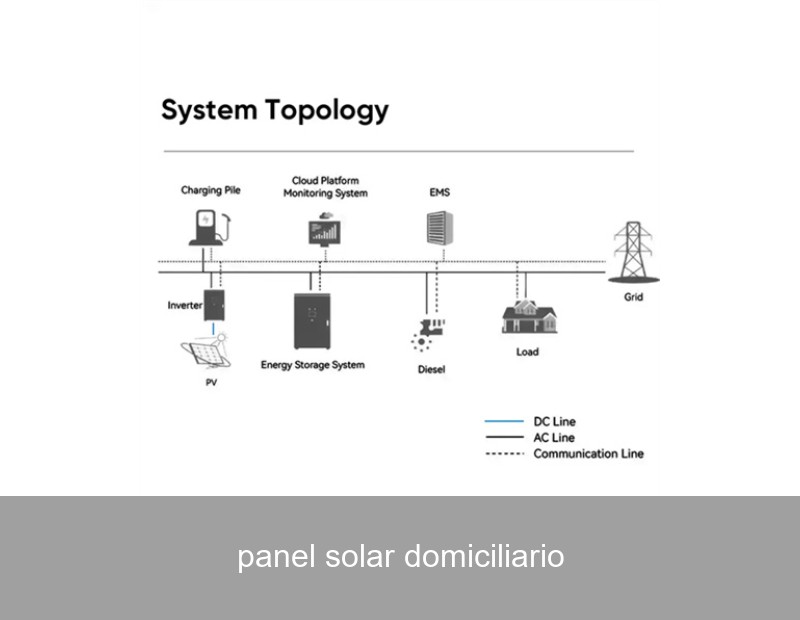
- Key Components of a Modern Solar & Storage System
- Making the Decision: Is a Home Solar System Right for You?
The Phenomenon: Home Solar is Booming, But There's a Catch
The sight of rooftop solar panels has become commonplace in many neighborhoods. The motivation is clear: harnessing free energy from the sun. The technology for panel solar domiciliario is mature, efficient, and more affordable than ever. Governments offer incentives, and the environmental benefits are undeniable. However, many early adopters quickly encountered a fundamental truth about solar power: the sun doesn't shine on a utility company's schedule. You generate the most power in the middle of the day when you might be at work, and you need power most in the evening when generation plummets. This mismatch means exporting excess energy to the grid for minimal feed-in tariffs and drawing expensive power back at night. This is the core challenge that a basic solar-only system cannot solve.
The Data: Understanding Solar Intermittency and Self-Consumption
Let's look at the numbers. A typical home solar system might produce a beautiful bell curve of generation peaking at noon. Meanwhile, a household's energy consumption often has two peaks: one in the morning and a larger one in the evening. Without storage, the self-consumption rate—the percentage of solar energy you use directly—often struggles to exceed 30-40%. That means over half of your clean, self-generated electricity is sent away. With declining feed-in tariffs across Europe (e.g., in Germany, Spain, and Italy), the economic model shifts from selling power to maximizing self-use. According to the International Energy Agency (IEA), coupling solar PV with batteries can increase the share of self-consumed electricity to 50-80%, dramatically improving the return on investment and grid resilience.
The Solution: Integrating Storage with Your Panel Solar Domiciliario
This is where home energy storage systems (ESS) come in. Think of a battery as a personal energy reservoir for your home. Your panel solar domiciliario fills the reservoir during the day. Then, when the sun sets, your home draws from this reservoir instead of the grid. This simple concept transforms your solar installation from a daytime generator into a 24/7 power source. It provides backup during outages, maximizes financial returns, and reduces strain on the public grid. The key is an intelligent system that manages when to store, when to discharge, and how to optimize for your specific tariff and consumption patterns.

Image: A modern home integrating solar panels and a wall-mounted battery storage unit. Source: Unsplash
Highjoule's Role: Intelligent Energy Management for Modern Homes
At Highjoule, with nearly two decades of expertise since 2005, we've moved beyond just providing batteries. We deliver integrated, intelligent energy ecosystems. For the residential market, our HomePower Stack series is designed specifically to complement and elevate any panel solar domiciliario installation. What sets our systems apart is the NeuronOS energy management platform. This smart brain doesn't just store energy; it learns your household's patterns, forecasts weather, and considers real-time electricity prices (where applicable) to make autonomous decisions that maximize your savings and comfort.
Our modular lithium iron phosphate (LiFePO4) batteries are known for safety, longevity (over 6000 cycles), and seamless scalability. Whether you're starting with a modest 5 kWh system or need a 30 kWh powerhouse for a large home with an electric vehicle, our solutions are designed to grow with your needs. We provide a complete package: high-performance battery modules, hybrid inverters compatible with both new and existing solar arrays, and intuitive monitoring via a user-friendly app.
A Real-World Case Study: The Schmidt Family in Bavaria
Let's make this tangible. The Schmidt family lives in a detached house in Bavaria, Germany. In 2020, they installed a 8 kWp panel solar domiciliario system. While they were happy to see their meter slow down, they were frustrated that their self-consumption was only around 35%, and they still faced high bills in winter. In early 2023, they decided to retrofit a Highjoule HomePower Stack 10 system (10 kWh storage capacity).
The results after one year were compelling:
- Self-Consumption Rate: Increased from 35% to 82%.
- Grid Independence: They now cover 94% of their annual electricity needs from their own system.
- Financial Impact: Their annual electricity costs dropped from €1,850 to approximately €280—primarily for grid fees and minimal winter top-ups.
- Peace of Mind: The system provided seamless backup during two grid outages, keeping lights, refrigeration, and internet running.
"The battery system was the missing piece," said Mr. Schmidt. "Now, we truly feel in control of our energy. The app shows us exactly how we use and save, turning energy from a boring bill into something we actively manage."
Key Components of a Modern Solar & Storage System
Understanding the parts of the puzzle helps you make an informed decision. Here’s what a complete Highjoule-powered home system includes:
| Component | Function | Highjoule's Value |
|---|---|---|
| Solar Panels (PV Array) | Converts sunlight into direct current (DC) electricity. | We partner with top-tier panel manufacturers or seamlessly integrate with your existing array. |
| Hybrid Inverter | The system's heart. Converts DC from panels/battery to AC for home use, manages energy flow. | Our inverters feature high efficiency (>98%) and are pre-configured for intelligent communication with our batteries. |
| Battery Storage | Stores excess solar energy for use at night or during outages. | Safe LiFePO4 chemistry, modular design, industry-leading cycle life, and full integration with NeuronOS. |
| Energy Management System (EMS) | The intelligent software that controls and optimizes the entire system. | NeuronOS enables smart features like time-based control, outage protection, and remote monitoring. |
| Monitoring & App | Provides real-time and historical data on production, consumption, and savings. | User-friendly interface that empowers homeowners with visibility and control over their energy. |

Image: Monitoring and controlling a home energy system via a smartphone application. Source: Unsplash
Making the Decision: Is a Home Solar System Right for You?
Investing in a panel solar domiciliario coupled with storage is a significant decision. The ideal candidates often are homeowners with:
- High electricity rates and a desire to lock in long-term energy costs.
- A suitable, unshaded roof (south, east, or west-facing in the Northern Hemisphere).
- A commitment to sustainability and energy resilience.
- Interest in leveraging smart home technology and future-proofing for electric vehicles.
The economics have improved dramatically. While payback periods vary by region and incentives (like the EU's REPowerEU plan or the U.S. federal tax credit), the combination of rising utility prices and falling system costs makes the proposition stronger every year. It's an investment that increases not just your energy independence, but potentially your property value.
What's the First Step?
Begin with a detailed analysis of your past year's electricity bills to understand your consumption pattern. Then, consult with a certified installer who can assess your site and model different system configurations. Ask them about the integration of storage from day one—retrofitting is always possible, but a designed-from-scratch system is often more optimized and cost-effective.
As you contemplate generating and storing your own power, what specific concern or question about making the shift to a self-sufficient home energy system is most on your mind? Are you curious about the long-term maintenance, how it performs in your specific climate, or how to navigate local permits and incentives? We're here to help illuminate the path.
 Inquiry
 Online Chat