


Solar Park International: Powering a Global Clean Energy Future
Imagine vast landscapes, not of untouched wilderness, but of shimmering photovoltaic panels, silently converting sunlight into electricity for thousands of homes and businesses. This is the reality of the modern solar park international project. These large-scale, utility-grade solar installations are becoming cornerstones of national energy strategies from the sun-drenched plains of Spain to the expansive terrains of Texas. But as their scale and ambition grow, so does a critical technical challenge: how do we ensure this clean but intermittent power is reliable, stable, and fully integrated into the grid? The answer lies not just in capturing the sun's energy, but in mastering its storage and dispatch.
The Grid Challenge: Intermittency & Integration
The core appeal of solar power is its simplicity and cleanliness. However, its inherent intermittency—the sun doesn't shine at night, and clouds can cause sudden dips in generation—poses a significant problem for grid operators. An international solar park feeding hundreds of megawatts into the grid can cause voltage and frequency instability if its output fluctuates wildly.
- Grid Congestion: During peak solar hours, transmission lines can become overloaded, forcing solar parks to curtail (waste) perfectly good energy.
- Nighttime & Peak Demand Mismatch: In many regions, electricity demand peaks in the early evening, just as solar generation falls to zero. This creates a reliance on fossil-fuel peaker plants.
- Ancillary Services Shortfall: Traditional grids rely on large spinning turbines to provide essential services like frequency regulation. Inverter-based resources like solar parks need to be equipped to offer these services to maintain grid health.
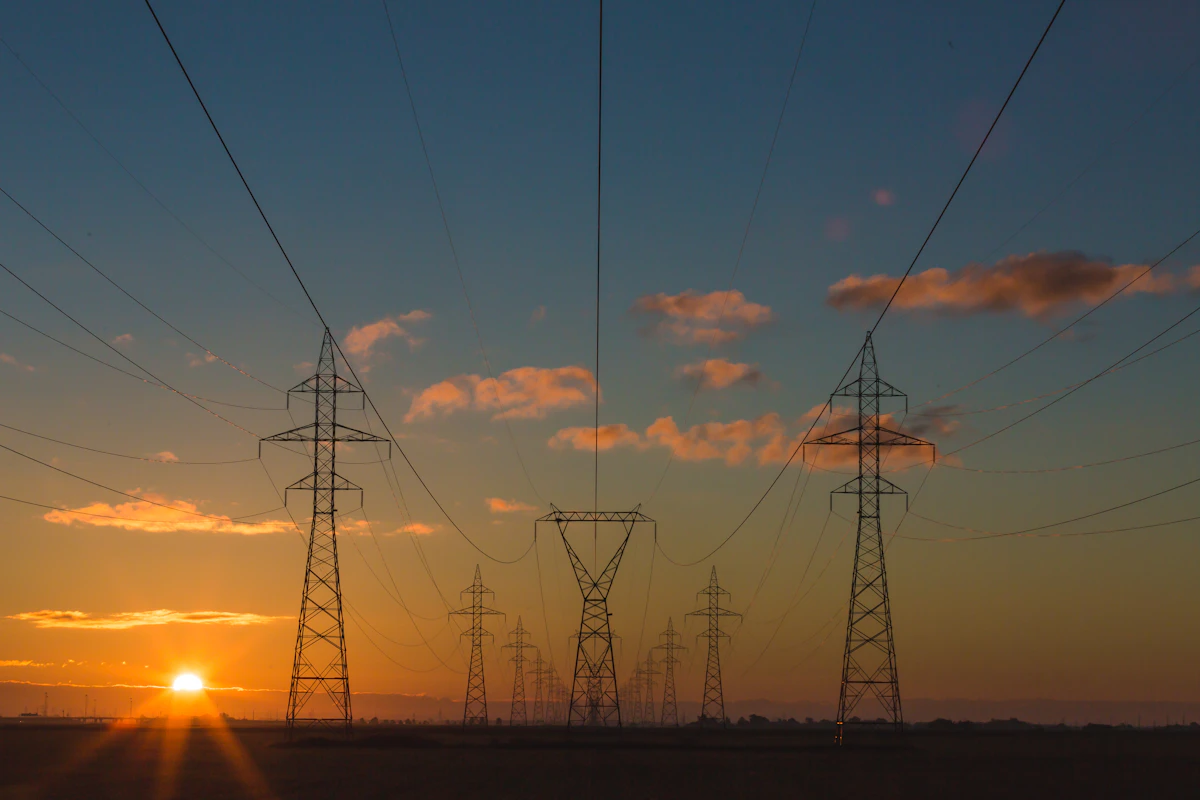
Image Source: Unsplash - Representative image of a utility-scale solar installation.
The Data Behind the Challenge
According to the International Energy Agency (IEA), solar PV is set to become the largest source of installed power capacity globally by 2027. This explosive growth amplifies the integration challenge. In California, a leader in solar deployment, the infamous "duck curve" illustrates the daily net demand dip caused by high solar midday production and a steep ramp-up requirement as the sun sets. Without solutions, this curve gets deeper and steeper, threatening grid reliability.
The Essential Solution: Advanced Energy Storage
This is where Battery Energy Storage Systems (BESS) transition from a supportive technology to a critical grid asset. Co-locating a BESS with a solar park international project fundamentally transforms its value proposition from a variable generator to a predictable, dispatchable power plant.
| Challenge | Storage Solution | Benefit |
|---|---|---|
| Intermittency & Curtailment | Store excess midday solar energy | Eliminates waste, increases park revenue |
| Evening Peak Demand | Dispatch stored energy during high-price periods | Shaves peak demand, defers grid upgrades |
| Grid Frequency Instability | Provide fast frequency response (in milliseconds) | Stabilizes the grid, creates new revenue streams |
| Black Start Capability | Use storage to re-energize the grid after an outage | Enhances grid resilience and security |
Highjoule's Role in Empowering Solar Parks
At Highjoule, we've spent nearly two decades perfecting the technology that makes solar-plus-storage projects not just feasible, but highly profitable and grid-friendly. Our expertise is specifically tailored to the complex demands of solar park international developers and operators.
Our flagship product, the H-Series Utility Battery Storage System, is engineered for large-scale applications. It features industry-leading energy density, a long cycle life, and a fully integrated Power Conversion System (PCS) and Energy Management System (EMS). What truly sets Highjoule apart is our Adaptive Grid Intelligence (AGI) software suite. This AI-driven platform doesn't just store and release energy; it continuously analyzes grid conditions, weather forecasts, and electricity market prices to make autonomous, millisecond decisions on the most valuable service to provide—be it energy arbitrage, frequency regulation, or voltage support.
- For Developers: We provide turnkey EPC solutions and long-term performance guarantees, de-risking your project for financiers.
- For Operators: Our remote monitoring and predictive maintenance services ensure maximum uptime and system health.
- For Grids: Our systems are compliant with the strictest grid codes in North America and Europe, acting as a stabilizing force.

Image Source: Unsplash - Representative image of a battery storage system installation.
Case Study: A Real-World Success Story in Southern Europe
Let's move from theory to practice. In 2022, Highjoule partnered with a leading renewable energy developer on a 150 MW solar park international project in Portugal. The site had excellent solar resources but was connected to a region of the grid with known congestion issues.
The Project & Challenge
The developer faced two major hurdles: 1) potential curtailment orders from the grid operator during high-generation periods, and 2) the need to meet strict new grid code requirements for frequency control. Simply building a solar park was no longer enough to secure a grid connection permit.
The Highjoule Solution
We integrated a 60 MWh Highjoule H-Series BESS alongside the solar park. Our AGI software was configured with a multi-objective optimization strategy:
- Primary Function: Store energy during potential curtailment windows and discharge during the evening peak.
- Secondary Function: Continuously provide Frequency Containment Reserve (FCR) to the Portuguese grid operator, a service that is compensated separately.
The Results (12-Month Period)
- Curtailment Elimination: 0% of solar energy was wasted due to grid orders.
- Revenue Diversification: 35% of the project's storage-related revenue came from frequency regulation services, not just energy trading.
- Grid Compliance: Exceeded all grid code requirements, making the solar park a welcomed asset to the local TSO.
- ROI Acceleration: The additional revenue streams accelerated the payback period for the BESS component by an estimated 22%.
This case, documented in part with data from the European Network of Transmission System Operators (ENTSO-E), exemplifies the modern paradigm: a solar park international project is most successful when designed as a smart, multi-functional power plant from the outset.
Future Trends in International Solar Development
The trajectory is clear. Markets like the UK, Germany, and the U.S. (following FERC Order 2222) are increasingly valuing flexibility and ancillary services. Future solar park international ventures will almost invariably be "solar-plus-storage" by default. We are also seeing a rise in hybrid projects combining solar, wind, and storage, leveraging complementary generation profiles. Furthermore, innovations like virtual power plants (VPPs) will allow hundreds of distributed solar-plus-storage assets, including smaller commercial installations using Highjoule's C&I solutions, to aggregate and act as a single, massive grid resource.
The technology for a resilient, renewable-powered grid exists today. The question for developers, investors, and policymakers is no longer if storage is needed, but how to optimize its integration for maximum economic and grid value.
Your Next Step
Is your current or planned solar park international project designed to capture its full potential value, or is it at risk of being just another intermittent generator on an increasingly crowded grid? What specific grid challenge in your target market keeps you up at night, and how could a smarter storage strategy turn that challenge into a revenue opportunity?
 Inquiry
 Online Chat