


Unlocking Argentina's Energy Potential with Flexible Solar Panels
Imagine harnessing the powerful sun of the Argentine Pampas, the rugged terrain of Patagonia, or the curved rooftops of Buenos Aires' historic buildings with a solar solution that bends to the challenge—quite literally. This is the promise of flexible solar panels Argentina is beginning to embrace. Unlike traditional rigid silicon panels, flexible panels are lightweight, durable, and can conform to various surfaces, opening up renewable energy possibilities where conventional systems simply can't go. For a country with vast, diverse geography and a booming demand for decentralized power, this technology isn't just an alternative; it's a key to unlocking a more resilient and accessible energy future.
Why Argentina is a Perfect Fit for Flexible Solar Technology
Argentina's energy landscape is as diverse as its topography. From the sun-drenched northwest, which boasts some of the highest solar irradiance levels on the continent, to remote rural communities and sprawling agricultural and industrial facilities, the need for adaptable solar solutions is clear. Traditional rack-mounted systems face limitations here: they are too heavy for many older roofs, unsuitable for mobile applications like RVs or boats, and impractical for the temporary needs of mining or agricultural outposts.
This is where flexible solar panels shine. Typically made with thin-film photovoltaic materials like CIGS (Copper Indium Gallium Selenide) or advanced mono-crystalline silicon cells on a polymer base, these panels offer distinct advantages for the Argentine market:
- Lightweight & Versatile: They can be installed on lightweight structures, vehicle roofs, or even sewn onto tents for adventure tourism.
- Durability: Many are resistant to hail, wind, and partial shading, making them robust for harsh Patagonian weather.
- Ease of Installation: Often using simple adhesive or tie-down methods, they reduce structural reinforcement needs and installation costs.
According to a 2023 IRENA report, Argentina has steadily increased its solar capacity, with distributed generation playing a crucial role. Flexible panels are poised to accelerate this trend by democratizing access to solar power in previously untapped segments.

Image Source: Unsplash - Example of flexible panel application on non-standard surfaces.
A Real-World Case Study: Powering Sustainable Tourism in El Chaltén
Let's move from theory to practice. Consider a growing eco-lodge in El Chaltén, Santa Cruz province, in the heart of Argentine Patagonia. The lodge, committed to sustainability, faced a dual challenge: it needed to power its remote operations without relying on expensive and polluting diesel generators, and it had to preserve the aesthetic integrity of its architecturally unique, curved-roof buildings.
The solution was a custom-designed hybrid system centered on flexible solar panels Argentina-based installers sourced for the project. Approximately 12 kW of flexible panels were seamlessly adhered to the lodge's curved metal roofs—an impossible feat with standard panels.
| Project Metric | Data |
|---|---|
| Flexible Solar Capacity | 12 kW |
| Estimated Annual Generation | 18,000 kWh |
| Diesel Fuel Displaced | ~5,000 liters/year |
| CO2 Emissions Avoided | ~13 tons/year |
However, the sun in Patagonia, while strong, isn't constant. To provide 24/7 clean power, the solar array was integrated with a robust battery energy storage system (BESS). This ensured that energy captured during the long summer days was stored for use at night and during frequent cloudy periods, creating a truly autonomous and clean power supply for the lodge's critical loads.
Beyond the Panel: The Critical Role of Energy Storage
This case study highlights a crucial point often overlooked: the solar panel is only one part of the equation. The true value of any solar installation, especially in a country with Argentina's variable climates and for off-grid or critical applications, is realized only when paired with intelligent energy storage. A flexible panel captures energy, but a smart storage system ensures it's available when and where you need it most.
This is where expertise from a global leader becomes invaluable. At Highjoule, with nearly two decades of experience since 2005, we understand that energy independence is built on integration. Our focus isn't just on generating watts; it's on delivering reliable, intelligent, and sustainable power solutions. For projects utilizing flexible solar panels in Argentina, our role is to provide the brains and the backbone of the system: the advanced battery storage and energy management technology that turns intermittent solar generation into dependable power.
Highjoule's Integrated Solutions for the Argentine Market
Whether for a remote tourism venture, an agricultural processing plant, or a residential community seeking grid independence, Highjoule's product suite is designed to maximize the return on investment for flexible solar installations. Our systems are engineered for the long haul, ensuring that the innovative power capture of flexible panels is matched by storage performance and longevity.
- Highjoule Commercial & Industrial (C&I) BESS: Scalable, containerized or modular systems perfect for large-scale off-grid industrial applications, microgrids, or peak shaving for businesses. These systems seamlessly integrate with large solar arrays, including those using flexible panels on expansive warehouse roofs.
- Highjoule Residential Energy Hub: A compact, all-in-one unit that combines a hybrid inverter, battery storage, and intelligent energy management. Ideal for homes using flexible solar on unique rooftops, it allows homeowners to store excess energy, increase self-consumption, and ensure backup power during outages.
- Highjoule Energy Management System (EMS): The intelligent software layer that optimizes energy flow between flexible solar panels, battery storage, the grid, and loads. It's this smart technology that ensures efficiency, reduces costs, and provides real-time monitoring and control from anywhere in the world.

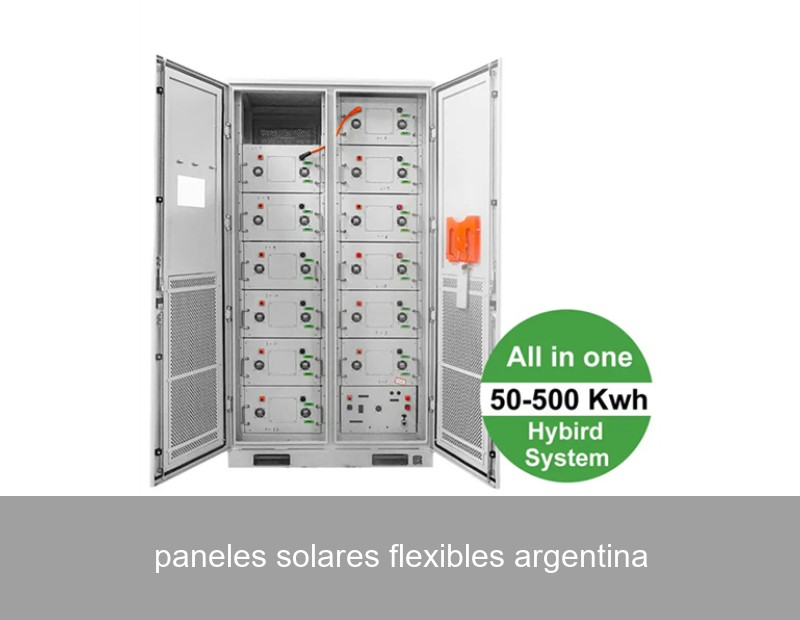
Image Source: Unsplash - Representative image of a modern battery storage system.
The Future of Flexible Solar in Argentina: Integration is Key
The trajectory for flexible solar panels Argentina is undoubtedly promising. As the technology advances, offering higher efficiencies and even greater durability, its applications will expand further into agrivoltaics, portable military and emergency power, and building-integrated photovoltaics (BIPV).
However, the sustainable energy leaders of tomorrow in Argentina won't be those who simply adopt the newest panel technology. They will be those who understand and invest in a holistic, integrated system. The future belongs to smart microgrids for remote communities, resilient backup power for critical infrastructure, and optimized self-consumption for industries—all powered by the marriage of innovative generation (like flexible solar) and advanced, reliable storage.
As you consider the potential of flexible solar for your project in Argentina, we leave you with this question to ponder: How will you ensure that the clean energy you capture today is still powerfully working for you when the sun goes down or the grid becomes unreliable? The answer lies not just on the roof, but in the intelligent system that stores, manages, and delivers that energy. Perhaps it's time to explore what a truly integrated solution can do.
 Inquiry
 Online Chat