


Modern Solar Panels: Unlocking Unprecedented Efficiency and Energy Independence
You've probably noticed them more and more: sleek, low-profile arrays on rooftops and fields, silently converting sunlight into clean electricity. Modern solar panels are no longer the clunky, inefficient additions of the past. They represent a technological revolution, a cornerstone in the global shift towards resilient and sustainable energy. But what truly sets today's high-performance photovoltaic (PV) modules apart? And how can you ensure you're maximizing their potential? As a global leader in advanced energy storage since 2005, Highjoule understands that the true power of modern solar panels is fully unleashed only when paired with intelligent energy management. Let's explore the cutting-edge features defining today's solar landscape and how they integrate into a complete power solution.
Table of Contents
- The Evolution: From Basic Cells to Power Plants
- Key Technologies in Modern Solar Panels
- The Data Advantage: Why Efficiency Matters
- Case Study: A Californian Winery's Success Story
- Beyond the Panel: The Critical Role of Energy Storage
- The Highjoule Solution: Intelligent Integration
- Future Horizons and Your Next Step
The Evolution: From Basic Cells to Power Plants
The journey of solar technology is a story of relentless innovation. Early silicon panels offered a mere 6-8% efficiency. Today, we're discussing commercial panels exceeding 23%, with laboratory cells pushing past 47%. This isn't just incremental improvement; it's a transformation in energy density and economic viability. Modern panels generate significantly more power in the same physical footprint, making solar accessible for a wider range of residential, commercial, and industrial applications. This leap is driven by breakthroughs in materials science, manufacturing precision, and smart design.
Key Technologies Defining Modern Solar Panels
So, what's under the hood? Several key innovations distinguish contemporary PV modules:
- PERC (Passivated Emitter and Rear Cell) Technology: This design adds a passive layer to the rear of the cell, reflecting light back into the silicon to capture more energy, particularly in low-light conditions. It's become a standard for high-efficiency modules.
- Bifacial Panels: These panels capture sunlight on both sides. The front side absorbs direct sunlight, while the rear side captures albedo light—sunlight reflected from the ground or surrounding surfaces. When installed over reflective surfaces (like white gravel or certain membranes), they can boost energy yield by up to 15-20%.
- Half-Cut Cells and Multi-Busbar (MBB) Design: By cutting standard solar cells in half, electrical resistance is reduced, and shade tolerance is improved. Combined with more busbars (the thin lines on cells that collect electricity), these features minimize power loss and improve overall module reliability and output.
- Advanced Frame and Durability: Modern frames are lighter yet stronger, designed for easier installation and to withstand higher wind and snow loads. Anti-reflective, anti-soiling coatings ensure more light enters the cell and makes the panels easier to clean, maintaining peak performance.

Image Source: Unsplash - Close-up of modern solar panel technology.
The Data Advantage: Why Efficiency Matters for Your ROI
Let's talk numbers. Higher panel efficiency directly translates to a better return on investment (ROI). For a homeowner with limited roof space, a 22% efficient panel will produce roughly 25% more energy over the year than an 18% efficient panel of the same size. For a commercial operation, this difference can mean meeting a much larger portion of their energy needs from their available rooftop or land area. According to the National Renewable Energy Laboratory (NREL), the average efficiency of commercial silicon panels has increased by about 0.5% annually for the last decade—a compound improvement with massive real-world implications.
A Real-World Case Study: Sustainability and Savings in Napa Valley
Consider the case of a renowned winery in Napa Valley, California. Their goal was twofold: reduce a significant portion of their substantial energy consumption (used for cooling, lighting, and processing) and bolster their brand's commitment to sustainability. They installed a 550 kW rooftop and carport solar array using high-efficiency bifacial modern solar panels.
The results, monitored over two years, are compelling:
| Metric | Result |
|---|---|
| Annual Energy Production | Over 820,000 kWh |
| Percentage of Energy Needs Met | ~65% |
| Annual Carbon Emission Reduction | Equivalent to ~580 metric tons of CO2 |
| Estimated Payback Period | Under 7 years (aided by state incentives) |
This project highlights how modern PV technology delivers tangible economic and environmental returns. However, the winery's managers identified a new opportunity: their solar system produced excess energy in the middle of the day, but they still drew expensive power from the grid during peak evening hours and had concerns about grid reliability during harvest season.
Beyond the Panel: The Critical Role of Energy Storage
This brings us to the most crucial insight in modern energy systems: the sun doesn't always shine when you need power. This is the inherent challenge of solar alone. The true potential of your investment in modern solar panels is realized when you can store surplus energy for use on-demand. This is where Battery Energy Storage Systems (BESS) become indispensable. They transform a solar installation from a intermittent source into a reliable, 24/7 power solution.
A sophisticated BESS allows you to:
- Maximize Self-Consumption: Store your solar overproduction instead of selling it back to the grid at lower rates, and use it later when electricity prices are high.
- Ensure Backup Power: Provide critical backup during grid outages, ensuring business continuity or home comfort.
- Support Grid Stability: For larger systems, participate in grid services that can generate additional revenue streams.

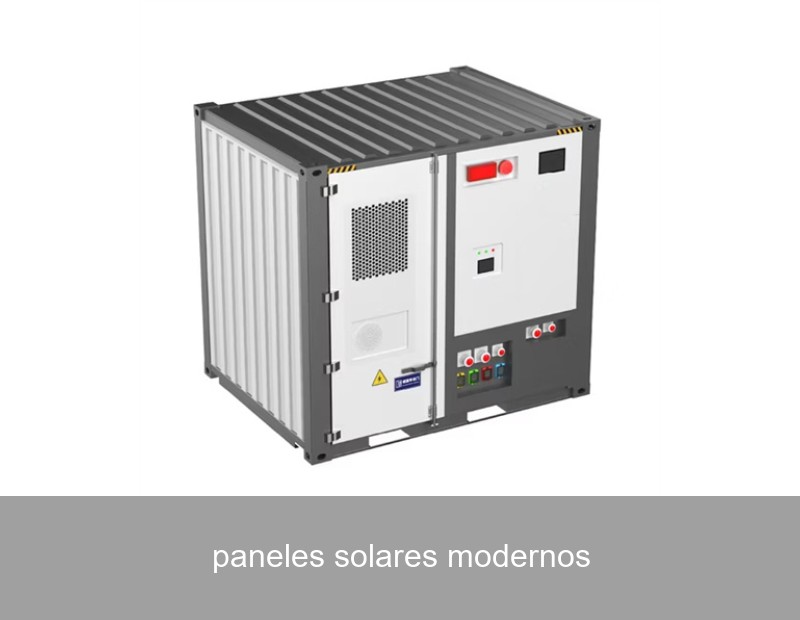
Image Source: Unsplash - A modern battery energy storage system.
The Highjoule Solution: Intelligent Integration for Maximum Value
This is precisely where Highjoule's expertise comes into play. We don't just provide storage; we provide intelligent, integrated energy systems. Pairing your high-efficiency modern solar panels with a Highjoule BESS creates a synergistic energy ecosystem.
Our flagship product line, the Highjoule H-Series, is designed for seamless integration with modern solar arrays. Key features include:
- Advanced Lithium-Ion Chemistry: Offering high energy density, long cycle life (exceeding 6,000 cycles), and exceptional safety with integrated battery management systems.
- Smart Energy Management System (EMS): The brain of the operation. Our AI-driven EMS learns your energy consumption patterns, weather forecasts, and utility rate schedules to autonomously optimize when to store solar energy, when to discharge, and when to draw from the grid, maximizing savings.
- Scalable Architecture: From residential (Highjoule H-Res) to large commercial and industrial applications (Highjoule H-Comm & H-Industrial), our modular systems can be scaled to meet exact energy needs.
- Grid Services Ready: Our C&I systems are designed to participate in demand response programs, providing an additional layer of financial return on your investment.
For the Napa Valley winery, adding a 250 kWh Highjoule H-Industrial system was the logical next step. It now stores the midday solar excess, powering the facility through the expensive 4-9 pm peak period and providing seamless backup during critical fermentation and storage processes. Their grid dependence has dropped to below 30%, and their energy costs are now predictable and controlled.
Future Horizons and Your Next Step
The future of modern solar panels is bright, with technologies like perovskite-silicon tandem cells on the horizon, promising efficiencies over 30%. Yet, the foundational principle remains: generation and storage must evolve together. As noted by the International Energy Agency (IEA), energy storage is the key enabler for secure, flexible, and renewables-heavy power systems worldwide.
Investing in top-tier modern solar panels is a brilliant first step. But are you ready to explore how to capture, control, and utilize every kilowatt-hour they produce? What would complete energy independence and resilience look like for your home or business?
 Inquiry
 Online Chat