


Radiant Solar Panels for Heating: The Sustainable Path to Ultimate Home Comfort
Imagine a winter morning. You step out of bed onto a pleasantly warm floor, and a gentle, even heat surrounds you—no drafts, no cold spots, and no sound of a blasting furnace. This isn't a luxury reserved for the few; it's the achievable reality of modern paneles solares radiantes calefaccion (radiant solar heating panels). As energy prices fluctuate and the call for sustainable living grows louder, homeowners across Europe and the U.S. are looking beyond traditional PV panels. They are turning to integrated systems that capture the sun's power not just for electricity, but for direct, sublime warmth. This article delves into how radiant solar heating works, its compelling benefits, and how pairing it with intelligent energy storage creates a truly autonomous and comfortable home.

Image Source: Unsplash - A modern home construction showing integration of radiant floor heating.
The Science Behind the Comfort: How Solar Thermal Meets Radiant Floors
Let's demystify the technology. A system for radiant solar heating typically combines two key components:
- Solar Thermal Collectors (The "Paneles Solares"): Unlike photovoltaic (PV) panels that generate electricity, these collectors are designed to capture thermal energy. They use a fluid (often a glycol-water mix) circulating through dark, absorber plates under a glass cover. The sun heats this fluid directly.
- Radiant Heat Distribution System: This heated fluid is then pumped through a network of durable cross-linked polyethylene (PEX) tubing embedded in your home's floors (or sometimes walls or ceilings). The warm tubing radiates heat evenly upward, warming objects and people in the room through infrared radiation—the same way the sun warms your skin.
The synergy is beautiful. The system provides low-temperature, consistent heat, which is exactly what solar thermal collectors produce most efficiently, especially in colder months with good solar exposure.
| System Component | Primary Function | Key Advantage for Heating |
|---|---|---|
| Solar Thermal Collectors | Converts sunlight into heat (thermal energy) | High efficiency (up to 70-80%) in converting sunlight to usable heat. |
| Heat Transfer Fluid & Pump | Transports heat from collectors to the home | Allows for heat storage in a buffer tank for use when the sun isn't shining. |
| In-Floor PEX Tubing | Distributes heat evenly across living spaces | Operates at lower temps (25-40°C) than radiators (60-80°C), perfect for solar input. |
| Buffer/Storage Tank | Stores excess thermal energy | Decouples solar collection from heat demand, providing evening/night warmth. |
Why Choose Radiant Solar Heating? Key Benefits Unpacked
The move to paneles solares radiantes calefaccion is driven by tangible advantages that impact your wallet, comfort, and carbon footprint.
- Unmatched Comfort: Radiant heat eliminates the uneven temperatures and air circulation of forced-air systems. It reduces dust mites and allergens, improving air quality.
- High Efficiency & Lower Operating Costs: By using free solar energy as the primary heat source, you drastically reduce reliance on gas, oil, or electricity. The U.S. Department of Energy notes that radiant heating can be more efficient than forced-air because it avoids duct losses.
- Energy Independence & Resilience: Pairing it with a buffer tank gives you a thermal "battery." When combined with a PV system and electrical energy storage, your home's resilience soars.
- Silent and Aesthetic: The system is completely silent and invisible, freeing up wall space and allowing for unrestricted interior design.
The Data: Understanding the Potential Savings
While savings depend on climate, insulation, and system design, studies show significant potential. For example, a well-designed solar thermal system can provide 40-60% of a typical European home's annual space heating needs. In sun-rich regions like the southwestern U.S. or Southern Europe, this figure can climb even higher. The key is not necessarily to achieve 100% solar fraction year-round, but to maximize the solar contribution, making the backup system (like a heat pump or efficient boiler) work minimally.
From Blueprint to Reality: A German Case Study with Data
Let's look at a real-world application. The "Eco-Home Freiburg" project, a single-family home in Germany's Black Forest, serves as a perfect model. The region experiences cold winters, making heating a major energy cost.
- System Installed: 15 sq.m. of high-efficiency evacuated tube solar thermal collectors, a 1,000-liter buffer storage tank, and a radiant floor system throughout the home's 150 sq.m. living area. A small air-source heat pump serves as a backup for prolonged cloudy periods.
- Performance Data (Annual): Monitoring over two years showed the solar thermal system provided approximately 55% of the total space heating demand. The household reduced its purchased energy for heating by over 50% compared to the local average for a gas-heated home of similar size.
- Homeowner Insight: "The consistency of warmth is what we love most. Our energy bills are predictable and low, and we have the peace of mind that most of our heat comes directly from our roof," noted the project owner. This case underscores that even in less-than-tropical climates, paneles solares radiantes calefaccion is a viable and powerful solution.

Image Source: Unsplash - A modern home featuring solar thermal collectors on its roof.
The Highjoule Advantage: How We Power Efficient Solar Heating Systems
This is where Highjoule's expertise becomes crucial. While solar thermal handles heat, a modern, resilient home needs a holistic energy strategy. Our role is to ensure the electricity powering your circulation pumps, controllers, and backup systems is as smart and sustainable as the thermal system itself.
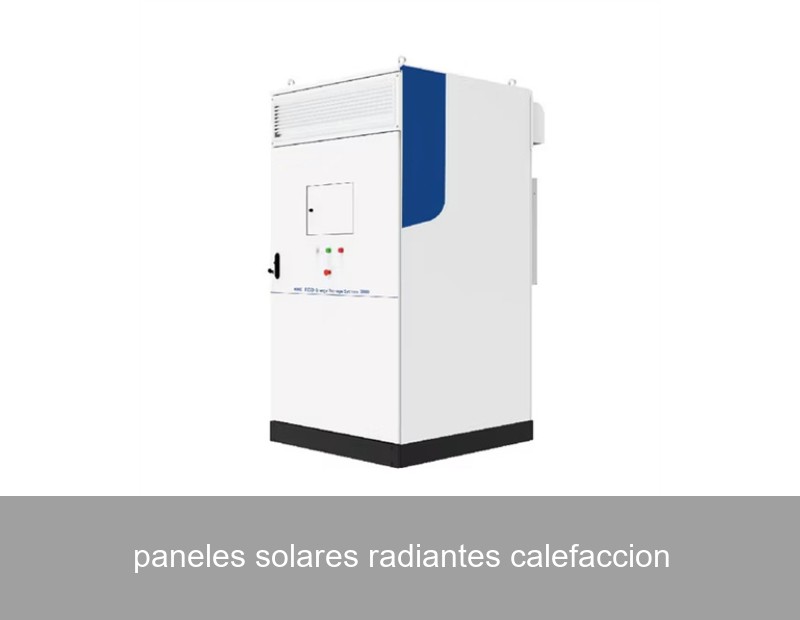
Highjoule's integrated energy storage systems (ESS) are the perfect companion to a radiant solar heating setup. Here’s how:
- Maximizing Self-Consumption: If you have PV panels, our ESS stores excess solar electricity during the day. This stored power can run your radiant system's pumps and controls at night, making your heating cycle truly solar-powered from both thermal and electrical perspectives.
- Providing Reliable Backup: During a grid outage, our systems can keep critical loads running. Imagine your radiant heating system continuing to operate, keeping your pipes from freezing and your family warm, while other homes go cold—a significant value in areas prone to winter storms.
- Intelligent Energy Management: Highjoule's smart energy management system can optimize when to draw from the grid, your batteries, or your solar production, ensuring your radiant heating system operates at the lowest possible cost and carbon intensity. For commercial applications, this intelligence translates into direct operational savings and sustainability reporting benefits.
Founded in 2005, Highjoule provides scalable, intelligent storage solutions for residential, commercial, and microgrid applications. Our products are designed to seamlessly integrate with diverse renewable sources, creating a robust and efficient energy ecosystem for your property.
A Synergistic System: Thermal + Electrical Storage
Think of it as a dual-storage approach: the buffer tank is your thermal battery, storing heat for hours. The Highjoule ESS is your electrical battery, storing power. Together, they dramatically increase your energy autonomy. For projects aiming for net-zero or extreme resilience, this combination is becoming the industry benchmark.
Is Radiant Solar Heating Right for Your Home? Key Considerations
Your journey to evaluating paneles solares radiantes calefaccion should start with a few key questions:
- Climate and Solar Access: Do you have a good, unshaded south-facing roof (in the Northern Hemisphere)? Even in colder climates, modern collectors work effectively with diffuse light.
- Home Construction Stage: Is this for a new build or a deep renovation? Retrofitting radiant floors can be more invasive, though low-profile systems exist.
- Insulation First: The golden rule of sustainable heating: ensure your building envelope is well-insulated and airtight. A efficient home needs a smaller, more cost-effective system.
- Holistic Planning: Work with a designer who considers the entire energy system—thermal solar, PV, storage, and backup—as one integrated unit. The International Energy Agency's Solar Heating and Cooling Programme offers valuable technical resources for planning.
As you contemplate the quiet, even warmth of radiant heat and the independence of solar power, consider this: What would it mean for your home to not only generate its own warmth but to store and manage it intelligently, creating a sanctuary of comfort that's both future-proof and kind to the planet?
 Inquiry
 Online Chat