


Backup Battery Energy Storage Cabinet: Your Shield Against Power Outages and Rising Energy Costs
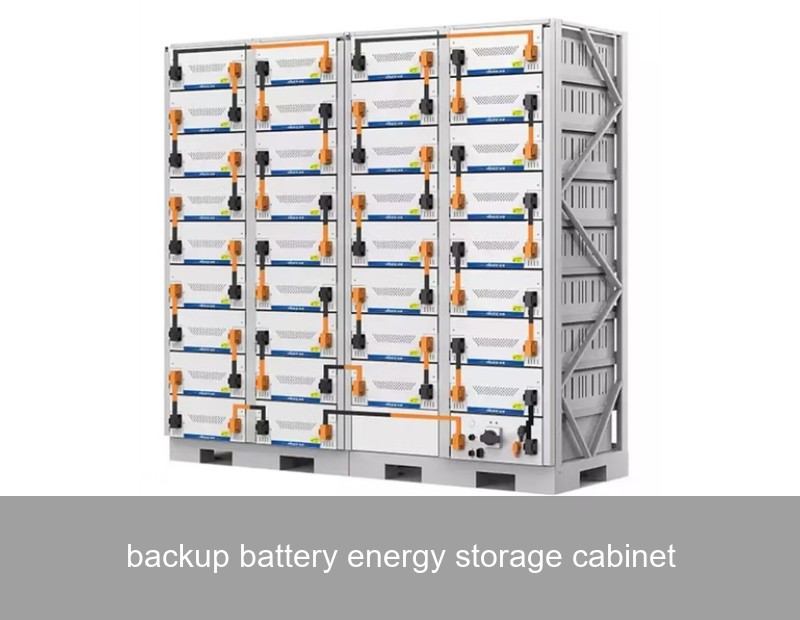
Have you ever experienced that sudden silence when the power goes out? The hum of appliances stops, screens go black, and operations grind to a halt. For businesses, hospitals, and even modern homes, this isn't just an inconvenience—it's a risk and a cost. This is where the modern backup battery energy storage cabinet steps in, evolving from a simple emergency power supply to a sophisticated, intelligent energy management asset. In an era of increasing grid instability and the push for renewables, these systems are becoming the backbone of energy resilience. Let's explore how this technology works and why it's a critical investment for energy independence.
Table of Contents
- What is a Backup Battery Energy Storage Cabinet?
- Why the Need is Growing: Data and Trends
- Key Components of a Modern Energy Storage Cabinet
- A Real-World Case Study: Resilience in Action
- Beyond Backup: Financial and Environmental Benefits
- Choosing the Right System: What to Look For Highjoule's Integrated Solutions
What is a Backup Battery Energy Storage Cabinet?
Think of a backup battery energy storage cabinet as a giant, smart power bank for your building or facility. It's a self-contained unit that stores electrical energy, typically from the grid or renewable sources like solar panels, and delivers it when you need it most. Unlike noisy, polluting diesel generators, these cabinets operate silently, emit no fumes, and can switch on almost instantaneously.
At its core, the cabinet houses several key elements: lithium-ion battery modules (the energy store), a battery management system (BMS) for safety and health monitoring, an inverter/charger that converts power between AC and DC, and thermal management systems. All these are integrated into a robust, often modular, steel enclosure designed for safety and ease of installation.

Image Source: Unsplash - Representative image of industrial energy storage equipment.
Why the Need is Growing: Data and Trends
The demand for reliable backup power isn't based on fear; it's grounded in data. In the United States, power outages have been increasing in frequency and duration. According to the U.S. Energy Information Administration (EIA), the average U.S. electricity customer experienced just over eight hours of power interruptions in 2020. For businesses, each hour of downtime can mean tens of thousands of dollars in lost revenue, spoiled inventory, and operational disruption.
In Europe, the drive towards renewable energy, while essential for decarbonization, introduces grid variability. The sun doesn't always shine, and the wind doesn't always blow. This creates a dual challenge: ensuring grid stability and maximizing the use of self-generated solar power. A backup battery energy storage cabinet solves both by storing excess solar energy for use at night or during outages, smoothing out the renewable energy supply.
Key Components of a Modern Energy Storage Cabinet
Not all storage cabinets are created equal. A high-quality system is defined by its integrated components:
- Battery Cells & Modules: Typically using Lithium Iron Phosphate (LFP) chemistry for its superior safety, long life, and stability.
- Battery Management System (BMS): The brain of the operation, constantly monitoring voltage, temperature, and state of charge to prevent overcharging or overheating.
- Power Conversion System (PCS): This bi-directional inverter is the workhorse, converting DC battery power to AC for your building and vice-versa for charging.
- Thermal Management: A critical safety and performance feature, often using liquid cooling or advanced air conditioning to maintain optimal battery temperature.
- Energy Management System (EMS): The strategic commander. This software intelligently decides when to charge, discharge, or hold based on tariff rates, grid status, and consumption patterns.
A Real-World Case Study: Resilience in Action
Let's look at a concrete example from the European market. A medium-sized dairy processing plant in Germany faced two major challenges: frequent micro-dips in grid voltage that disrupted sensitive cooling equipment, and high energy costs during peak hours. A power outage would have resulted in massive spoilage of perishable products.
Solution: The plant installed a 500 kWh / 250 kW backup battery energy storage cabinet system, integrated with their existing rooftop solar array. The system was configured for peak shaving (discharging during expensive peak-rate hours) and uninterruptible power supply (UPS) functionality.
Results & Data:
| Metric | Before Installation | After Installation |
|---|---|---|
| Peak Grid Demand | 450 kW | 200 kW |
| Solar Self-Consumption | 35% | Over 80% |
| Annual Outage-Related Losses | ~€15,000 | €0 |
| Monthly Demand Charge Savings | €0 | ~€2,800 |
Beyond Backup: Financial and Environmental Benefits
The true power of a modern backup battery energy storage cabinet lies in its multi-functionality. While backup is the core function, the financial and environmental benefits are transformative:
- Peak Shaving: Reduce costly "demand charges" from utilities by using stored energy during periods of high grid demand.
- Energy Arbitrage: Buy and store electricity when rates are low (e.g., at night), and use it when rates are high.
- Renewable Integration: Store excess solar energy produced midday for use in the evening, dramatically increasing your self-consumption and independence from the grid.
- Grid Services: In some markets, aggregated storage systems can provide services to stabilize the grid, creating a potential new revenue stream.
- Carbon Footprint Reduction: By maximizing clean solar usage and reducing reliance on peak grid power (often generated by fossil fuels), you significantly lower your operational carbon emissions.

Image Source: Unsplash - Commercial solar installation with potential for battery storage integration.
Choosing the Right System: What to Look For
Selecting a backup battery energy storage cabinet is a significant decision. Key considerations include:
- Capacity & Power: How much energy do you need to store (kWh), and how fast do you need to pull it out (kW)? This depends on your critical loads and backup duration goals.
- Safety & Certification: Insist on UL 9540 (USA) or equivalent IEC standards (Europe) for the entire system. LFP chemistry is widely regarded as the safest choice.
- Scalability: Can you start with a smaller system and add more cabinets as your needs grow?
- Software Intelligence: The EMS software should be user-configurable to optimize for your specific goals—backup, savings, or both.
- Warranty & Lifespan: Look for a system with a long performance warranty (e.g., 10+ years) and a high cycle life.
Highjoule's Integrated Solutions: Engineered for Reliability
At Highjoule, with nearly two decades of experience since 2005, we understand these challenges intimately. Our H-Series Commercial Energy Storage Cabinets are engineered from the ground up to provide more than just backup. They are intelligent energy hubs built with the robust LFP battery technology and feature our proprietary Adaptive EMS.
What sets a Highjoule cabinet apart is its deep integration capability. It seamlessly connects with new or existing solar PV systems, generator sets, and grid connections. Our systems are designed for the harsh demands of commercial and industrial applications, featuring industrial-grade liquid cooling for unmatched performance consistency and lifespan. We don't just sell hardware; we provide a complete solution—from initial energy audit and system design to installation, commissioning, and remote monitoring—ensuring you achieve your resilience and financial targets.
For microgrids and large-scale applications, our modular design allows for containerized solutions scaling into the megawatt-hour range, providing communities and campuses with true energy independence. You can learn more about grid stability challenges from the U.S. Department of Energy's Office of Electricity.
Ready to Transform Your Energy Profile?
The conversation around energy is shifting from mere consumption to active management. A backup battery energy storage cabinet is the cornerstone of this new paradigm. It's no longer a question of if you need one, but how to choose the right one to meet your specific operational and financial goals.
What would a 2-hour power outage tomorrow cost your business, and how would a system that pays for itself over time change your energy strategy?
 Inquiry
 Online Chat