


Paneles y Baterias Solares: The Complete Guide to Energy Independence
Have you ever looked at your electricity bill on a sunny day and thought, "All that free energy from the sun is going to waste"? You're not alone. Across Europe and the United States, a quiet revolution is taking place on rooftops and in backyards. More homeowners and businesses than ever are pairing paneles y baterias solares (solar panels and batteries) to not just generate clean power, but to truly control it. This combination is transforming how we think about energy—from a monthly expense to a personal asset. But what does it really take to move from simple solar generation to 24/7 energy resilience? Let's explore the journey from a common phenomenon to a smart, sustainable solution.
Table of Contents
- The Phenomenon: Sunshine Doesn't Pay Bills at Night
- The Data: Why Storage is the New Solar Essential
- The Case Study: A Spanish Hotel's Path to Energy Autonomy
- The Insight: Choosing the Right Solar and Battery System
- The Highjoule Solution: Intelligent Energy Storage
- Your Next Step Towards Energy Freedom
The Phenomenon: Sunshine Doesn't Pay Bills at Night
Here's the fundamental challenge with traditional solar panel systems: they are brilliant producers, but terrible timekeepers. They generate the most power in the middle of the day, precisely when many households are empty. In the evening, when families return home, turn on lights, appliances, and heating, the panels are offline. This mismatch creates a frustrating gap. You're exporting excess energy to the grid for a modest feed-in tariff, only to buy it back at a much higher price hours later. It's like growing a bounty of tomatoes, giving most away, and then buying expensive canned tomatoes from the store for your dinner. The solution to this timing problem is the battery. Paneles y baterias solares working in unison allow you to store your midday solar harvest for use anytime, day or night.
The Data: Why Storage is the New Solar Essential
The numbers powerfully advocate for integrating storage. According to the International Energy Agency (IEA), global solar PV capacity is set to dominate electricity growth, but the value of that energy hinges on flexibility. Let's look at a typical household in California or Southern Spain:
- Self-Consumption Rate: A solar-only system might increase your direct use of solar power from 30% to 50%. Add a battery, and that figure can soar to 70-80% or more, dramatically slashing grid purchases.
- Return on Investment (ROI): While upfront costs are higher, coupling paneles y baterias solares protects you from rising electricity prices. In markets with time-of-use rates or weak net metering policies, the payback period for a combined system is becoming increasingly attractive, often within 6-10 years.
- Grid Stress: Data from grid operators shows that peak demand in the early evening is a major strain. Home batteries can collectively alleviate this, preventing blackouts and delaying costly grid infrastructure upgrades.

Image: A modern home equipped with solar panels and a wall-mounted battery unit. Source: Unsplash
The Case Study: A Spanish Hotel's Path to Energy Autonomy
Let's examine a real-world example from the Mediterranean coast. A 120-room hotel in Alicante, Spain, faced steep seasonal energy costs and an unreliable local grid during summer heatwaves. Their goal was to reduce operational costs and ensure uninterrupted power for guest comfort.
The Solution: In 2022, they installed a 250 kW rooftop solar array paired with a 500 kWh commercial battery storage system. This wasn't just a simple pairing of paneles y baterias solares; it required an intelligent system to manage the complex energy flow.
The Results (12-Month Period):
| Metric | Before Installation | After Installation |
|---|---|---|
| Electricity from Grid | 100% | 35% |
| Energy Cost Savings | Baseline | €48,000 annually |
| Grid Peak Demand Charge | €1,200/month (avg.) | €280/month (avg.) |
| Self-Powered During Grid Outage | 0 hours | Critical load for 18+ hours |
The hotel now uses its solar energy to power daytime operations, charges its battery with the excess, and then powers evening and night loads from the battery. During a grid outage, the system automatically switches to island mode, keeping lights, refrigeration, and reception running seamlessly. This case illustrates the transition from cost center to controlled asset.
The Insight: It's Not Just Hardware, It's Intelligence
Choosing the right paneles y baterias solares goes beyond comparing kilowatt and kilowatt-hour specs. The true differentiator in a modern energy system is the brain—the energy management system (EMS).
- Chemistry Matters: Lithium iron phosphate (LFP) batteries have become the preferred choice for home storage due to their safety, long lifespan (often over 6,000 cycles), and stability, even if their energy density is slightly lower than older NMC chemistries.
- Scalability is Key: Your energy needs will evolve. Can you easily add more battery modules later? A modular design is crucial for future-proofing your investment.
- Software is the Silent Hero: Advanced algorithms can decide the most economical moment to charge (from solar or the grid during off-peak times), discharge, or even participate in grid services (where available), maximizing your financial return. As noted by the U.S. Department of Energy, integration and smart controls are pivotal for a resilient grid.
The Highjoule Solution: Intelligent Energy Storage for Demanding Applications
This is where expertise and engineered solutions make all the difference. At Highjoule, with nearly two decades of experience since 2005, we understand that integrating paneles y baterias solares is a sophisticated dance of hardware, software, and real-world conditions. Our systems are designed for those who view energy not as a bill, but as a strategic resource.
For residential and commercial clients across Europe and North America, Highjoule's HPS Series (Hybrid Power System) provides an all-in-one solution. It combines a high-efficiency hybrid inverter with modular LFP battery cabinets, all governed by our Helios Energy OS. This platform doesn't just react; it learns and forecasts. It considers your consumption patterns, weather predictions, and utility rate structures to autonomously optimize your energy flow for cost and carbon savings.

Image: A technician inspecting a large-scale battery energy storage system. Source: Unsplash
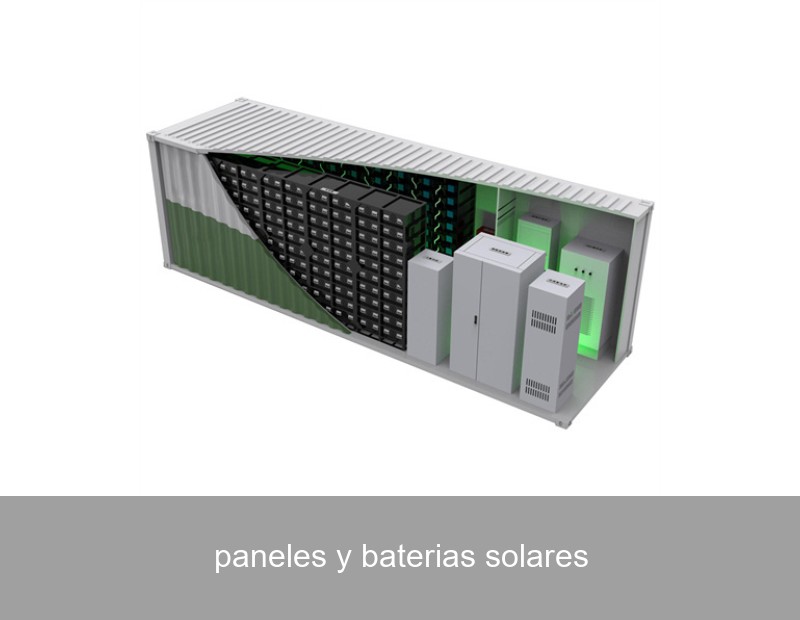
For larger-scale industrial and microgrid applications, our BESS (Battery Energy Storage System) solutions offer utility-grade performance. These containerized or skid-mounted systems can integrate massive solar farms, provide backup power for factories, or stabilize community microgrids, turning renewable energy into a reliable, dispatchable power source. Our approach ensures that the promise of your paneles solares is fully realized, 24 hours a day.
Key Features of a Highjoule Integrated System:
- Seamless Integration: Compatible with both new and existing solar PV installations.
- Modular & Scalable Design: Start with what you need and expand your battery capacity as your needs grow.
- Advanced Safety: Built-in multi-layer protection (electrical, thermal, environmental) with LFP chemistry as the foundation.
- Intelligent Control: The Helios OS enables modes like self-consumption maximization, time-of-use optimization, and backup readiness.
Your Next Step Towards Energy Freedom
The journey from being a passive consumer to an active energy producer and manager is no longer a futuristic concept. The technology, in the form of intelligent paneles y baterias solares systems, is here, proven, and financially savvy. The question shifts from "Is it possible?" to "What is the optimal system for my specific energy profile, goals, and local regulations?"
What would you do with an electricity bill that was 80% lower and the certainty that your power stays on even when the grid goes down?
 Inquiry
 Online Chat