


Powering Progress: The Rise of Panneaux Solaires in Douala and Beyond
Imagine a city buzzing with economic energy, where businesses thrive and communities grow, yet the constant hum of diesel generators is a reluctant soundtrack. This is the reality for many in Douala, Cameroon's bustling economic capital. The quest for reliable, affordable power is a daily challenge. But a quiet revolution is taking shape on rooftops and in industrial parks: the strategic adoption of panneaux solaires Douala. This isn't just about installing solar panels; it's about building a resilient, intelligent energy ecosystem. As a global leader in advanced energy storage, Highjoule sees this shift not as a trend, but as the fundamental future of power in growing urban centers and industrial hubs worldwide.
Table of Contents
- The Douala Dilemma: More Than Just Blackouts
- Beyond the Panel: Why Solar Alone Isn't the Full Answer
- The Storage Solution: Unlocking True Solar Potential
- Case Study: A Douala Textile Factory's Transformation
- Highjoule's Role: Intelligent Systems for Complex Needs
- The Future of Energy in Douala and Your Community
The Douala Dilemma: More Than Just Blackouts
For businesses and residents in Douala, power instability is a costly operational tax. The phenomenon is familiar: voltage fluctuations damage sensitive equipment, unscheduled outages halt production lines, and the high cost of diesel backup erodes profit margins. According to the World Bank, the economic cost of power outages in Sub-Saharan Africa can amount to up to 2-4% of GDP annually. For a factory owner in Douala, this isn't an abstract statistic; it's lost orders, spoiled inventory, and strained customer relationships.

The logical, and increasingly affordable, first step is turning to panneaux solaires. Solar energy offers a clean, on-site power source. But here's the insight many discover only after installation: solar production peaks in the middle of the day, while energy demand for many businesses—and certainly for homes in the evening—often hits its peak when the sun is low or gone. This mismatch between generation and consumption is the central puzzle that simple solar setups can't solve.
Beyond the Panel: Why Solar Alone Isn't the Full Answer
Think of a solar panel system without storage like a water tap filling a bucket with a large hole in it. You can collect water (energy) when the tap is on (sunny), but you can't save it for later when you're truly thirsty (high demand at night). The energy must be used instantly or fed back into a grid that may itself be unstable. This limitation caps the financial and operational return on your solar investment.
- Intermittency: Clouds, rain, and nightfall stop generation.
- Grid Dependency: If the grid fails, most basic solar systems shut off for safety, leaving you in the dark despite having a generating asset.
- Wasted Potential: Excess solar energy produced at midday is often unused if consumption is low.
The key to transforming panneaux solaires Douala from a supplementary power source to a primary energy foundation lies in one critical technology: the Battery Energy Storage System (BESS).
The Storage Solution: Unlocking True Solar Potential
A BESS acts as the "energy bucket" without a hole. It captures surplus solar energy during peak production and stores it for use whenever you need it—during an outage, in the evening, or on a cloudy day. This creates what we at Highjoule call "Solar-Shift™ capability," decoupling energy generation from consumption. The benefits are transformative:
| Challenge | Solar-Only System | Solar + Highjoule BESS |
|---|---|---|
| Power during Grid Outage | No power (system shuts down) | Seamless backup from stored energy |
| Energy Use at Night | Reliance on grid/generator | Use of stored solar energy, reducing bills |
| Managing Peak Demand Charges | Limited impact | Discharge battery during high-rate periods, slashing costs |
| System ROI | Moderate, limited by self-consumption | Maximized, through 24/7 solar utilization and grid service savings |
Modern lithium-ion phosphate (LFP) batteries, like those used in Highjoule systems, are safe, long-lasting, and designed for thousands of charge cycles. When paired with intelligent energy management software, they become the brain and heart of a truly resilient power setup.
Case Study: A Douala Textile Factory's Transformation
Let's ground this in reality. A medium-sized textile factory in the Bonabéri industrial zone of Douala was facing monthly diesel costs exceeding $15,000 and losing an estimated 120 hours of production annually to grid failures. They installed a 500 kW rooftop solar array, which helped during the day but left them vulnerable at night and during outages.
In 2023, they integrated a Highjoule H2-Stack Commercial BESS with a capacity of 750 kWh. The results, monitored over 12 months, were compelling:
- Diesel Generator Use: Reduced by over 90%. The generators now serve only as a rare, tertiary backup.
- Energy Cost Savings: Combined solar self-consumption and peak shaving led to a 65% reduction in monthly energy expenses.
- Production Reliability: Zero production downtime due to grid outages. The system provides seamless transition to battery power in under 20 milliseconds.
- ROI Period: The integrated solar-plus-storage system is projected to pay for itself in under 5 years.

"It changed our operational paradigm," the plant manager reported. "We now plan production based on demand, not on the grid's schedule. Our panneaux solaires installation went from being a cost-saver to our primary, most reliable power asset."
Highjoule's Role: Intelligent Systems for Complex Needs
Since 2005, Highjoule has moved beyond simply supplying hardware. We design integrated, intelligent energy ecosystems. For a business or community considering panneaux solaires in Douala, our value lies in the sophisticated orchestration of generation, storage, and consumption.
Our Adaptive Power Platform (APP) is the central nervous system. It doesn't just react to outages; it proactively manages energy flow based on weather forecasts, consumption patterns, and tariff schedules. For our Douala textile client, the APP prioritizes charging the batteries with solar excess, decides when to discharge to avoid peak grid tariffs, and ensures critical loads are always powered.
Our product suite, suitable for commercial, industrial, and microgrid applications, includes:
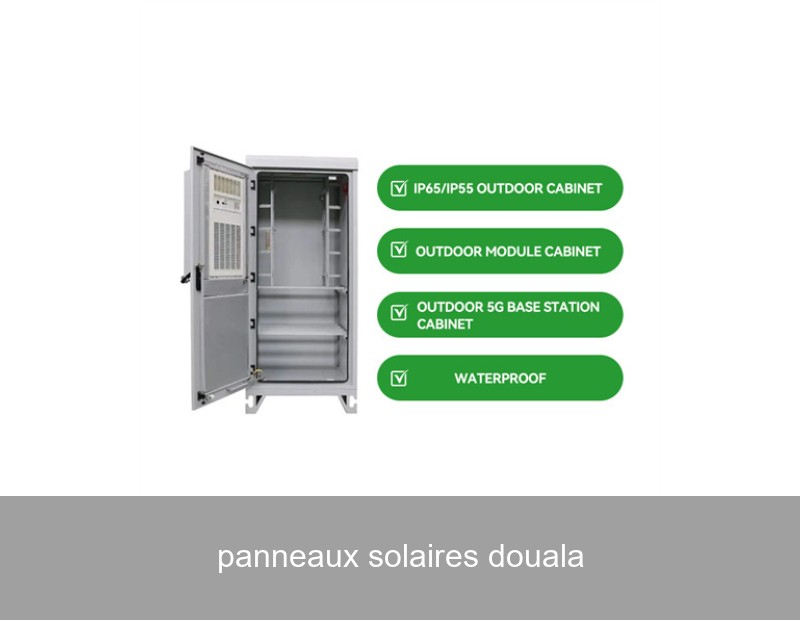
- H2-Stack Commercial/Industrial BESS: Modular, scalable battery cabinets for businesses seeking reliability and demand charge management.
- GridSynergy Microgrid Controller: For larger complexes or communities wanting to operate independently or in tandem with a weak grid.
- Highjoule Energy Management Software (HEMS): Cloud-based analytics and control, providing visibility and optimization from anywhere in the world.
We understand that every site in Douala, from a hospital to a hotel to a residential compound, has a unique energy fingerprint. Our solutions are tailored to match that fingerprint precisely.
The Future of Energy in Douala and Your Community
The journey of panneaux solaires Douala is a microcosm of a global shift. From California to Germany, the combination of distributed solar and advanced storage is redefining resilience and economic efficiency. The International Energy Agency (IEA) notes that energy storage is the keystone technology for the world's clean energy transitions. It turns variable renewable sources into firm, dispatchable power.
For forward-thinking leaders in Douala, the question is no longer "Should we invest in solar?" but "How do we build the most intelligent, resilient, and cost-effective solar-powered energy system for our specific needs?"
What is the single biggest energy challenge your business or community faces today that a smarter, stored solar solution could solve?
 Inquiry
 Online Chat