


Understanding the Partes de una Central Fotovoltaica: A Guide to Solar Farm Components
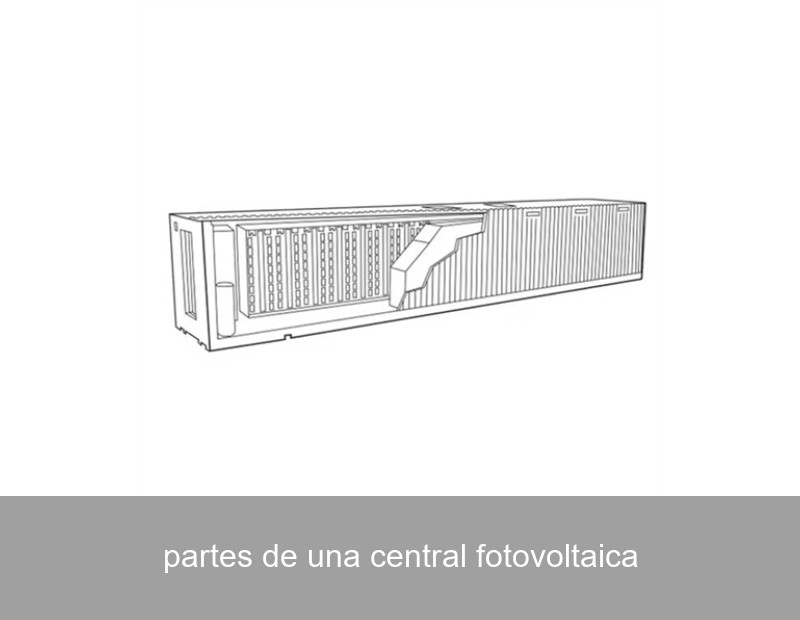
Have you ever driven past a vast field of glistening panels and wondered, "What exactly are the partes de una central fotovoltaica, and how do they all work together to power our homes?" You're not alone. As solar energy becomes a cornerstone of the global shift to renewables, understanding the key components of a photovoltaic (PV) power plant is more relevant than ever. This isn't just about panels on a roof; it's about sophisticated, utility-scale systems designed for maximum efficiency and reliability. In this guide, we'll demystify the anatomy of a solar farm, explain how each part contributes to clean energy generation, and explore how advanced energy storage is becoming its indispensable partner.
Table of Contents
The Core Parts of a Photovoltaic Power Plant
A utility-scale solar plant is a finely tuned orchestra of electrical and mechanical components. Each section has a critical role. Let's break down the primary partes de una central fotovoltaica:
1. The Solar Array: The Heart of the System
This is the most visible part—thousands of photovoltaic modules arranged in rows. These modules are mounted on support structures, often with tracking systems that tilt them to follow the sun's path, increasing energy yield by up to 25% compared to fixed systems.

Image: A large-scale solar array with single-axis trackers. Source: Unsplash.
2. Inverters: The Brains and Translators
Solar panels produce Direct Current (DC) electricity. Our power grids and appliances use Alternating Current (AC). Inverters perform this crucial conversion. Central inverters are common in large plants, but string and power optimizer technologies are gaining ground for better performance under shading or module mismatch.
3. The Transformation Center: Stepping Up the Voltage
After inversion to AC, the voltage is still relatively low (e.g., 600V). Transformation centers, which include transformers and medium-voltage switchgear, step up the voltage to levels suitable for long-distance transmission (e.g., 30kV or higher), minimizing energy losses.
4. The Connection Point: Interfacing with the Grid
This is the physical and contractual point where the solar plant connects to the public electricity network. It requires protective relays, meters, and control systems to ensure the power fed into the grid is stable, synchronized, and safe.
5. The Monitoring & Control System (SCADA)
A supervisory control and data acquisition system is the nerve center. It monitors every component's performance, from individual string currents to inverter efficiency, allowing operators to maximize output and quickly identify faults.
The Phenomenon: From Sunlight to Grid Power
The magic happens when these parts work in unison. Photons from sunlight strike the semiconductor material in the PV cells, knocking electrons loose and creating a flow of DC electricity. This DC power travels through cabling to the inverters, is converted to grid-compliant AC, stepped up in voltage, and finally injected into the transmission lines. It's a seamless, automated process that turns abundant sunlight into usable power for thousands of households.
The Data: Why Efficiency & Reliability Matter
The performance of a solar plant is measured by its capacity factor and Levelized Cost of Energy (LCOE). While solar is now one of the cheapest energy sources (IRENA, 2023), its intermittent nature presents a challenge. The sun doesn't always shine, and cloud cover can cause rapid ramping in output. This variability can strain grid stability, especially in regions with high solar penetration like California or Southern Europe.
| Plant Component | Primary Function | Impact on Overall Efficiency |
|---|---|---|
| PV Modules | Convert sunlight to DC electricity | Dictates maximum theoretical yield (e.g., 21% module efficiency) |
| Inverters | DC to AC conversion, system monitoring | High-efficiency inverters (99%+) minimize conversion losses |
| Tracking System | Orient panels to follow the sun | Can increase annual energy production by 15-25% |
| Balance of System (BOS) | Wiring, switches, mounting, etc. | Quality design reduces resistive losses and operational downtime |
The Case Study: Stabilizing the Grid in Southern Spain
Let's look at a real-world example. In 2022, a 50 MW solar farm in Andalusia, Spain, faced curtailment issues. Grid operators were frequently asking the plant to reduce output during midday peaks because the local grid couldn't absorb all the solar generation, leading to significant revenue loss and wasted clean energy.
The Solution: The plant operator partnered with Highjoule to integrate a 20 MWh battery energy storage system (BESS) alongside the existing partes de la central fotovoltaica. Our HJ Cube containerized BESS was deployed, featuring our advanced energy management system (EMS).
The Outcome: The BESS now stores excess solar energy during peak production hours. It then discharges during evening demand peaks or when grid signals indicate a need for stability. Within the first year, the project achieved:
- 98% reduction in curtailment events.
- Added new revenue streams through frequency regulation services.
- Increased the plant's capacity factor and overall value.
This case shows that modern solar plants are no longer just about the core PV components; they are evolving into integrated power hubs.
The Insight: The Missing Link is Storage
The Spanish case study highlights a critical insight: the most advanced partes de una central fotovoltaica can only capture energy when the sun is available. To truly unlock solar power's potential—to provide dispatchable, firm capacity—you need intelligent storage. This transforms a variable resource into a reliable one, smoothing output, shifting energy to when it's most needed, and providing essential grid services.

Image: A technician inspecting a utility-scale battery storage installation. Source: Unsplash.
The Future: Smart, Integrated Solar-Plus-Storage Plants
The future of solar energy lies in the seamless integration of generation and storage from the initial design phase. This is where Highjoule's expertise becomes pivotal. We don't just provide batteries; we provide complete, intelligent storage solutions that act as a force multiplier for solar assets.
Our HJ PowerStack for C&I applications and HJ Microgrid Controller allow solar plant operators and developers to:
- Maximize Self-Consumption: Store on-site solar energy for use at night, dramatically increasing energy independence.
- Ensure Grid Stability: Provide fast-frequency response and voltage support, becoming a good grid citizen.
- Future-Proof Investments: Adapt to evolving market rules and maximize revenue through arbitrage and ancillary services.
By viewing storage as the next essential "part" of the photovoltaic plant, developers can build more resilient, profitable, and valuable energy assets. For a deeper dive into grid-scale storage technology, you can explore resources from the U.S. Department of Energy.
As we design the solar farms of tomorrow, shouldn't we ask: How can we design our energy systems not just to generate power, but to intelligently manage it, ensuring every watt of clean solar energy is captured and utilized to its fullest potential?
 Inquiry
 Online Chat