


The Silent Crisis: Why Your Hotel's Backup Generator Might Be Letting You Down
a storm knocks out the grid. Your hotel is plunged into darkness. A moment later, your diesel backup generator for hotel operations roars to life—shaking the ground, emitting fumes, and shattering the tranquil ambiance your guests paid for. It keeps the lights on, but at what cost? For decades, the diesel generator has been the undisputed champion of hotel emergency power. But in an era where sustainability is a booking criterion and operational excellence is non-negotiable, this old faithful is showing its age. The modern hospitality industry needs more than just backup; it needs intelligent, clean, and silent resilience. This is where advanced energy storage systems are not just an alternative but a strategic upgrade, redefining what a backup generator for hotel can and should be.
Data Don't Lie: The True Cost of Downtime
The primary job of any backup system is to prevent downtime. And the stakes are incredibly high. According to a study cited by industry analysts, a single hour of total power outage can cost a medium-sized hotel between $5,000 and $10,000 in direct revenue, not including long-term reputational damage. Traditional generators do address the power gap, but their performance comes with hidden liabilities:
- Noise Pollution: Generators operate at 70-100 dB, equivalent to a lawnmower or motorcycle. Guest complaints and negative reviews often mention "disruptive noise," especially during what should be a peaceful night.
- Emissions & Sustainability Goals: Diesel gensets directly contradict corporate ESG (Environmental, Social, and Governance) commitments. They emit CO2, NOx, and particulate matter, making it difficult for hotels to achieve carbon-neutral certifications that are increasingly valued by corporate clients and eco-conscious travelers.
- Operational Complexity & Cost: They require regular maintenance, fuel procurement, storage, and testing. Fuel prices are volatile, and the system itself has a limited lifespan of heavy cycling.
This creates a paradox: your backup solution, meant to protect your business, is actively harming your guest experience, your sustainability profile, and your operational budget.

Image Source: Unsplash. A peaceful guest experience hinges on uninterrupted, silent power.
Case Study: The Coastal Resort That Switched to Silent Sunshine
Let's look at a real-world transformation. A 150-room luxury coastal resort in Southern California was facing pressure from local regulations to reduce emissions and noise. Their existing 300kW diesel generator was reliable but became a liability during frequent public safety power shutoffs (PSPS) due to wildfire risk.
The Challenge: Provide seamless backup power for critical loads (lighting, HVAC in common areas, elevators, and key kitchen equipment) for up to 8 hours, while eliminating noise complaints and reducing carbon footprint.
The Solution: The resort partnered with Highjoule to deploy an integrated solar-plus-storage system. The core of the solution was Highjoule's H-Series Commercial Energy Storage System, a containerized battery storage solution with integrated power conversion and advanced energy management software (EMS).
| Metric | Old Diesel Generator | Highjoule H-Series + Solar |
|---|---|---|
| Backup Capacity | 300 kW | 400 kW / 800 kWh |
| Noise Level | 85 dB at 10m | < 55 dB (near-silent) |
| Response Time | 10-30 seconds | < 20 milliseconds |
| CO2 Emissions during backup | ~2,500 kg per 8-hr run | 0 kg (from battery) |
| Annual Operational Cost (fuel, maint.) | $18,000 | $2,500 (system monitoring) |
The Outcome: During a two-day grid outage, the system performed flawlessly. Guest reviews specifically mentioned appreciation for the "uninterrupted and quiet stay." The resort now uses stored solar energy to offset peak utility rates daily, saving an additional 15% on their energy bill—turning a cost center (backup) into a revenue-protecting and cost-saving asset. The project qualified for state-level incentive programs, improving the ROI significantly. This case exemplifies the modern backup generator for hotel—it's not a generator at all, but an intelligent battery storage system.
How Highjoule's System Works as Your Intelligent Backup Partner
Highjoule's approach moves beyond simple battery boxes. Our systems are designed as holistic power hubs:
- Ultra-Fast Switching: Our bi-directional inverters detect a grid failure in milliseconds and seamlessly form a microgrid, keeping critical loads online without the flicker of a lightbulb.
- Smart Energy Management (EMS): The brain of the system. It doesn't just react to outages; it proactively manages energy 24/7. It decides when to store energy (from solar or the grid during low-cost periods), when to use it (during peak rates or outages), and prioritizes loads to maximize backup duration.
- Scalability & Flexibility: Whether you're a boutique hotel or a large resort chain, our modular systems scale from 100 kWh to multi-megawatt installations. They integrate with existing solar, future wind, or even your legacy generator, which can be relegated to an ultra-rare, last-resort backup.
Beyond Backup: The Smart, Sustainable Power Hub
When you think of a backup generator for hotel, you likely think of a dormant asset that only earns its keep during a crisis. A Highjoule energy storage system flips this model on its head. It is an active, daily contributor to your bottom line and sustainability report.
1. Peak Shaving: Utility companies often charge "demand charges" based on your highest 15-minute power draw each month. Our EMS intelligently discharges the battery during those high-usage periods (e.g., when all AC units kick on at check-in), dramatically reducing this fee. For many hotels, the savings from peak shaving alone can finance the system over time.
2. Renewable Integration & Energy Arbitrage: Pair the system with solar PV, and you can store excess daytime solar energy to power your hotel at night. You can also charge the battery when grid electricity is cheap and use it when prices are high—a process known as arbitrage.
3. Sustainability Leadership: Deploying a Highjoule system is a tangible, marketable step toward decarbonization. It allows you to claim a reduction in reliance on fossil fuels, appealing to the growing segment of sustainability-minded travelers and meeting stricter local regulations, like those in California or the EU.

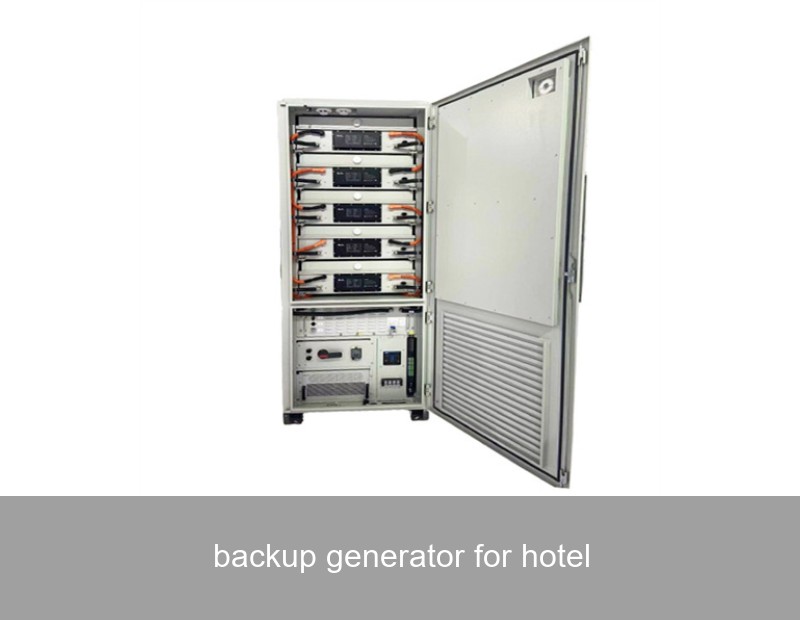
Image Source: Unsplash. Modern battery storage systems are clean, compact, and intelligent.
Making the Switch: A Practical Guide for Hoteliers
Transitioning from a traditional generator to a battery-based system is a significant infrastructure decision. Here’s a logical pathway:
- Energy Audit & Load Analysis: Work with experts like Highjoule's engineering team to understand your precise "critical load." What truly needs backup? This determines the size and configuration of your system.
- Financial Modeling: Analyze not just upfront cost, but total cost of ownership (TCO) and return on investment (ROI). Factor in savings from peak shaving, energy arbitrage, reduced generator maintenance, available tax credits (like the ITC in the U.S.), and potential incentives in Europe.
- Phased Deployment: Integration can be phased. Start with a core storage system for backup and peak shaving. Later, add solar canopies over the parking lot. Your existing generator can be kept as a secondary backup for extreme scenarios, drastically reducing its runtime and associated costs.
Why Highjoule is the Partner for This Transition
With nearly two decades of experience since 2005, Highjoule isn't just a hardware provider. We are a solution architect for the energy transition. Our GridShield™ for Hospitality package is specifically tailored for hotels and resorts. It combines our battle-tested H-Series batteries with our proprietary Aegis EMS software and includes 24/7 remote monitoring and support. We ensure your system is not just installed but optimized for your specific location, utility rates, and operational patterns.
The Future of Hotel Power is Here. Are You Ready?
The question is no longer just "Do we have a backup generator?" The strategic questions for forward-thinking hoteliers are now: "Is our power infrastructure resilient, silent, and clean? Is it a cost center or a value-added asset? How does it align with our brand promise of comfort and sustainability?" The diesel generator had its era. The future belongs to intelligent, software-driven energy storage systems that provide unwavering reliability while enhancing the guest experience and protecting your profits every single day.
What would the ROI look like for your property if your backup power system started saving you money tomorrow, instead of waiting for the next outage?
 Inquiry
 Online Chat