


Why Leading Photovoltaic Companies in Cyprus Are Betting on Smart Energy Storage
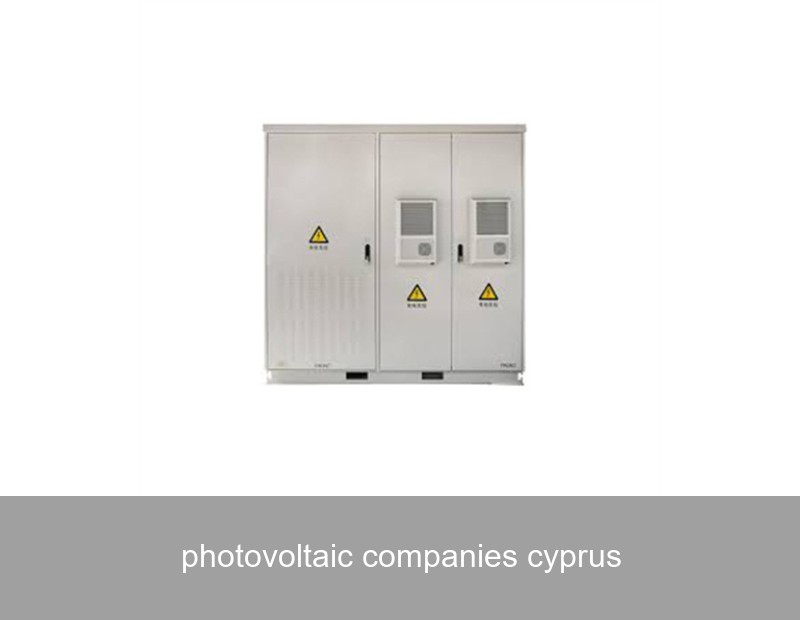
If you're looking into solar power in Cyprus, you've likely noticed a significant shift. The conversation is no longer just about the number of panels on your roof. Today, forward-thinking photovoltaic companies in Cyprus are emphasizing a crucial add-on: intelligent battery energy storage systems (BESS). This isn't just an upsell; it's a fundamental response to the island's unique energy challenges and a gateway to true energy independence. As a global leader in advanced storage solutions, Highjoule has seen this evolution firsthand, partnering with installers across Europe to transform solar arrays from intermittent power sources into reliable, 24/7 energy assets.
Table of Contents
- The Cyprus Energy Challenge: More Sun, More Complexity
- The Data Reality: Why Solar-Only Systems Hit a Limit
- Case Study: A Limassol Hotel's Path to Energy Resilience
- The Highjoule Advantage: Smart Storage for Intelligent Management
- Beyond the Meter: Contributing to Cyprus's Future Grid
- Is Your Solar System Truly Future-Proof?
The Cyprus Energy Challenge: More Sun, More Complexity
Cyprus is blessed with over 300 days of sunshine annually, making it a prime candidate for photovoltaic (PV) adoption. However, this potential comes with a grid under pressure. The island's electrical system is largely isolated, leading to some of the highest electricity costs in the European Union. Furthermore, the duck curve phenomenon—where solar production peaks during midday but demand surges in the evening—is particularly pronounced here. This creates a dual problem: wasted solar energy at noon and continued reliance on expensive, often fossil-fuel-based generation at night.
This is where the proposition from quality photovoltaic companies in Cyprus changes. The leading ones now offer not just generation, but management. They understand that the real value lies in controlling when and how you use your solar energy.

Image: A typical solar installation in Cyprus, where adding storage maximizes the return on investment. Source: Unsplash
The Data Reality: Why Solar-Only Systems Hit a Limit
Let's talk numbers. A typical residential solar system in Cyprus might cover 70-80% of a household's daytime electricity needs. But what about the other 20-30%, and the 100% needed after sunset? Without storage, data from the International Energy Agency (IEA) shows that the capacity factor of solar PV (the ratio of actual output to potential output) is limited by daily cycles. This means a significant portion of your potential savings is left on the table.
Consider this breakdown:
| System Type | Daytime Self-Consumption | Evening/Night Coverage | Overall Energy Bill Reduction |
|---|---|---|---|
| PV Only (5kW) | ~75% | ~0% (Grid Import) | ~40-50% |
| PV + Storage (5kW + 10kWh) | ~95%+ | ~80% (From Battery) | ~70-90% |
The financial logic is clear. With volatile and high grid prices, every kilowatt-hour you store and use yourself is money saved. This economic driver is why partnerships between local PV installers and technology providers like Highjoule are so vital. We provide the core hardware and intelligence that allows installers to deliver radically better outcomes for their customers.
Case Study: A Limassol Hotel's Path to Energy Resilience
Let's look at a real example. A 120-room coastal hotel in Limassol was facing an annual electricity bill exceeding €180,000. Their existing 100kW rooftop solar system reduced their daytime grid draw, but their major loads—air conditioning, lighting, and kitchen operations—peaked in the late afternoon and evening when solar production faded. They were also vulnerable to grid outages, which risked guest comfort and operational continuity.
Working with their local photovoltaic company in Cyprus, the hotel integrated a Highjoule H-Series Commercial Battery System with a capacity of 120kWh. The system was configured for:
- Peak Shaving: The battery automatically discharges during the highest tariff periods (6-10 PM), avoiding costly grid power.
- Solar Self-Consumption Maximization: Excess midday solar production charges the battery instead of being exported at a lower rate.
- Backup Power: Critical hotel circuits remain powered during grid outages, ensuring guest safety and comfort.
The results, monitored over 12 months, were compelling:
- Grid energy consumption during peak hours reduced by 92%.
- Overall electricity costs slashed by 68% annually.
- ROI period calculated at under 5 years, considering Cyprus's incentive schemes.
- Enhanced green credentials, appealing to eco-conscious travelers.
This case exemplifies the new standard. It's no longer just about selling PV modules; it's about delivering a comprehensive energy solution that solves real business problems.
The Highjoule Advantage: Smart Storage for Intelligent Management
So, what should you, as a consumer or business owner, look for when a photovoltaic company in Cyprus proposes a storage solution? The battery itself is just one component. The true differentiator is the energy management system (EMS)—the brain of the operation.
Highjoule systems, such as our Residential H-Core and Commercial H-Series, are built around our proprietary Adaptive EMS. This isn't just a simple timer. It's a smart system that:
- Learns Your Consumption Patterns: It analyzes your daily and seasonal energy use.
- Integrates Weather Forecasting: It anticipates solar production for the next day, optimizing charge/discharge cycles.
- Dynamic Tariff Response: In markets with time-of-use pricing, it automatically schedules discharge during the most expensive periods.
- Scalable Architecture: Start with what you need and add more battery capacity as your needs grow.
For our partners—the photovoltaic companies in Cyprus—this intelligence translates into reliability and ease of installation. Our systems come with remote monitoring and diagnostics, allowing installers to provide superior after-sales support and ensure customer systems are always performing optimally. We empower them to be true energy consultants, not just equipment vendors.

Image: A modern, wall-mounted battery storage unit like Highjoule's H-Core system. Source: Unsplash
Beyond the Meter: Contributing to Cyprus's Future Grid
The evolution continues. With initiatives like EU smart grid policies pushing for more flexible, decentralized energy networks, storage-equipped solar homes and businesses can become active grid participants. Imagine a future where, during times of high national demand, your battery system can provide stabilizing services to the grid, potentially creating a new revenue stream for you.
This concept, known as virtual power plants (VPPs), is on the horizon. Highjoule's technology platform is already designed with this bidirectional capability in mind. By choosing a system with this future-proof potential, you're not just investing in today's savings, but in tomorrow's energy ecosystem.
Is Your Solar System Truly Future-Proof?
As you consult with photovoltaic companies in Cyprus, the key question has shifted. It's no longer "How many panels do I need?" but rather "How will I manage and maximize the energy I produce?" The integration of smart storage is the definitive answer.
When evaluating proposals, ask your installer: How does the proposed storage system learn and adapt? Can it provide backup power during an outage? Is the technology platform capable of integrating with future grid services? The answers will separate basic providers from true energy partners.
What specific energy cost or reliability challenge could a smart solar-plus-storage system solve for you in the next year?
 Inquiry
 Online Chat