


Navigating the Photovoltaic Systems Sale: A Guide to Smart Solar Investments in 2024
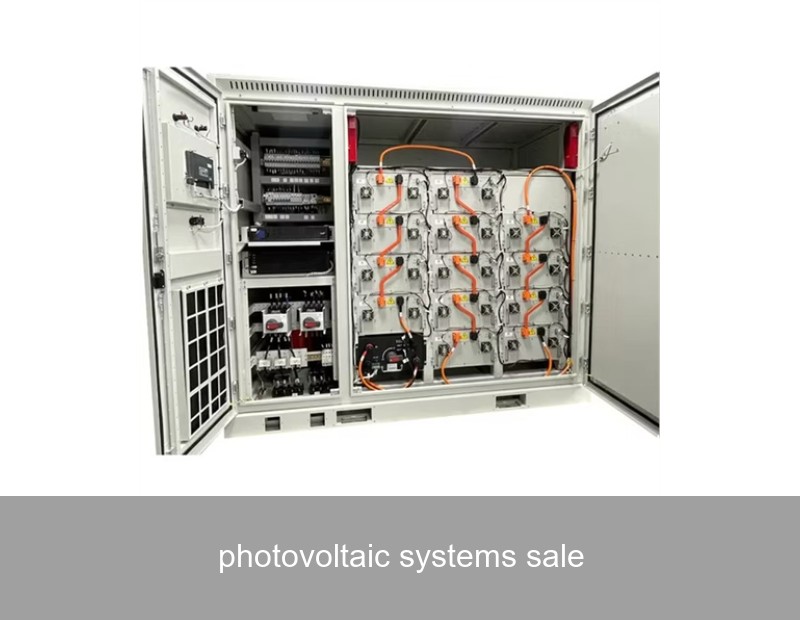
So, you're considering a photovoltaic systems sale. Whether you're a homeowner in California, a factory manager in Germany, or a municipal planner, the promise of solar energy is compelling: lower bills, energy independence, and a cleaner footprint. But let's be honest, the market can feel overwhelming. Between varying panel efficiencies, complex financing, and bold promises from installers, how do you ensure your investment truly pays off? This guide cuts through the noise. We'll explore not just how to buy a system, but how to invest in a resilient, intelligent energy future for your home or business.
Table of Contents
- The Phenomenon: More Than Just Panels on a Roof
- The Data: Why Storage is the Game-Changer
- The Case Study: A German Industrial Park's Success Story
- The Insight: Key Considerations for Your Purchase
- Highjoule's Role: Beyond the Sale to a Partnership
- Your Next Step: Questions to Ask Your Provider
The Phenomenon: More Than Just Panels on a Roof
The modern photovoltaic systems sale has evolved dramatically. It's no longer just about sourcing the cheapest panels per watt. Today's savvy buyers are looking for integrated solutions. Why? Because solar generation is intermittent. Your panels produce most at midday, but your home's peak demand might be in the evening, and your factory runs 24/7. This mismatch between production and consumption is the central challenge. The new paradigm, therefore, centers on solar-plus-storage systems. This holistic approach ensures the clean energy you produce is available when you need it most, maximizing self-consumption and providing critical backup during grid outages, which are becoming more frequent in both Europe and the US.
The Data: Why Storage is the Game-Changer
Let's look at the numbers. According to the International Energy Agency (IEA), global renewable capacity is set to grow by 2,400 GW between 2023-2028, with solar PV accounting for over half of this expansion. However, the value of that solar energy is increasingly tied to storage. A study by NREL (National Renewable Energy Lab) highlights that pairing storage with solar can increase the value of solar by up to 30% for residential users and even more for commercial entities, by shifting energy to high-price periods and providing grid services.
| System Type | Typical Self-Consumption Rate | Key Benefit |
|---|---|---|
| Solar-Only (No Battery) | 30-50% | Reduces daytime grid import |
| Solar + Basic Storage | 60-80% | Shifts energy to evening, basic backup |
| Solar + Intelligent ESS (like Highjoule) | 85%+ | Maximizes self-use, grid services, advanced backup, long-term ROI |
Table: The impact of adding intelligent energy storage systems (ESS) to a photovoltaic installation.
The Case Study: A German Industrial Park's Success Story
Let's ground this in reality. A medium-sized industrial park in Bavaria, Germany, faced rising energy costs and pressure to meet corporate sustainability goals. They engaged in a photovoltaic systems sale that included a 500 kWp rooftop solar array. Initially, they considered a solar-only setup but realized a large portion of their midday solar surplus would be fed to the grid at low feed-in tariffs, while they'd still buy expensive power in the morning and evening.
Their solution was to integrate a Highjoule H-Ion 500 commercial battery storage system. The results, after one full year of operation, were compelling:
- Self-Consumption Rate: Increased from an estimated 35% to 92%.
- Energy Cost Savings: Total electricity costs reduced by 68% annually.
- ROI Timeline: The integrated system's payback period was calculated at 6.2 years, thanks to optimized arbitrage and reduced demand charges.
- Resilience: The system now provides seamless backup power for critical loads, preventing production stoppages during brief grid disturbances.
This case exemplifies the shift from a simple component purchase to a strategic energy infrastructure investment. The intelligent Highjoule system uses predictive algorithms to learn consumption patterns and market prices, deciding when to store, use, or (minimally) export energy for optimal economic return.

Image: Modern industrial solar-plus-storage installation. Intelligent systems like Highjoule's manage the flow between panels, batteries, and the facility.
The Insight: Key Considerations for Your Photovoltaic Systems Sale
Based on data and real-world applications, here are the critical factors to evaluate beyond panel price:
1. System Design Philosophy
Is your provider selling you a commodity kit, or are they designing a custom energy solution? The right partner will analyze your historical consumption data (at least 12 months), site specifics, and future energy goals.
2. Battery Chemistry & Intelligence
Not all batteries are equal. Lithium Iron Phosphate (LFP) chemistry, used in Highjoule systems, is renowned for its safety, long cycle life (often over 6,000 cycles), and stability. More crucial is the Energy Management System (EMS) – the "brain" of the installation. A sophisticated EMS is what transforms stored energy into strategic value.
3. Scalability and Software
Your energy needs will change. Can your storage system be easily expanded? Is the software platform user-friendly, offering remote monitoring, performance analytics, and control? Highjoule's OmniCore EMS platform, for instance, gives clients a dashboard to track savings, carbon reduction, and system health in real-time.
Highjoule's Role: Beyond the Sale to a Partnership
At Highjoule, we view every photovoltaic systems sale as the beginning of a long-term partnership. Founded in 2005, we've grown into a global provider by focusing on intelligent, integrated storage solutions that make renewable investments future-proof.
For residential clients, our HomePower series offers scalable LFP battery systems that integrate seamlessly with new or existing solar arrays, managed by an intuitive app. For commercial and industrial (C&I) clients, our modular H-Ion containerized solutions provide utility-scale performance with plug-and-play deployment. And for microgrids, our systems are the cornerstone for achieving 100% renewable penetration and grid independence.
Our service doesn't end at installation. We provide ongoing performance monitoring, software updates to improve algorithms, and a dedicated support network across Europe and North America. We empower you to become an active manager of your energy ecosystem.

Image: The modern energy-independent home, combining solar, storage, and electric vehicle charging – all manageable through a single platform.
Your Next Step: Questions to Ask Your Provider
As you navigate your photovoltaic systems sale, the dialogue with potential providers is key. To move from a transactional quote to a strategic consultation, start by asking these questions:
- "Can you provide a detailed simulation of my energy production, consumption, and storage balance, month-by-month, for the next 20 years?"
- "How does your Energy Management System software actively work to improve my financial return over time, beyond just basic scheduling?"
- "What is the expected degradation profile of the battery system, and what is the guaranteed end-of-life capacity?"
- "Can your system integrate with future technologies, like vehicle-to-grid (V2G) or additional renewable sources?"
- "What does your long-term operational support and performance warranty include?"
The energy landscape is complex, but your path to a smart investment doesn't have to be. What specific energy challenge is driving you to explore solar and storage today, and how can we help you build a solution that addresses it for decades to come?
 Inquiry
 Online Chat