


Understanding Photovoltaik Speicher Preis: A Smart Investment in Energy Independence
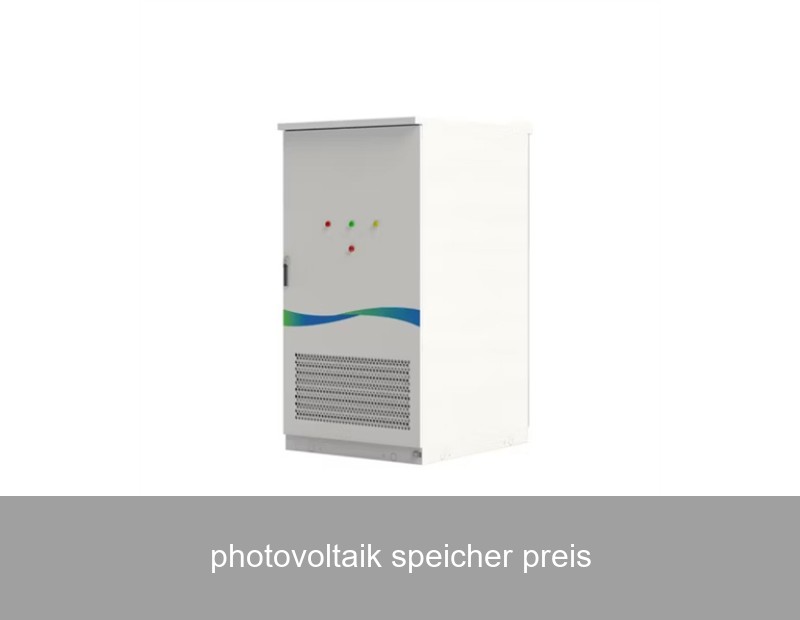
If you're a homeowner in Europe or the US with solar panels, or considering them, you've likely asked the crucial question: "What's the real price of a Photovoltaik Speicher, and is it worth it?" The initial cost can seem like a significant hurdle. But what if we told you that the true "price" isn't just an invoice figure—it's a complex equation of upfront investment, long-term savings, energy security, and environmental impact. As energy prices remain volatile and the desire for self-sufficiency grows, understanding the factors behind Photovoltaik Speicher Preis is the first step toward making a empowered decision for your home and our planet.
Table of Contents
The Real Breakdown of a Solar Battery Price
Let's demystify the cost. A typical Photovoltaik Speicher Preis for a residential system isn't a single number. It's a package that includes:
- The Battery Unit Itself: The core component, priced per kilowatt-hour (kWh) of usable capacity. This is the "gas tank" of your system.
- The Battery Inverter or Hybrid Inverter: The brain that manages energy flow between solar panels, battery, and home grid, converting DC to AC power.
- Balance of System (BOS): Cabling, safety switches, monitoring hardware, and mounting equipment.
- Professional Installation: Labor costs for certified electricians to ensure a safe, compliant, and optimized setup.
- Software & Monitoring: Intelligent energy management systems that maximize self-consumption and provide real-time insights.
In 2023, the average fully-installed price for a quality residential storage system in Germany ranged from €900 to €1,300 per kWh of storage capacity. A typical system size of 8-10 kWh could see a total investment between €7,200 and €13,000 before potential subsidies. In the US, prices are comparable, generally falling between $800 and $1,200 per kWh installed.
Key Factors Influencing Your System's Cost
Why such a range? Several variables directly impact your final quote.
| Factor | Impact on Price | Consideration |
|---|---|---|
| Battery Chemistry | High | Lithium Iron Phosphate (LFP) is now the market standard for homes, offering excellent safety, longevity (often 6,000+ cycles), and stable performance. It has largely replaced older NMC chemistry in residential settings. |
| System Capacity & Power | High | Larger capacity (kWh) stores more energy. Power rating (kW) determines how much electricity can be delivered at once. Sizing correctly for your consumption is key to avoiding overpaying. |
| Brand & Quality | Medium-High | Established brands with robust warranties, certified safety, and proven field performance may command a premium but offer peace of mind and reliability over decades. |
| Installation Complexity | Medium | Retrofits to existing solar vs. new-build installations, roof type, distance between components, and local permitting fees can all sway labor costs. |
| Intelligence & Integration | Medium | Advanced systems with smart home integration, weather forecasting, and time-of-use optimization software add value and can improve ROI significantly. |
Case Study: The Müller Family in Bavaria
Let's look at a real-world example. The Müller family in Freising, Germany, installed a 9.8 kWp solar array in 2022. Despite generating ample power, their self-consumption was only 35%, exporting most surplus to the grid for a modest feed-in tariff. In early 2023, they decided to invest in a storage system.
- Goal: Increase self-consumption, gain independence from evening price spikes.
- Solution Installed: A 10 kWh LFP battery system with a hybrid inverter.
- Total Installed Cost: €11,500.
- Subsidy: They received a €1,800 grant from the German KfW development bank, reducing net cost to €9,700.
- Result: Their self-consumption rate jumped to over 85%. By avoiding buying peak grid electricity, they now save approximately €1,100 annually on their energy bill. At this rate, their simple payback period is under 9 years. Given the system's 10-year product warranty and expected lifespan of 20+ years, the long-term financial and energy security benefits are clear.

Image Source: Unsplash - A typical home benefiting from solar and storage.
Looking Beyond the Price Tag: Value & ROI
Focusing solely on the lowest upfront Photovoltaik Speicher Preis can be shortsighted. The true metric is Levelized Cost of Storage (LCOS)—the total cost of owning and operating the system per kWh of usable electricity over its lifetime. A cheaper battery with lower cycle life or efficiency may have a higher LCOS. More critically, value encompasses:
- Energy Security: Providing backup power during outages (a critical feature in areas with unstable grids or increasing extreme weather events).
- Price Hedge: Locking in a portion of your electricity cost at the "price" of sunlight, insulating you from future utility rate hikes.
- Grid Support & Incentives: In some markets, you can participate in virtual power plants or grid-service programs for additional income.
- Property Value: Modern, energy-independent homes are increasingly attractive in the real estate market.
The Highjoule Approach: Smart Technology for Optimal Value
At Highjoule, we believe the right Photovoltaik Speicher should be an intelligent partner in your energy ecosystem, not just a silent box in the basement. Since 2005, we've engineered our systems to deliver superior long-term value, not just competitive entry cost.
Our Residential Energy Hub series integrates high-density LFP battery cells with a cutting-edge hybrid inverter. But the real magic lies in our Adaptive Learning Software. The system analyzes your household's consumption patterns, local weather forecasts, and real-time electricity tariffs (in deregulated markets) to automatically optimize charging and discharging cycles. This means it doesn't just store surplus solar energy; it strategically saves it for the most expensive peak periods, maximizing your financial return.
For example, our systems can be configured to ensure you have sufficient reserve for a potential overnight outage while still participating in cost-saving arbitrage. This blend of hardware durability and software intelligence is designed to give you the lowest possible LCOS and the highest degree of energy autonomy. We provide comprehensive solutions for homeowners looking to retrofit storage or design a new solar-plus-storage system from the ground up.

Image Source: Unsplash - A sleek, modern home battery installation.
Future Trends: What's Next for Battery Prices?
The trend for Photovoltaik Speicher Preis has been steadily downward, thanks to economies of scale and innovation. According to a report by the Fraunhofer Institute for Solar Energy Systems ISE, the cost of battery storage systems in Germany fell by over 60% between 2013 and 2022. While raw material fluctuations may cause short-term plateaus, the long-term trajectory points to continued value improvement.
Future advancements are less about crashing prices and more about increasing value: longer lifespans (15,000+ cycles), even safer chemistries, and deeper integration with electric vehicles and heat pumps. The system that manages your entire home's energy flow—solar, storage, car, and heating—will become the standard, making the intelligence of the platform, like that in Highjoule systems, more critical than ever.
So, as you evaluate your options and see various quotes, ask yourself and your provider: Is this proposal just about the lowest Photovoltaik Speicher Preis today, or is it about delivering the highest energy independence and the lowest cost of ownership for the next 20 years? What energy goals are most important for your household's future?
 Inquiry
 Online Chat