


Understanding the True Cost of a 500W Solar Panel: Beyond the Price Tag
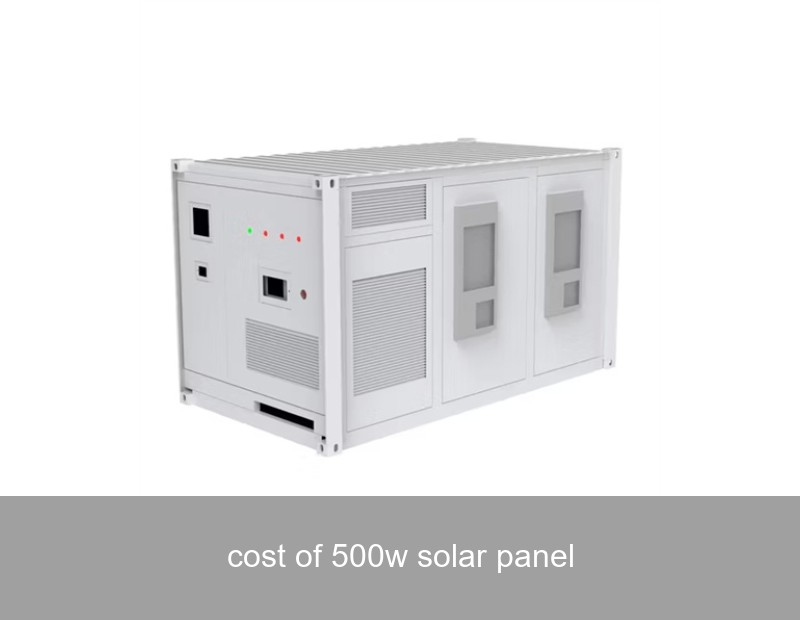
So, you're looking into solar power and have your eye on a 500W solar panel. The first number you'll see is the module's price, but is that the real story? As a homeowner or business owner in Europe or the US, you're making a smart investment in energy independence. However, the upfront "cost of a 500w solar panel" is just the initial piece of a much larger financial and technical puzzle. Let's unpack what you're *really* paying for, from the hardware on your roof to the decades of clean energy it provides.
Table of Contents
Breaking Down the Cost: Module, System, and Soft Costs
When we talk cost, we must separate the panel price from the system cost. A standalone 500W monocrystalline panel might retail between $250-$400, depending on brand, efficiency, and region. But that panel alone doesn't generate usable power for your home or business.
The true cost encompasses the entire system:
- Balance of System (BOS): Inverters (to convert DC to AC), mounting racks, wiring, and combiners.
- Soft Costs: Permitting, inspection, installation labor, and installer margins. In the US, these can constitute up to 65% of the total residential system cost according to the National Renewable Energy Laboratory (NREL).
- Operational Costs: Maintenance, monitoring, and potential repairs.
Therefore, a 4kW system using eight 500W panels might have a total installed cost ranging from $12,000 to $20,000 before incentives in many European and American markets. The value, however, is measured in levelized cost of energy (LCOE)—the average net present cost of electricity generation over the system's lifetime. A high-quality panel in a well-designed system delivers a lower LCOE.

Image: The installed system cost includes high-quality panels, racking, and professional labor. (Photo by Vivint Solar on Unsplash)
The Efficiency Factor: Why Panel Quality Dictates Long-Term Value
Here's a crucial insight: a cheaper, lower-efficiency 500W panel might require more roof space to produce the same annual energy as a premium, high-efficiency one. Efficiency translates the panel's physical size into power output. A panel with 21% efficiency will produce more kilowatt-hours per square meter over 25 years than one with 18% efficiency, especially in space-constrained installations.
This is where companies like Highjoule add immense value. While we are a global leader in advanced energy storage systems, our integrated solar-plus-storage solutions only partner with tier-one panel manufacturers. We focus on the holistic performance of your energy assets. A premium 500W panel paired with a Highjoule intelligent battery system like our HES Series ensures every watt generated is either consumed, stored, or managed for optimal financial return, dramatically improving your system's payback period.
The Components of a High-Performance Solar System
| Component | Role | Impact on Total Cost & Value |
|---|---|---|
| 500W Solar Panel (Module) | Converts sunlight to DC electricity | Higher efficiency = more energy per sq. ft., better long-term LCOE. |
| Inverter (String/Micro) | Converts DC to usable AC power | Smart inverters enable grid services and storage integration. |
| Mounting & Racking | Secures panels to roof or ground | Quality ensures durability and protects roof warranty. |
| Battery Storage (e.g., Highjoule HES) | Stores excess solar for use at night or during outages | Increases self-consumption from ~30% to 70%+, maximizes ROI, provides backup. |
| Energy Management System | Brain of the system, optimizes flow | Critical for unlocking full value of storage and solar. |
A Real-World Case Study: A German Bakery's Energy Recipe
Let's move from theory to practice. Consider a family-run bakery in Bavaria, Germany. Their challenge: high electricity costs for refrigeration and ovens, with peak usage in the early morning and evening—outside peak solar hours.
- System Installed (2022): 30kW solar array (using sixty 500W panels) + a Highjoule HES 25 battery storage system (25kWh capacity).
- Goal: Maximize self-consumption of solar energy, reduce grid reliance, and ensure backup power for cold storage.
- Result: Within the first year, the bakery achieved 84% self-consumption of its solar energy—more than double the typical rate without storage. Their grid electricity bill was reduced by over 70%. The battery seamlessly provided backup during two grid outages, preventing thousands of euros in spoiled inventory.
This case illustrates the point perfectly. The "cost of the 500w solar panels" was a line item, but the real financial victory came from integrating them with intelligent storage. The system wasn't just an expense; it became a strategic energy asset with a clear, calculable ROI.
The Storage Imperative: Maximizing Your Solar Investment
Without storage, a significant portion of your solar energy—often produced midday when you're not home—gets exported to the grid at low feed-in tariffs. With declining export rates in Europe and net metering reforms in many US states, this is becoming less economical.
This is Highjoule's core expertise. Our HES (Home Energy System) and CES (Commercial Energy System) are not just batteries; they are integrated AC-coupled systems with sophisticated energy management software. They learn your consumption patterns, automatically decide when to store solar energy, when to discharge, and when to take advantage of time-of-use electricity rates.
For a system built around 500W panels, adding a Highjoule storage solution transforms the economics. It effectively raises the value of every kilowatt-hour your panels produce by ensuring you use it yourself, rather than selling it cheaply and buying it back expensively at night. It also future-proofs your investment against changing grid policies.

Image: An integrated battery storage system, like Highjoule's HES, turns solar into a 24/7 power source. (Photo by American Public Power Association on Unsplash)
Making the Decision: Key Questions for Your Solar Journey
As you evaluate the cost, shift your mindset from purchasing panels to procuring a long-term energy service. Here are the right questions to ask your installer or energy advisor:
- What is the estimated annual energy production (kWh) of the entire system, not just the panel wattage?
- How does the panel's efficiency rating affect the number of panels and roof space needed for my goals?
- What is my expected self-consumption rate without storage? How could a battery like Highjoule's improve it?
- Can the system design and components (inverter, battery) easily expand if my energy needs grow?
- What does the total installed cost include, and what are the warranty terms for performance and equipment?
Remember, the most sustainable and cost-effective energy is the kilowatt-hour you never have to buy from the grid. A holistic approach that pairs high-quality 500W panels with intelligent storage and management is the surest path to achieving that.
Given your specific energy profile and local electricity rates, what would have a bigger impact on your next utility bill: reducing the per-panel cost by 10% or increasing the amount of solar energy you can use directly by 50%?
 Inquiry
 Online Chat